Tuesday, November 14, 2006

Welcome Acephalous Readers


The post that made
Scott's nose itchy
is below.

A picture of a true medieval acephale (called a Blemmyae) is at left.

You can be certain that if it is intriguing to think with in a postmodern kind of way, we medievalists had our hands on it first. We don't mind your borrowing it for a while, Mr. Scott Eric Kaufman, just like we don't mind you copying the medievalist practice of deploying your middle name to sound more prestigious, but please be careful with it or we will take our headless figure back.

Monday, November 13, 2006

Straight Outta Chicago: Streisand Meets Berube On the Way to the Blogosphere

I am just returned from the annual meeting of the Midwest MLA [Palmer House Hilton, Chicago], where Michael Berube gave the "President's Keynote Address" on Friday evening, entitled "Professors at Work." We had no idea what this was going to be about, and as it turns out, we're not entirely sure Prof. Berube knew either, but some of what he had to say will interest readers of this blog, I think.

The first half of Berube's talk appeared to be a mainly humorous riff on popular culture representations of professors, during which he showed clips of Streisand leading a class discussion on the mythology of love in The Mirror Has Two Faces [during which scene, the medievalish words "Chretien de Troyes" and "Lancelot" are clearly visible on the blackboard] and of Professor Snape [played by Alan Rickman] terrorizing Harry Potter in the classroom [Harry Potter and the Sorcerer's Stone]. Berube then switched gears, without much of a transition, to the subject of the inhumanity of the humanities [i.e., all the ways in which universities seem to be designed to maximize cruelty to others, especially during job searches], and to illustrate this point we got clips from Babe and Toy Story [please don't ask which ones: suffice to say, that one clip involved a wild dog trying to tear a toy apart with his gnashing teeth]. All of this, as it turned out, did not really have much to do with what the REAL topic of his talk turned out to be: academic blogs.

Yes, that's right, the main topic of Berube's M/MLA keynote address was academic blogs and how, if you really want to see "professors at work," you've got to travel to the wild and wonderful world of the academic blogosphere, the production of and traffic in which Berube compared to the emergence of print culture in the late medieval/early modern period. So, number one point: it's possible that, historically, and in relation to issues of cultural literacy in general and public intellectual blathering more particularly, blogs could be very very important, indeed. But Prof. Berube also did not want, I think, to make too much of academic blogs, in the sense that--at least for now--they may not count for much in the way of publishing-toward-tenure, although he did take great pains to point out how much intellectual discussion & important critical debate is happening on blogs that isn't happening anywhere else. By way of example, Prof. Berube shared that, in one case, a scientist whom he had been criticizing on his blog [can't recall name] actually joined in the discussion at one point and that the comment thread on that discussion exceeded 150 posts. I, myself, have also noted that, just this past Friday [Nov. 10], Berube's blog, Le Blogue Berube [haha], had its five millionth visitor [yes, that's impressive]. Five million. Wow. Berube mentioned that he himself spends about two hours each day writing for his blog, although he readily admits that as a tenured, advanced professor, he has the luxury of choosing to do so.

By way of classifying academic blogs, Berube said there are two kinds: the "raw" and the "cooked." "Cooked" blogs are highly sophisticated and have posts that are much like polished, full-length essays [the best of these, according to Berube, are blogs such as Crooked Timber and The Valve]. "Raw" blogs mainly focus on random personal musings and, in Berube's mind, often aren't worth the trouble [examples of these, according to Berube, are . . . guess what? I'm not going to mention them because I don't believe in repeating that kind of negative critique--let's just say that the blogs we link to here at In The Middle provide a good sampling of both types, if we follow Berube's lead on this]. In The Middle wasn't mentioned at all: damn! Berube thinks blogs provide excellent professionalization venues for especiallly smart and talented graduate students [his favorite is Eric Scott Kaufmann, who participates on The Valve and also has his own blog, Acephalous]. Finally, Berube has no problem with anonymous blogging, especially for graduate students and the untenured: if it was good enough for classical authors, it should be good enough for all of us.

So, there you have it. I'm sure I left some things out--if anyone else was there with me in the audience and remembers something I haven't, please jump in and add, emend, and criticize! The upshot of the whole talk seemed to be something along the lines of "blogs are extremely important venues for intellectual work, and are even generating audiences regular academic publishing does not generate, yet are still not taken seriously enough by some, and who really has the time?" Who, indeed?

Trauma, culture, humor

At the synagogue my family belongs to, religious school begins with a parent and child chosen class focused on a theme -- this time for Kid #1 and me, "Modern Israel through Pop Culture." We've listened to contemporary music (you don't know hip hop til you hear it in Hebrew), watched snippets of a film I'd seen before and liked, and yesterday viewed some commercials from Israeli TV.

The young man who leads the course (a native of Jerusalem) made the observation that some cultures have so much experience of danger, violence, and trauma that dark humor becomes an almost ingrained coping mechanism. He observed that whereas Americans tend to make trauma sacred and therefore untouchable (e.g. 9/11), Israelis tend not to be quite so grave in their approach. He asked us if we could ever imagine a US television commercial like this one, that makes so light of such a complicated problem.

The comments got me thinking also of Gerald of Wales, and his word pictures of an Irish bishop and of several Jews who use dark humor to deflate the oppression and violence Gerald himself is on the side of. I'll post a few of those quotes later.

Friday, November 10, 2006

Medieval Roadkill, or Where Karl's Been

I hope some of you have noticed that I've been away for a few days (okay: a week or more). We're all busy, I know. Alas! Here's a bit of what I've been working on. My (nearly finished!) penultimate dissertation chapter is about carrion, hunting, and, in a kind of appendix, Yvain. Appropriately enough, the excerpt below is from somewhere in the middle. By this point, I've gone through the carrion rules of the penitentials (carrion, commonly called morticinum or suffocatum = the meat of animals wounded or killed by nonhuman animals, and it shouldn't be eaten, except, as I discuss later, by bestiales homines or lepers) and followed Mary Douglas and Rob Meens in rejecting explanations of carrion laws that appeal to hygiene or Leviticus/Deuteronomy. Unsurprisingly, I understand the laws as another manifestation of the human subjugation of animals.

Three ninth-century works—two penitentials and one letter—openly express what had been only latent in earlier carrion laws. Both the St. Hubert and Merseburg B penitentials forbid the consumption of any fish found dead in a river, "since it was not hunted by men." The letter, an anonymous cleric's response to a King, possibly Louis the German, King of the Eastern Franks, develops this point at far greater length; to the best of my knowledge, it is the most detailed discussion of suffocatum in the Middle Ages. The letter first restates Jerome’s gloss on Ezekiel 44:31, likely through the conduit of a penitential: “We call an animal ‘suffocated’ that was throttled or mangled by a wolf or a bear or by another beast (aliqua bestia). We say that this sort of flesh is to be abstained from and is not for use for eating or for any other consumption." At this stage, the letter’s definition seems to criminalize meat obtained with the assistance of falcons or dogs, animals that surely could be classified as “aliqua bestia.” The letter's recipient is a nobleman and hence almost indubitably a devotee of hunting. As such, he could only have been deeply dissatisfied had the letter ended with this point, which is, as I have shown, the point to which most penitentials confine themselves. But this letter is addressed to a noble, not to a general Christian audience; nor is it obliged to imitate the unornamented brevity of Penitential prose. Because the cleric has room to elaborate, and also because he must, he exempts most hunting from Christian strictures: or rather, he brings hunting within Christian regulation.
But as for that which was captured by a dog, we do not count this meat among suffocated things, since man is the hunter, accompanied by a dog, whose acute sense of smell and quick agility man uses to capture animals, and so this capturing of an animal is not to be assigned to the dog but to man. For when we ourselves write, we assign the writing, not to the pen that writes the letters, but to the hand (scripturam ipsam non calamo, quo litterae caraxantur, sed scriptoris manui deputamus). It should likewise be thought about snares or other suchlike traps, which human ingenuity and skillful industry has invented. And so one may universally deduce: whatever is captured by human effort, art, or skill should not be numbered among suffocated animals, nor does anyone commit offense who consumes this food with thanksgiving.

Terrestrial animals drowned in the alien element of water are likewise fit for eating, so long as they were chased into the water by hunting dogs. Fish suffocated by being removed from water are also licit. Contradicting other penitentials, the letter similarly reasons to allow the consumption of birds captured by tamed raptors, nets, or birdlime. In every case, the letter exempts animals from the category of suffocatum so long as humans wanted them dead. In an echo of 1 Timothy 4:4 or, indeed, Augustine, the letter also directs humans to avoid sin by eating with thanksgiving. The second half of the letter explains why Christians should follow dietary laws even though they have left behind Judaism, but, as is apparent, the letter turns to this explanation only after it has provided a definition of suffocatum that has everything to do with the proper control of violence and nothing to do with hygiene or, for that matter, any specifically Judaic law.

The letter distinguishes the carcasses of animals killed by wolves and bears from those killed or injured by domesticated carnivores. The letter also condemns the flesh of animals killed or injured by "aliqua bestia," but it does not explain what these beasts might be. They could well be dogs, but the letter refuses to imagine, or rather refuses to remark upon, the possibility that domestic carnivores might also hunt independently, like wolves or bears. Because the dog, like a pen, possesses no agency, the letter can preserve the supremacy of human agency: although humans and dogs work together in the violence of the hunt, the human remains the master, no more a companion with his dog than he is with any less organic technology. The letter has discursive precedent for its disavowal, for a longstanding textual tradition combines vigorous praise for canine facility in hunting with just as vigorous a denial of canine independence. Both Ambrose and Rabanus Maurus allude to the Dog of Antioch, an animal renowned for refusing to leave the corpse of its master and its alacrity in identifying--and sometimes assaulting--the murderer. However, Ambrose and Rabanus each hedge their admiration of dogs, Rabanus by declaring that “it is the nature [of dogs] not to be able to be without humans,” and Ambrose, more strongly, by declaring “that dogs are devoid of reason is beyond all doubt.” The very justness of Rabanus and Ambrose's denials of canine independence make their denials less effective than that of the carrion letter. While dogs, as Rabanus argues, at least might be thought not to be able to live well without humans, and while much evidence could readily be assembled to support Ambrose's claim of canine irrationality, dogs are very much unlike pens, for dogs, unlike pens, can act on their own. A pen would never write a charter by itself, while a dog certainly might hunt on its own if it had the opportunity or lacked the training to encourage it to leave independent violence exclusively to its masters. It is the very ineptness of the comparison that makes it so potent. Humans can distinguish between independent and dependent violence by whatever means they chose, for power itself is its own justification. The human need not look outside itself to judge what is right for it. If humans cannot consume carrion, they, at least, have the power to condemn it, and this power, especially at its most arbitrary, is ultimately what matters most.


Works
Ambrose. Hexameron, Paradise, and Cain and Abel. Translated by John J. Savage. New York: Fathers of the Church, 1961, VI.4.23-24.
Dümmler, Ernst, ed. Epistolae Karolini Aevi III, Monumenta Germaniae Historica Epistolae 5. Berlin: Weidmann, 1899, 633-36.
Kottje, Raymund et al., ed. Paenitentialia franciae, italiae et hispaniae saeculi VIII-XI, Corpus Christianorum Series Latina 156-156A. Turnholt: Brepols, 1994, Vol I, 165 and 174.
Rabanus, De universo, PL 111: 223D-224A

A new motto for medievalists


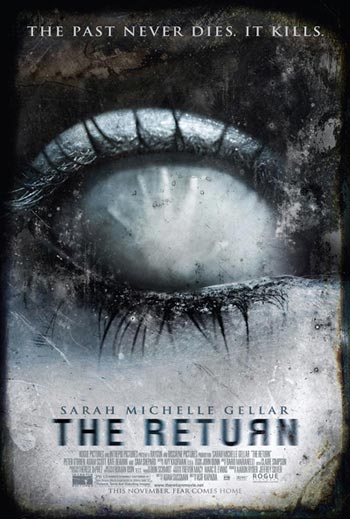
"The past never dies. It kills."

Thursday, November 09, 2006

Infinite Realms


Here, by way of advance publicity, is the final table of contents for a project I blogged about in months of yore. More news as it develops.

Infinite Realms: Archipelago, Island, England

1. Jon Kenneth Williams, "Sleeping with an Elephant: Wales and England in the Mabinogion"

2. Kathleen Biddick, "What Merlin Saw, or, Archiving Slaughter"

3. Suzanne Conklin Akbari, "Between Diaspora and Conquest: Norman Assimilation in Marie de France’s Esope and Petrus Alfonsi’s Disciplina Clericalis"

4. John Ganim, "Islands Upon the Land: Some Medieval Urban Origin Legends and Their Literary Representations"

5. Eileen Joy, "The Shadow of the Blackbird Crossed the 'Wonders of the East'"

6. Kathy Lavezzo, "Imperial Abjection and National Asceticism in the Alliterative Morte Arthure"

7. Anne Clark Bartlett, "No Woman is an Island: The British Female Saint, the Insular Imaginary, and the Contact Zone."

8. Jeffrey J. Cohen, "The Green Children and the Britain of England."

9. David Townsend, "Gathering All Things to Herself: Orality, Ethnicity, and Syncretism in Geoffrey of Burton's Vita sancte Moduenne uirginis"

10. Heather Blurton, "The Space of the Past in Twelfth-century Durham"

11. Ruth Nisse, "The Jew’s Hand: Le Jeu d’Adam and the Culture of Jewish-Christian Debate in Norman England"

12. Randy P. Schiff, "The Instructive Other Within: Secularized Jews in 'The Siege of Jerusalem'"

Wednesday, November 08, 2006

The psyche of the university professor

(according to my colleague Margaret Soltan, AKA UD)

A lot of professors are eerily good at ignoring everything in the world. They've written 14 books with obnoxious children and harridan wives bedeviling them every step of the way. To call them "absent-minded" would be an insult. They are not there ...

Professors have nothing against getting quietly tight in their own snug lodgings, but the idea of braving the cold and getting soppy with a bunch of fellow drunks is revolting. In general, professors are not team players -- groups of any kind give them the heebie jeebies.


It is not very nice to have my sweet little progeny described as "obnoxious" (Kid #1 did not shoot HER with a Nerf dart gun when he had erected his cardboard Fortress of Solitude at the door to the English Department this summer; that honor was reserved for a senior colleague who was not at all amused to have a nine year old demand that she provide the secret password ["pickle juice"] or be denied access to the copy machine). Yet I take Professor Soltan's point. College sports are indeed out of control and so far beyond the core mission of an educational institution that the investment of so many dollars in them at a time of academic cutbacks is nothing short of obscene.

(via Inside Higher Ed)

Tuesday, November 07, 2006

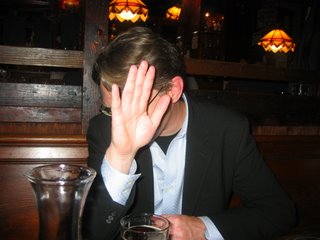
In case you're wondering what I look like ...


and haven't caught me in, say, this little cheesefest, here I am in all my medievalist glory. In a bar.

Via the inimitable JKW.

On a different topic, does medieval studies possess futures other than those imagined by Kellie and Kofi?

Monday, November 06, 2006

Futures of the Field II: The Postcolonial, the Caribbean, the Medieval


Below you will find the remarks delivered by Kofi Omoniyi Sylvanus Campbell at the Futures of the Field symposium. Kofi traces the contours of his own training as a postcolonial medievalist, and suggests some fertile areas of field interpenetration for future mapping.

(You may ask why Kofi's talk is illustrated with a shabby looking pirate. I may then answer that illustrating Kellie's talk was easy; I used a self-portrait, since I'd been called a spiked mammal. Here I performed a Google image search for "medieval caribbean" and the first hit was a poorly constructed pirate costume. The fellow at left bears no resemblance to Kofi, who is too suave to ever dress like such a low rent rogue; the pirate also bears only a glancing resemblance to me. But you know, we medievalists ought to do more with pirates. I'll save that for another post).

-------------

The research which led to my dissertation, and my first book, really sprang in the first place from a problem I encountered right at the end of my undergraduate career, which was that I had developed a love for both medieval and postcolonial literatures. The two fields at the time seemed so completely incommensurate with each other that I always assumed that eventually I would have to choose between them.

But in my MA year at the University of Toronto I was lucky enough to take a seminar with Dr. Suzanne Akbari entitled “Constructions of the Other in Medieval Literature.” The course focussed precisely on what I wanted to do; it combined medieval and postcolonial studies in its examination of medieval European constructions of the eastern, Muslim world. The course was at the time on the absolute forefront of this area of scholarship; no scholarly work had so far been published which dealt with this congruence of medievalism and postcolonialism, although the first articles and book collections were in the process of being prepared. Within 2 or 3 years the field had established itself as the most rapidly expanding area of medieval studies, as I would argue it continues to be today; in the time between when I first came to the field, and the time I started to write, several works had appeared in the area, from Gilles’ and Tomasch’s Text and Territory, to Sprunger and Jones’ Marvels, Monsters and Miracles, to Jeffrey’s book The Postcolonial Middle Ages, which really brought a lot of the research that was being done together, and solidified the subfield into the form we recognize today. What this meant practically for me was that, even at the time I began to write this book, a great deal of work had already been done in the field, and this led to the question of what kind of contribution I could still make. Now, there were, or rather still are, two tendencies within the practice of medieval postcolonialism which I eventually came to realize that I wanted to address. In the first place, it became obvious that much of the work in the field was almost exclusively concerned with what postcolonial theories and literatures could contribute to an understanding of medieval literature and culture, and almost never with the reverse. So, for example, I learned a lot about what writers such as Edward Said, Homi Bhaba, Benedict Anderson and Timothy Brennan could teach us about English nationalism in the 14th century, but almost nothing about how the shape of that nationalism could force us to re-read those scholars of modernity. This became one of the driving forces behind my research; I became convinced that medieval literatures and cultures had a lot to teach us about the modern world and about our theories of postcolonialism. This explains Bruce’s statement in his Speculum article on the topic, that while this is a big deal in medieval studies, it’s really not in poco studies – in fact, it’s not even really on the radar yet in postcolonial studies. And it seems to me that it won’t really get the attention of postcolonialists until we can show them what this kind of scholarship can do for them, so this is part of what I set out to do. What I still hope to do.

The second realization I came to, eventually, was that almost all of the scholarship had an obsessive east-west focus. That is, it focused on relationships between Christian Europe and Muslim Asia, to the exclusion of all other relationships. I found this particularly strange because throughout the primary literature, Africans and the Muslims were so closely allied.

I thought it was so strange that I began to search for Africa and Africans throughout Middle English literature, expecting that, since there was no scholarly activity on the topic, I would find nothing. But as I read around I realized that Africa and Africans were actually all over Middle English literature. It is just that they were most often in the background of European-Muslim conflicts. But I also came to realize that there was a substantial enough body of primary texts which focussed on Africa specifically to warrant serious attention, and so my attention turned there.

And once I realized that these works were often quite influential in shaping the expectations of early English explorers, I naturally began to focus on what those explorers saw in them that was so fascinating. I began to realize that what the explorers got out of them were justifications, reasons, for what they were doing, as well as knowledge which enabled them to do it. And once I saw that these texts were related to the enterprises of colonialism and slavery, it became clear, that they represented a part of black Atlantic history, one which has rarely been discussed by historians of colonialism and slavery. The black Atlantic is a term developed by the sociologist Paul Gilroy; it refers to the political, cultural and creative interrelations among blacks living in Africa, the Americas, and Europe (specifically England for the purposes of this discussion, as my work focusses on the Anglophone black Atlantic); it refers, in other words, to the English speaking black diaspora encircling the Atlantic ocean. As I note in the introduction to my book, it is currently held as gospel that the black Atlantic has its origins in the Middle Passage, the mass transportation of slaves from Africa to the Americas, which began in the Renaissance. But after reading these texts, it became clear to me that that history begins much earlier. I quickly came to realize that writers such as Wilson Harris and Derek Walcott didn’t believe that either. And so I focussed on demonstrating those basic facts: that black Atlantic history begins earlier than commonly imagined, and that understanding this fact can help us to make clearer some of the processes at work in postcolonial literatures and cultures.
So I begin by focusing on the methods through which Middle English representations of Africans and blacks constructed them in a manner which laid the groundwork for the future colonialist project. They did this by consistently portraying black Africans in ways which would make it easier to justify and accept their eventual enslavement and displacement, and by portraying their lands as highly desirable. The various texts which I examine use very different methodologies and disciplinary techniques to arrive at similar conclusions and a composite picture - that blacks are primitive, lazy, ugly, inhuman, cowardly, overly-sexual, threatening in various ways, and blessed with a rich and fruitful land whose wealth they squander through ignorance. These texts also speak of the need to impose some sort of containment upon black Africans, a containment which is often based on arguments for various forms of invasion and subjugation; various forms of colonialism, in other words.

This process really begins around the turn of the 14th century in Middle English. Now, at the beginning of the period, the discourse is quite vague in terms of discussing actual colonialism. What it does do is begin to construct black Africans in convenient ways – but by the middle of the 15th century, we get a text which, for the first time, really suggests that the English should be moving into Africa, that they in fact have a duty to do so. This text is the Book of John Mandeville – now, The Book exists in several version in Middle English – most of them spare little space for Africa, one or two pages at the most. But the Bodley-version is quite obsessed with Africa – and this redactor’s treatment is quite interesting. The Book is a medieval travelogue, describing the journeys of the supposed English Knight as he travels through the lands of the east and the south. What the Bodley-writer does is to take the worst examples of humanity and human behaviours from all other parts of the world, and transplant them wholesale onto Africa, often verbatim. But what is really interesting about this version is that while it does focus heavily on African difference, it also draws our attention to the similarities between the Africans and Europe, and especially on religious similarities. The Bodly-writer states that in fact, all Africans have SOME inkling of the Christian faith, although they don’t understand perfectly. So he encourages his audience to go there and teach them, to make them more godly, more civilized. This is, of course, the oldest and most-often cited aim of colonialism, to enlighten and bring to god the savages that live in other parts of the world. So we can see that this colonialist justification is much older than we commonly think.

Examining these medieval texts allow us to make many other corrections to some of the most widely-held beliefs in postcolonial studies. It allows us, for example, to see that the construction of blacks as ugly, inhuman and primitive is not a product of 19th century Social Darwinism, as is commonly believed, but is in fact part of a much older Western tradition of constructing its others. This particular realization is important to the second arm of my research, which is trying to show that these medieval and early Renaissance discourses can still be traced in contemporary Caribbean narratives, and how they can be viewed not as a specific discourse of Caribbeanism or Africanism. For example, this discourse of ugliness and inhumanity really begins with Middle English discussions of Muslims living in Asia – once Africa becomes important to England, these discourses are transposed onto Africans – and once the Caribbean is discovered, it becomes translated onto the Caribbean.

Many Caribbean writers self-consciously engage with these constructions of blacks. In this way, I argue, they try to expand the notion of hybridity as it is commonly understood in postcolonial studies. Paul Gilroy argues that one of the most important features of black Atlantic hybridity is the flow of creative energies along the black Atlantic – by engaging with these medieval constructions, the writers I examine engage with a hybridity that is not only cultural, but also temporal – they suggest that features of the distant past must be incorporated into contemporary Caribbean identities, along with the cultural hybridites which constitute that identity. By engaging with these discourses, they extend the black Atlantic hybridity backwards through time as well. Derek Walcott, for example, in Dream on Monkey Mountain, uses this image of black inhumanity to discuss the contemporary relationship between black Caribbeans and England. He refers explicitly to the medieval process whereby Ham, the son of Noah, becomes synonymous with blackness, evil, and slavery – he suggests through this image that the roots of the relationship between England and the Caribbean are pre-colonial, and that we must acknowledge that depth of that history if we are to deal with it effectively. Wilson Harris likewise links the physical space of the Caribbean landscape with the pre-colonial discourse which constructs it as a vast and empty space filled with the possibilities for new beginnings, a notion which was central to convincing Europeans to settle the Caribbean. So these writers allow for a flow of creative energies along the black Atlantic which is both cultural and temporal – they suggest that ALL aspects of black Atlantic hybridities must be accounted for in the creation of a stable and useful future for Caribbeans.

And it seems to me that this area of investigation is one of the most important directions the field can go in right now – an examination of how the study of the medieval can help us to shed light on postcolonial writings; in the case of my work, specifically Caribbean writings. One of the most exciting projects for me right now is a collection which is coming along nicely, edited by Kathleen Davis (Princeton) and Nadia Altschul (Johns Hopkins); the collection is titles Medievalism and the Post/Colonial Perspective: Historical Foundations to Global Politics. That collection examines the understanding and practice of medievalism in the former colonies themselves – that is, it examines how postcolonial writers actively engage with medievalism in their works, and on how they understand its influence. For that collection I’m writing a piece which examines the uses of the medieval in Wilson Harris’ Guyana Quartet. What I’m suggesting in that article is that Harris views the coming of Europeans to the Caribbean as a clash of two medievalisms. Harris in his critical writings describes the European Middle Ages in the way I do in my book, as a time in which the European colonialist ideologies were born and refined. He suggests that the Arawak and other Amerindian tribes which lived in the Caribbean at the time, were also an imperialist, colonizing people, and that their encounters with Europeans was the clash of two imperialist cultures – but what he argues is that the Amerindian empire was at the end of its grand colonizing movement, which Europe was at the beginning of its imperialism. This clash of medieval cultures is repeatedly invoked in the four novels of his Guyana Quartet; in each novel, the main character, who is always playing the role of European colonizer, comes into contact with representatives of the Amerindian peoples, and is transformed through that encounter – what Harris seems to be suggesting is that that original clash is played out over and over in Caribbean history – after the original encounter, the Amerindians were further colonized and silenced by the freed black slaves, and then by the east Indian indentured workers who were brought over after the abolition of slavery. So this clash of medievalisms becomes a symbol for Harris of the repetitive history of subjugation in the Caribbean, but also of the potential for new identities to emerge which are defined by the hybridization of all these cultures. He argues, in other words, that the clash of medievalisms in the 16th century marked both an ending and a beginning in black Atlantic history, and that recognizing this fact can allow us to create identities based on a more honest understanding of that past and the role Caribbean subjects themselves have played in it.

The other really important direction I think the field is beginning to head in has to do with the idea of England itself. One of the good things the study of medieval postcolonialism has allowed us to do is to challenge the homogenization of Muslims and blacks which Middle English literature enacted – we’ve begun to allow for, and to discuss, the homogeneity of those peoples and places. But in doing so scholars have often been guilty, and I count myself among these, of (re)homogenizing England in turn. So we speak of how “England” constructs Saracens, of how “English literature” portrays blacks. But what do we mean by England, and English literature?. In our rush to argue that England in the late Middle Ages was in many ways a nation, and that it enjoyed colonial relationships with some countries already, we often forget one of the most important lessons of postcolonial and nationalist theory, which is that no nation is inherently self-cohesive – this is a fiction which national literature constructs. This is a lesson we must apply more carefully to England itself. So I think that Jeffrey’s forthcoming collection Infinite Realms: Archipelago, Island, England, will be very important for the field. It will show the processes whereby England came to discipline the heterogeneity within its own borders, how it came to define itself as England not only against Asia and Africa, but against its own internal others as well. This work will also, I think, be of importance in our understanding of contemporary nationalism, and particularly postcolonial ones. It will lay bare some of the processes whereby a new nation, as postcolonial nations are, begins to refine its sense of self and to fashion itself into a fictional homogeneity.

These two anthologies in particular then, will be useful not only in shedding light on medieval postcolonialisms, but on ways in which those postcolonialisms can really help to elucidate contemporary postcolonial cultures and their writings. And to me, this is the vitally important thing we need to do in this subfield, if it is to continue to grow. We must seek to engage with postcolonialists more directly, because many postcolonial writers have engaged with medievalism, and until scholars in the two fields put their heads together more directly, there will continue to be a lot of blank spots in the study of both medieval literature and postcolonial studies. This is one of the reason I am so excited about the collection by Kathleen Davis and Nadia Altschul – it brings together both medievalists and postcolonialists, not only in individual essays, but by having postcolonialists respond to articles by medievalists, and vice versa. In this way, it will begin to build the kind of direct dialogue that I think, I hope, will come to define the study of medieval postcolonialism.

Sunday, November 05, 2006

Futures of the Field: More on Hedgehogs. Also, Foxes.


Below you will find Kellie Robertson's remarks from the Futures of the Field symposium held at the George Washington University on October 27. I hope to have Kofi's remarks up soon as well.

According to Kellie, I am a hedgehog -- a suggestion at which initially I bristled ... but then I realized, I must be a hedgehog if I am bristling, right? Because that's what spiny mammals do. Anecdote: At Columbia University last night, just before the "Medieval Conversations" event, I was handed a double sided sheet of paper with quotations from my books, essays and blog arranged neatly into four categories -- fourteen years of work condensed into a tidy scheme. Kellie, you were right: I have seen the hedgehog and he is I.

I hope you enjoy Kellie Robertson's piece as much as my colleagues and I did.

--------
On Hedgehogs, Foxes, and Medievalists

I appreciate Jeffrey’s invitation to think about the future of medieval studies, a topic that many people (including some medievalists) would consider to be an oxymoron.

Medievalists are, by nature, difficult. Contrary to the myth of “progress” that modern peoples ostensibly hold (and that good modernists work to debunk), medievalists are fonder of the ubi sunt theme. Like the medieval peoples we study, our first impulse may be to frame the question not as ‘where are we going?” but rather “where has it all gone?” For medievalists of a certain generation, the disciplinary glass always looks half empty rather than half full.

My thoughts on the future of medieval studies then will take the form less of prediction than of “retrodiction,” thinking about the past as uncanny prologue to the future. It will also, I’m afraid, indulge a quintessentially medieval passion for imitation and authority over invention.

For my auctor, I take Sir Isaiah Berlin; my materia, his well-known essay, “The Hedgehog and the Fox.” Berlin’s title refers to a saying by the Greek poet Archilochus: “the fox knows many things, but the hedgehog knows one big thing.” The world according to Berlin divides into two types of people: those who reflect on the complexity of life, following multiple courses wherever they lead—these are the foxes. And those for whom—to quote Chaucer—“all roads lead to Rome,” those who subordinate perceived anomalies to a more unified historical vision—these are the hedgehogs. Believing that life is too complex to reduce to a single system, foxes at their best are organic synthesizers whose diverse knowledges produce the cultural explanation we have all been waiting for (or, at least, the one we all deserve). At their worst, foxes are dilettantes: scattered, inconsistent, self-contradictory. Hedgehogs have the potential to become Kuhnian paradigm shifters, pointing out where we’ve been and where we are going. A poor man’s hedgehog, however, devolves into little more than a one-trick pony. Berlin’s alpha-hedgehogs include Plato, Lucretius, and Dante, while his foxes are Aristotle, Erasmus, and Shakespeare. A more recent example of this division can be found in the debate over the nature of populism that has erupted in the pages of the journal Critical Inquiry: on one side is Ernesto ‘the Hedgehog’ Laclau and on the other, Slavoj ‘the Fox’ Zizek.

Before we get too carried away with our sorting hats, Berlin himself acknowledged the limitations of this dichotomy, the absurdity that would ensue when taken to extremes. For Berlin--an expert in Russian literature—the dichotomy was useful for considering the case of Tolstoy’s views on history: was he “a monist or a pluralist”? more similar to Dostoevsky or Pushkin? Berlin concludes early on that Tolstoy belonged squarely to neither camp. Instead, Berlin argues that Tolstoy “was by nature a fox, but believed in being a hedgehog” (5). Tolstoy’s desire for “hedgehog-ness” not only led him to play false his own inner fox, but also to misinterpret his own work and world view, to do one thing, while consistently saying he was doing another. It is this insight that I believe can serve as a useful heuristic for thinking about the future of medieval studies, because it helps us to distinguish what we say we value as a field from what gets valued in practice, both personally and institutionally. Berlin can help us make sense of our desire to value multiplicity—interdisciplinarity, multiculturalism, comparativism, “knowing it all”—with our desire to tell cogent and compelling stories both about long-ago societies and about the present state of our own discipline.

Medieval studies was established by some venerable hedgehogs: Eugène Vinaver, the editor of Mallory and Caxton, Sir Israel Gollancz, editor of the Pearl-poet, William Skeat, editor of Chaucer and Langland, and the daddy of all medieval hedgehogs, Frederick Furnivall, who edited just about everything else. But we who follow stand on the shoulders of some distinguished and learned twentieth-century foxes: Georges Duby, Aaron Gurevitch, and, more recently, Peter Haidu. It is certainly the case that medieval studies has always been innately foxy in Berlin’s sense of that term. In order to “do” medieval studies, you supposedly have to know many things: paleography, Latin, literary theory, rhetorical theory, philosophy, ecclesiastical history, legal history; and, if you are exceptionally well-trained (or have an alarmingly high threshold for boredom), a smattering of codicology, diplomatics, prosopography, and archaeology. And yet often times knowing these many things gets put into the service of the one rather than the many: think of D.W. Robertson [no relation] for whom all of Chaucer became an allegory for the Christian virtue of caritas or ‘charity.’

So does the future of medieval studies lie with the hedgehogs or with the foxes? On the way to a contingent answer to this question, I’ll speak from my own disciplinary formation as well as my department’s recent search for a medievalist. Both cases, I think, highlight how our profession says it values foxes but, in reality, trains (and tenures) hedgehogs.

I went to graduate school to work with a brilliant and terrifying New Critic but also eventually ended up working with a practitioner of medieval New Historicism; my dissertation was directed by two deeply antipathetic hedgehogs. Things got even trickier when I decided that—unlike either of my advisors—I was interested in actual medieval manuscripts. I bullied my way into a Latin paleography class taught by a historian in the Beineke Rare Books Library (he tried to tell me that the class was full and that fire regulations would prevent my participation… yeah right). After my comps, I went to the UK for a year and a half where I adjuncted at the University of Leeds and spent my weekends in the Cambridge University Library manuscript room. The dissertation that eventually resulted from this work was on medieval translation—for those of you who know who Rita Copeland is, suffice to say, I was the poor woman’s Rita Copeland. I threw this dissertation away as soon as I landed my job as an assistant professor. Instead of the book on translation theory that both myself and my department thought I was going to write, I wrote one on labor history.

Unlike the New Historicist arch-fox who once famously claimed that he wrote out of a desire to [quote] “speak with the dead,” I write out of a desire to speak with the living. I chucked my dissertation because it wasn’t allowing me to have the conversation with modern critics that I wanted to have as a medievalist. The book I did end up publishing, entitled The Laborer’s Two Bodies, came out of reading Michael Hardt and Antonio Negri’s work on so-called “immaterial labor”—the contention that we live in a post-labor society marked by a movement towards intellectual and affective labor over productive labor. These claims made me want to investigate the historical partitioning of “material” from “immaterial” labors, particularly at the moment that the first national labor laws appeared in England.

As I discuss in my book, what was striking to me about Hardt and Negri was not that they read the changing relation of material to immaterial as the harbinger of a new labor era, but rather how much this new era of Empire (capital ‘e’) looked a lot like an older era, the Middle Ages. As the book ends of capitalism and colonialism—the premo and the pomo, the preco and the poco--the medieval and postmodern end up in cahoots. While the book Empire argues that the transition from imperialism to “Empire” marks the end of the medieval notion of translatio imperii, the book itself acts out a nostalgic medievalizing translation.

Negri reframes the incomplete autonomist political project of 1970s Italy in terms of Augustinian metaphysics, switching from linear, capital time to eschatological time. In Negri’s use of both medieval writers like Augustine and medievalizing writers like William Morris, we see a new sense that the medieval is not the displaced other of the present but is its likeness. Where twentieth-century critics like Hans Robert Jauss argued for the “alterity” of the Middle Ages in relation to the modern, Negri would see the medieval as twin of the postmodern. The medieval is no longer the pre-modern, rather it is the pre-postmodern. The dangers of this interest in the medieval as a category for analyzing modern labor relations is that it has the potential to obscure actual medieval labor practices or, moreover, that the medieval may be reduced to merely a trope for understanding our own position vis-à-vis a “post-capital” nexus of relations. Wanting to be a part of this conversation is what led me to slog through several centuries of labor laws and court records.

My new book, entitled Material Chaucer, arose from a similar desire to speak with (or perhaps more accurately, argue with) the living. The historian of science Bruno Latour has argued that it was in the seventeenth century, with the advent of Boyle and Hobbes—a new model of empiricist science met a new social theory—that the demarcation between the human and the nonhuman solidified. Because Latour and his audience are predominantly interested in defining where “modernity” begins, they have been less inclined to examine how this ostensibly more permeable boundary between bodies and things may have been sustained in the Middle Ages or, moreover, how it may have continued after the seventeenth century. Thus my book, which is a history of medieval materialism masquerading as a study of Chaucer’s poetics, seeks to show that, while the seventeenth-century laboratory may have been most obvious instantiation of this division between human and nonhuman, it was not necessarily its inception.

As you can see from even this brief summary of my work, I believe that the future of medieval studies lies in helping the present (whether defined as the modern, the post-modern, or something else altogether) think through the myths of origins that it uses to define its own identity, in speaking with the living as well as the dead; after all, the living are occasionally more interesting. But the question remains: is it the fox or the hedgehog who can help us do this work most effectively? Hiring a medievalist last year was very instructive in this regard.

Based on an unscientific sampling of some of my medieval academic friends, I can conclude that 4 out of 5 academics either want to be or already consider themselves to be foxes. And with good reason: who wouldn’t want to be the wily hermeneut in the face of monolithic hedgehog power-slash-knowledge? And yet Berlin’s fox-hedgehog binary does not map so easily onto a straight progressive/conservative divide. Some of the most fascinating and progressive work gets done by hedgehogs. I think Jeffrey Cohen, for instance, is a great example of a hedgehog in the best sense of that word. He has developed a compelling idea of what medieval society is by looking at what it systematically excludes: the monster, the Jew, the gender outlaw, the Saracen. (As you can see, this is my plug for the hedgehogs). In our departmental hiring, we interviewed many fascinating hedgehogs.)

It may come as no surprise, however, that the person we ended up hiring was a fox. The candidate’s dissertation examined the hidden affinities between academic medieval histories—studies like Stephen Justice’s Writing and Rebellion—and contemporary “alternative histories”—ostensibly non-fiction bestsellers like Holy Blood, Holy Grail and The Templar Revelation. Her work carefully re-considers medieval primary sources as well as contemporary literacy studies in order to theorize how readers and writers of this non-fiction genre interact. She regularly attends popular fan conventions, doing demographic work similar to that undertaken by Janice Radway on romance readership. Like most foxes I know, our new colleague is “self-fashioned”--to borrow again from one of the foxiest foxes around. As a graduate student, she learned paleography and manuscript studies while doing an MA at York; then went into a lit theory-heavy English PhD program in the US, where she also was awarded a fellowship in the contemporary social policy institute to pursue her work on contemporary fan culture. I describe her to you in such detail--not to encourage you to poach her from us--but to suggest how her foxiness stimulated our departments’ own sense of its synergies: the ethnography components of this candidate’s research appealed to the composition theory people; her ability to talk about contemporary literature appealed to the creative writers; while her interrogation of historical methodology and anachronism appealed to the Deconstructors and the recovering New Historicists.

And yet my hiring tale is also cautionary. While we all say we want interdisciplinary foxes, disciplinary training actually militates against their production. Rare is the PhD program that values textual editing equally with postcolonial theory. Sometimes, candidates can appear too foxy for their own good: we had a candidate who had published extensively on medieval literature in French and other romances languages. While most of my colleagues valued this aspect of the CV, it prompted another colleague to ask: “Whatever would I talk to this person about over coffee?” The profession may have decided to love foxes, but we still tend to train, have coffee with, and tenure hedgehogs. The future of medieval studies could look quite different if we accept that our desires for the future are not necessarily aligned with the way we train and tenure our colleagues, if we could do what Berlin’s Tolstoy was unable to do: value being a fox in a world that institutionally values hedgehogs.

To conclude: medieval studies is becoming more, not less, important, and it is so for reasons different than those that made it important 20, 50 or a 100 years ago. As humanities scholarship re-arranges its enabling chronologies—premodern, modern, postmodern, antimodern—it is also questioning major narratives such as secularization, modernization, disenchantment, and monodirectional hegemonic colonialization. All of these point to the Middle Ages. They are big, hedgehog stories, and there will be a need for medievalists—foxes and hedgehogs alike—to examine them.

My thoughts on the future of medieval studies have somewhat accidentally taken that most medieval of forms, the beast fable. And since every good fable has a moral, I’ll give it a shot. I’ll throw out a couple and you can choose whichever you think is most appropriate:

“Beware of foxes in hedgehogs’ clothing.”
“Don’t discount the hedgehogs, while valuing the fox.’
“Be suspicious of your desire for foxes.”
“Keep your foxes close, but your hedgehogs closer.”
“If it looks like a fox, talks like a fox, walks like a fox, it still might be a hedgehog.”

And finally:
“There are a lot more hedgehogs than you think.”


Or you may want to discount everything I have said as simply the ramblings of a hedgehog suffering from fox envy.

Saturday, November 04, 2006

At the Cohen breakfast table

Forty-two years ago today, good readers, my mother cast a vote for Lyndon B. Johnson and went into labor. I came into the world in Cambridge, Mass., a democrat ex nativate. The medievalist part came later.

When I was much younger I didn't think people could actually live this long. Now I discover my progeny suspect the same.

Kid #2: Happy birthday! You gonna have a pink cake and a hat. Aren't you daddy?

Kid #1: Just think, dad. You're so old, we'll be having your next party in a nursing home.

Me: Funny.

Kid #1: Need a shawl?

On Virtue

Nice post on virtue, glamour, and all those other swell things we sometimes talk about here by Dean Dad.

Thursday, November 02, 2006

Invitation to a Shipwreck: For Emile B., and Others

This is an invitation to a shipwreck. If you come along, the only life raft I can offer is to keep the tone light. Perhaps I have spent too many years sprayed by the pungent, cynical, raunchy, and irreverent humor of soldiers--the humor of Aristophanes--to take awful stuff any other way. I am a physician, an unlicensed philosopher, and a missionary for the veterans I serve. . . . But it's also fair to say that I am a shameless intellectual, deeply immersed in the perennial philosophic quest: what is this wonderful/terrible critter, this Human?—Jonathan Shay, "Just One Critter"

Perhaps when Anatole Broyard was dying and called upon people to recognize that illness is dramatic and thus can be enjoyed, what he meant is that humans can learn to persevere in an expanded sense. We can be not only where we are but also where we have been and will be, in all those different stories, and we can know where we are, not only through our own bodies, but through those other people who effect our participation in the world. Those possibilities may be the transformative communalization of suffering.Arthur W. Frank, "Telling the Dramas of Suffering"

Hoping entails the ability to to maintain what Hirokazu Miyazaki calls a "prospective perspective." It generates a narrative task. The narrative work entails more than telling stories about past events. It also involves the creation of stories about personal transformation required in order to continue to hope, and to revise one's hopes, no matter how desperate the circumstances or how bleak the prospects. Thus, these stories concern the future as much as the past, and the moral struggle entailed in finding a way to live with uncertainty. Willing enters the picture in a central way because the struggle is so difficult. . . . Above all, moral willing is connected to the project of coming to be a different, better kind of person, one who acquires the strength to face unexpected hardships and to treat the world more compassionately. This project is a long one, and its achievement is not guaranteed.Cheryl Mattingly, "Hoping, Willing, and Narrative Re-envisioning"

I believe technology is the future. But we need balance technology with humanism, and I think that’s why the term that will increasingly become important for medicine in the future is the term “medical humanities.” Embedded in this will be everything from bioethics to medical anthropology, and also the study of literature . . . because it’s so important that we not lose the human element in medicine. . . . [O]ne wants to have much more open systems of knowledge that interact with each other, that admit their limitations.—Arthur Kleinman, “A Conversation with Arthur Kleinman”

Conisder this post partly a plug for the fabulous Hedgehog Review, partly an attempt to answer some of Emile B.'s more niggling, pricking, and even caustic questions on this blog regarding the "use" of the "humanities" to the supposedly more "human" social and other sciences. I cannot promise I will touch upon "the medieval," per se, although a concern with "the past" is certainly implicit.

The Hedgehog Review is, as they describe themselves, “an interdisciplinary, academic journal of critical reflection on contemporary culture,” which is published by the Institute for Advanced Studies in Culture at the University of Virginia, whose mission is to offer “critical research and resources to those concerned with responding creatively and constructively to the challenges posed by our time.” I love the journal because each issue typically addresses a really important contemporary social and political subject—such as “Religion and Violence,” “The Body and Being Human,” “Evil,” “The Fate of the Arts,” “Discourse and Democracy,” “What Is the University For?”, “After Secularization,” “Technology and the Human Person,” etc.—and while the essays are always written by well-known, leading experts and scholars in various fields, they are written with minimal footnotes and no jargon. Each issue also includes books reviews, interviews, artwork, and a bibliographic review related to that’s issue’s theme. The ultimate aim, as they state it, is to work “against the current fragmentation and isolation of academic inquiry,” pose “hard questions,” pursue “knotty questions,” and push intellectual discussions “beyond their current impasses.” In terms of style, breadth, and meaningfulness, the journal is similar to Manas: The Journal of Intellectual Idealism, a now defunct journal that Emile B. recommended to us this past summer. The Hedgehog Review is the only academic journal I have ever been willing to continuously spend my own money on [I let my subscription to Speculum lapse after I realized the Medieval Academy was never going to let go of its ultra-conservatism and boring-ness and embrace the twentieth century, no matter how many times people like Joan Ferrante and Rick Emmerson promised they would evolve].

The current issue of The Hedgehog Review is devoted to “Illness and Suffering”—more specifically, to an important area of scholarly research that has been exploring “how experiences of suffering find commonalities in narrative” and how “telling suffering through stories assists the work of social reconstruction and psychic healing.” The contributors include scholars whose work, in very real and meaningful ways, combines science, social science, and the humanities. So, for example, Arthur W. Frank is a sociologist who is also a memoirist of critical illness and author of books on illness and ethics. Cheryl Mattingly is a cultural and medical anthropologist, who writes on narrative and healing. Paul Komesaroff is a physician, medical researcher, and medical ethical philosopher. Jonathan Shay is a staff psychiatrist at a veterans outpatient clinic in Boston who has written books on classical Greek literature and combat trauma, such as Achilles in Vietnam: Combat Trauma and the Undoing of Character. Joseph Kleinman is a psychiatrist and medical anthropologist, who founded the journal Culture, Medicine, and Psychiatry. The poetry of Donald Hall and the paintings of Deborah Haynes—both dealing with the terminal illnesses of close family members and friends—is also included.

Each essay in this volume, as well as the interviews, are deeply moving and also beautifully illustrate the ways in which science, the social sciences, and more humanistic disciplines, such as philosophy and literature, are mutually productive when put in the service of asking, as Kleinman puts it, “what is life for?” or “how to lead a life?” So, Jonathan Shay, a psychiatrist who specializes in combat trauma and who treats and advocates for war veterans who have been deemed hopeless cases of PTSD, finds much of use to his work in ancient Athenian political philosophy and literature. Kleinman drew upon Montaigne’s Essays as a model for his book What Really Matters: Living a Moral Life Amidst Uncertainty and Danger. And so on and so forth. Suffering, in many of the essays, is seen as a situation in which “one’s carefully and socially structured collection of feelings, meanings, roles, moods, and stories called ‘the self’ prove irrelevant to the inescapable facts of weakness, pain, and mortality.” Narrative, or what the moral philosopher Charles Taylor has called the “sense of the good” that “has to be woven into my understanding of my life as an unfolding story,” and which Heidegger discussed as the temporal structure of being, is turned to again and again by the authors of these various essays as central to the process of what Shay terms the “communalization of trauma” and what others would call the work of healing and of living a meaningful life, even in the face of great deprivations.

While it is true that none of the authors in this volume of essays is a literature scholar or theorist, and that each of them very squarely belongs within what might be called the “helping” professions [medicine, psychiatry, and the like], all of their footnotes and references indicate their debt to the humanities in their work: to Rilke, Levinas, Elaine Pagels, Charles Taylor, Iris Murdoch, Alasdair McIntyre, Martha Nussbaum, Homer, Euripides, Aristotle, Sartre, Blanchot, Alphonso Lingis, Joseph Conrad, Adorno, Giorgio Agamben, Derrida, Shoshana Felman and Dori Laub, Rousseau, Hegel, Sander Gilman, and so on. It is a model of scholarship we should well emulate: learned and human, wide-ranging and generous, moral, and pluralistic, yet attentive to the well-being of specific individuals in specific times and places.

[Note: it might be of interest to readers of this blog that a forthcoming issue of The Hedgehog Review will be devoted to “The Past,” another to “Intellectuals."]

Wednesday, November 01, 2006

Off to NYC ...

... Thursday, where I hope to see many "In the Middle" readers. I'll be a guest at Susan Crane's "Medieval Animals" seminar, and then will participate in a "Medieval Conversations" public discussion. I hear that the format involves my responding to any question anyone wants to ask. If I give an unsatisfactory answer, I will be poked with a sharp stick. Looking forward to it.

JKW informs me that I will also be at the Abbey Pub in the evening. Stalk along, if you wish.

In memoriam: Clifford Geertz (1926-2006)

Believing with Max Weber that man is an animal suspended in webs of significance he himself has spun, I take culture to be those webs and the analysis of it to be therefore not an experimental science in search of law but an interpretive one in search of meaning. (The Interpretation of Cultures)

This crosswise doubleness of an event which, taken as a fact of nature, is rage untrammeled and, taken as a fact of culture, is form perfected, defines the cockfight as a sociological entity. A cockfight is what, searching for a name for something not vertebrate enough to be called a group and not structureless enough to be called a crowd, Erving Goffman has called a "focused gathering"-a set of persons engrossed in a common flow of activity and relating to one another in terms of that flow. Such gatherings meet and disperse; the participants in them fluctuate; the activity that focuses them is discreet-a particulate process that reoccurs rather than a continuous one that endures. They take their form from the situation that evokes them, the floor on which they are placed, as Goffman puts it; but it is a form, and an articulate one, nonetheless. For the situation, the floor is itself created, in jury deliberations, surgical operations, block meetings, sitins, cockfights, by the cultural preoccupations-here, as we shall see, the celebration of status rivalry-which not only specify the focus but, assembling actors and arranging scenery, bring it actually into being.("Deep Play: Notes on the Balinese Cockfight")