Saturday, February 18, 2006

So You Want to Raise a Medievalist II


You'll never transform your children into tiny medievalists until you (1) snatch them away from their Nintendo DS and (2) force them to learn Latin.

I don't have any advice on (1), but for (2) a book that is delightful -- and that now seems to be becoming a series -- is Minimus, from Cambridge University Press. As you may have guessed from the title, the book centers around the life of a small mouse (oh how those classicists love their puns). He dwells with a family who has been stationed in Roman Britain, near Hadrian's Wall, c.100 AD. This family is in fact based upon people whose lives are known from fragments of letters discovered at Vindolanda. The Latin is imparted through simple comic strips and activities. Recently, Minimus even gained his own website.

Minimus is a charming, low pressure way to have a child learn some basics of Latin. In my son's case, I should also add, it triggered an unhealthy interest in the worst of the Roman emperors. Ask him about anything that Nero or Caligula did, and he's happy to share his research (most of it based upon another British book, Ruthless Romans).

Friday, February 17, 2006

On the topic of lethal fauna

As a kid, I was addicted to “In Search Of,” with Leonard Nimoy. (I know, I know…) One episode that really stuck with me was about killer bees. We were supposed to be inundated with killer bees by the year 2000. What happened to the killer bees?

-- Dean Dad at Confessions of a Community College Dean

Thursday, February 16, 2006

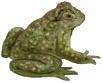
toads: man-eating; poisonous


Readers want to know: what's up with that index entry on toads? (See "Index Joy") We know the Middle Ages were zany, you say, but could they really be so zany as to believe in not one but two types of lethal toad?

Well, yes.

The story of the man-eating toads (I suppose they would also eat women, and maybe even children, but in the story they devour only a man) was narrated by Gerald of Wales. This was the same twelfth-century writer who also loved to tell tales of self-castrating beavers and interspecies procreation. In a travelogue he composed of his preaching tour of Wales -- a tour that netted about 3000 volunteers for the crusades -- Gerald tells of a man plagued by toads. Great quantities of the creatures gather near him and joyfully nibble his flesh. Bedridden and in danger of being transformed completely into amphibian kibble, the poor fellow is eventually carried to the top of a tree by sympathetic friends. Carnivorous toads are, unfortunately for him, also arboreal. They climb the tree, troop to his branch and eagerly snack upon him, leaving only a skeleton clinging to the limb (Journey Through Wales 2.2)

More widespread in medieval literature are toads of the venomous rather than carnivorous variety. Working recently with texts produced around England's twelfth-century civil war, I became interested in two appearances of these creatures. The first is in the Peterborough Chronicle, a version of the Anglo-Saxon chronicle that was continued late into the century. The chronicle takes us inside the dungeons of malefactors who, because the king is weak, have been incarcerating innocents to extort their money. Death by toad venom ranks right up there with being suspended by your thumbs or having your brains forced out through your ears:


No martyrs were ever tortured as [these victims] were. They were hung by their thumbs or by the head, and corselets were hung on their feet. Knotted ropes were put round their heads and twisted till they penetrated to the brains. They put them in prisons where there were adders and snakes and toads, and killed them like that. [entry for 1137]


A second and eerily similar example of venomous toads can be found in Thomas of Monmouth's Life of St William of Norwich. Here we are once again taken inside one of these civil war dungeons:


There was, then, a woman of Brandney named Wimarc, who in the time of Stephen, when the days were evil, was given as a hostage at Gainsborough for her husband who had been taken by pirates. In his stead she was committed to prison with three other women and one man, and there she remained for long. These people, after long enduring miserably cold, hunger, stench, and attacks of toads, began to plan in concert the death of their gaoler (6.13)

In an inspired moment, the prisoners squeeze venom from some of these threatening but oddly handy amphibians and mix with it the gaoler's drink. Suspecting treachery, he forces them to imbibe their concoction. All but Wimarc immediately perish of toad poisoning. Her flesh swells grotesquely. Her skin nearly tears. Once she is finally released from prison, for seven years Wimarc is possessed of the body not of a human being but of "some portentous new monster." You will be happy to learn, though, that a pilgrimage to Saint William's shrine in Norwich brings her instant relief. She vomits the toad's venom over the pavement in front of the shrine ("there was enough of it to fill a vessel of the largest size") and is restored to her slender figure.

So medieval toads were indeed lethal ... but at least there was a possible cure.

The Medieval and the Political

For reasons that will become clear when I finally finish my index and post about another ongoing project, I've been thinking quite a bit about how the Middle Ages might intersect with contemporary political preoccupations in an untimely way. That a non-medievalist finds a book about medieval minority groups useful for thinking about the present is intriguing. Here's the link:

A Canadian Lefty in Occupied Land

(courtesy of the ever-rich History Carnival)

Tuesday, February 14, 2006

So You Want to Raise a Medievalist


Sure, there are classic books like the Lord of the Rings (Seth Lerer did a brilliant MLA paper a few years ago on Gandalf as philologist that made me realize my own career was set in place by my sixth grade reading). But then again Tolkien's opus is now on DVD, and who reads when they can watch a DVD?

A book that my son highly recommends -- and that I must admit that I'm getting all kinds of guilty pleasure from reading myself -- is Nancy Farmer's Sea of Trolls. Set on the northeast coast of England during Viking days, the story reworks Beowulf, among many other medieval stories. And where else can your kid read a novel in which some of the dialogue is in Old Icelandic -- and LIKE IT?

Monday, February 13, 2006

Another Book to Anticipate ...


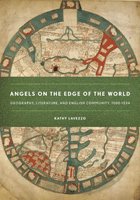
ANGELS ON THE EDGE OF THE WORLD:
Geography, Literature, and English Community, 1000–1534
by Kathy Lavezzo, University of Iowa

From the Cornell University Press website:

In a view that sweeps from the tenth century to the mid-sixteenth century, Kathy Lavezzo shows how the English people’s concern with their island’s relative isolation on the global map contributed to the emergence of a distinctive English national consciousness in which marginality came to be seen as a virtue. Lavezzo examines the many world maps and textual geographies produced by the English during these years. In a beautifully illustrated book, she argues that the English looked to the globe only to emphasize and, in time, to exalt their own exceptional geographic status.

The author charts this process by examining a series of wondrous maps and canonical texts. Demonstrating how medieval geographic notions conditioned English attitudes toward Rome, clarifying the complicated religious history leading up to Henry the Eighth’s divorce and the Reformation, Angels on the Edge of the World straddles the subjects—and methods—of literature, history, and cultural geography. It will be of special interest to those readers who use cartography as a way to map cultural identities.


In print this June.

Index Joy

Because the index of my book seems to feature every historical personage from "Abelard, Peter" to "Wulfstan," it is taking me what seems to be eons to complete.

Here are my favorite entries so far.

cattle 87-88, 97-100

Celts: formation of Celtic Fringe, 35-36; as modern invention 44, 179n; as strategic designator, 30

deer-cow 103

difficult middles: and alternative histories, 3, 47, 59-63, 72-76; and blood, 72, 73; as borderland, 7, 10, 100-104; defined, 2; denial of, 12, 41, 57; doubling within, 29, 56-57; exclusion and return, 41, 73; as mixture without synthesis, 98; and postcoloniality, 112. See also hybridity; monsters

English: and Bede, 47, 48, 50, 52, 64; as frigid, 33; as mutable, 11, 23, 55, 58; hairstyles, 17-18, 123; mixed origin, 35, 44, 45, 50-51; tails, 39-40; unity, 110-111; as uncivilized, 35, 38, 39, 55. See also Angles and Bede.

Irish: 54, 191n; and cattle, 87-88; clothing, 18, 87; as barbarians, 87; bestiality, 87-90, 97; as equals and allies, 20, 35, 46-47; monsterization of, 35, 78, 86-90; as primitive, 35, 87; as unkempt, 18; as werewolves, 86-87, 89

monkey-puppies 103

monsters: as aboriginals, 27; and cultura mestiza, 102; and gender, 105; and hybridity, 3, 6, 7, 8, 16, 41, 59-60, 100, 102; and freedom, 6, 102; and middle spaces, 76, 99-102; as mixta 100, 102, 103; monsterization 3, 5, 11, 105, 112; and postcolonial theory 6; and race 41. See also Britons; centaur; difficult middles; hybridity; Irish; Jews; Minotaur; Ox Man; Picts; Saracens; Scots; Welsh; wolves

polygamy 20, 34

pork 14, 21, 22

toads, man-eating 95; poisonous, 147

Friday, February 10, 2006

Two Items Involving Imagined Jews


1. A book to look forward to:

Steven F. Kruger
The Spectral Jew: Conversion and Embodiment in Medieval Europe

Examining the points of contact between Christian and Jewish communities, Kruger discloses the profound paradox of the Jew as different in all ways, yet capable of converting to fully Christian status. He draws from central medieval authors and texts such as Peter Damian, Guibert of Nogent, the Barcelona Disputation, and the Hebrew chronicles of the First Crusade, as well as lesser known writings such as the disputations of Ceuta, Majorca, and Tortosa and the immensely popular Dialogues of Peter Alfonsi.By putting the conversion narrative at the center of this analysis, Kruger exposes it as a disruption of categories rather than a smooth passage and reveals the prominent role Judaism played in the medieval Christian imagination.
(from the University of Minnesota website)


2. Evidence that medieval conspiracy theories about Jewish cabals might be alive and well:

Check out Joan Scott's post and David Hirsh's reply , all regarding the "AAUP Fiasco" (a complicated issue, to say the least).

Thursday, February 09, 2006

Animal Innovation: William of Malmesbury's Donkey


Here is a bit of the essay I am working on that examines how animals in the Middle Ages might serve as bodies through which were dreamt new possibilities for identity. It is prefaced by a section on the racial line as a species line in the Middle Ages (subaltern races were typically imagined as bestial), then wonders what happens once the prison of race and the flesh of the animal become so intermixed.

A version of this section on William of Malmesbury also appears in Hybridity, Identity and Monstrosity in Medieval Britain .


------------
The twelfth-century historian William of Malmesbury was the child of conquest, the biological product of the events initiated by William of Normandy in the preceding century. His mother indigenous and English, his father a French-speaking Norman, and his world a celibate, Latinate monastery, William seems to have had a great deal of difficulty working out exactly what history's impurities had fashioned in him. Writing in the turbulent wake of England's transformation from a relatively homogeneous kingdom to a racially bifurcated one, William attempted in his History of the English Kings to provide his fractured country with a continuous history. This repair work was in part propelled (I would argue) by his own precarious position as a man caught between worlds that had moved closer together in his lifetime but were far from constituting a unity.

William has been condemned in the past by critics who do not see the point of the marvels that from time to time erupt within the otherwise sober narrative of his History. Among these is a report of two elderly women who delight in imprisoning men in the bodies of animals, selling them at the market to embark on new lives, imprisoned in selfhoods they never dreamt would be their own (2.171). The story of these two witches culminates a narrative arc instigated by a digression over a necromancer-pope who indirectly triggers the Norman Conquest. It brings the arc's themes of racial and cultural admixture into a more bluntly corporeal register. The story emphasizes the confusions engendered when amalgamated identities coinhabit a single body, and stresses as well as the purifying power of Roman speech:

'On the high road that leads to Rome lived two old crones, altogether filthy and given to liquor, who shared one cottage and were filled with one spirit of witchcraft. If ever a traveller came to lodge with them by himself, they used to make him take the shape of horse or hog or some other animal and offer him for sale to the dealers in such things, spending on their stomachs the coin they thus obtained. One night, as it happened, they gave lodging to a youth who earned his living as an acrobat, and made him to take the shape of an ass, thinking that donkey whose astonishing capers could hold the attentions of passers-by would be a great addition to their assets; for whatever movements were dictated by one of the dames the donkey followed. He had not, you see, lost a man's intelligence, though he had lost the power of speech.' (History of the English Kings 2.171)

The two women find their performing donkey a lucrative addition to their livestock business, but they eventually sell the him to a rich man. The new pet entertains at drunken feasts, but eventually the novelty wears off. The crones had warned the rich man never to allow the ass to approach water. Now that he is unguarded, the donkey runs to a pool and rolls in its cleansing embrace. He is restored to his human shape. Soon thereafter he is asked if he happened to have seen an escaped donkey wander by. The acrobat admits that he was once that very donkey, the case goes all the way to the pope, and eventually the witches are convicted for their crimes.

The acrobat's intelligence [intelligentia] at work in a body that renders him strange combines the human and the animal in novel ways that at once entrap and delight (he yearns for the contours of an ordinary form while performing feats of invention that neither ass nor man could do alone). The artist in a donkey's skin is an alternative figuration for racial and cultural hybridity. Possessed of a fascinating vitality, this conjunction of identities within a single body offers a powerful (if temporary) resolution to all the anxieties about mixed race that circulate in William's narration of his own heritage, anxieties allayed but not transcended through William's ardent embrace of monastic and classical Latin over indigenous English and imported French. True, the man in his animal skin lacks the power of speech [amiserat loquelam], and true, he must submerge himself in the purifying power of water to gain the ability to describe his compoundedness, yet William's breathless narration betrays a deep-seated fascination on his part, an enchantment that no restoration to human ordinariness can lay quickly to rest.

In describing the power of animals to lead us away from the merely human, the late Jacques Derrida punningly spoke of the "animal-word," l'animot. A jolting neologism, the French term combines a singular article with an ending that sounds plural but cannot be; it also hybridizes animal to meaning-making as a way of undermining allegory. "Ecce animot," writes Derrida, offering a word forged from the proximate and the "radically foreign, a chimerical word" that – like the classical Chimaera – possesses a "monstrousness derived precisely from the multiplicity of animals" from which it was formed, "heterogeneous elements within a single verbal body" ("The Animal that Therefore I am [More to Follow]").

William of Malmesbury's narrative of transformation, storytelling, and bodies in flux offers a medieval counterpart to Derrida's l'animot. William was capable of speaking about the past of his beloved homeland with great confidence. Englishness is never examined so much as assumed; it dominates, collects, purifies. Strange figures of impurity and hesitation like the acrobat-donkey provide another version of that past, branching and ambiguous paths that if acknowledged could disrupt the chain of history once again, ruining William's careful repair work. William does not follow these uncertain roads to their unknown destinations, preferring stable histories and secure futures. He distances his wondrous bodies geographically or through their gender. Despite his allowance of contradiction into his narrative, despite his acknowledgement that history is messy, incongruous, difficult to sort, the History of the English Kings ultimately sides with continuity and firm foundation over invention and disruptive innovation. The acrobat-donkey becomes is abandoned at the wayside along the straight road to Rome.

Wednesday, February 08, 2006

Never doubt an eight year old


At least when it comes to monsters.

My son has been researching his assigned biome of the rainforest. He came home from school last week proudly announcing that there is a kind of Amazonian fish that can swim inside your body while you are peeing and live on your blood. Ever patient, ever encouraging father that I am, I immediately told him that he must have misread his information, and that what he was talking about is surely some microscopic parasite.

He told me that I am absolutely wrong and that I don't know everything.

Obnoxiously, however, I often convince myself that I DO in fact know everything, including the fact that internal parasites are invertebrates, NOT fish.

Of course I was wrong. He came home today with a printout of this link on the candiru.

I bought him ice cream and apologized for acting like a jerk.

PS Moral of the story -- besides the fact that I am a failure as pater -- is that this gruesome fish is surely a monster ... talk about category violation. I share this information because I am so busy indexing my book that I haven't been able to post another blog about animals as promised.

Monday, February 06, 2006

Inexclusion

Here's a comment on a previous post that I think is worth bringing to the front where it won't get lost:

Anonymous said...
I recently submitted a paper proposal about ravishing animals i.e., animals that ravish, not animals that are ravished) to a seminar on the natural world in e.m. england and was surprised to find my topic reconfigured under the rubric of "monsters." My animal sources didn't strike me as particularly "monstrous" (the three I listed were a cow, a monkey, and a donkey). I also foregrounded the proposal with a discussion of Brownmiller's erroneous, but rather fascinating, imagination of primal history. (in it, she boldly states that man is the only animal that rapes, which made me even more surprised that I was perceived to be talking about monsters. In some ways, my animal examples were: cow, monkey, donkey, human).

In his comment, JKW roughly defined monsters as "representations of the body fragmented or in expanding pieces." Here's my question to JJC or JKW or the internet world at large: what's the role of activities in configuring the category of monsters? Using the seminar's rubric, wouldn't it matter more what these little green one-eyed cartoons DID (rather than just what their corporeal being suggested?)


Is monstrousness performative? Good question. Maybe the difference is between monstrous as an adjective and monster as a noun: humans can be monstrous, rape-inflicting cows can be monstrous [apparently], but wouldn't a monster have to be that being precariously dwelling between the human and the cow, a minotaur?

"Monster" is difficult to define, but I always come back to category violation and improper admixture. I entitled this post "inexclusion" because the monster often winds up exiled through some gesture of repudiation (and typically that gesture also grants some dominating identity a temporary stability) -- but at the same time incorporated through that very gesture, becoming an essential support for the dominant, the ideal, the normal. That's why the monster is so intimately related to the queer. Both also intermix anxiety and desire.

So, Anonymous (weren't you the author of Primary Colors?), I would tentatively say that when a monkey, donkey or cow is ravishing a human, it is acting monstrously, stepping far beyond what is permitted for its category. The same with a human who practices bestiality, no?

Last, to return to Mike and green monsters: I think we can see already why he and his buddy Sully are monsters who've been evacuated of their monstrousness. They possess the bodies but don't play the roles.

Inventing with Animals

Over the next week or so I'll post a few excerpts from an essay in progress, "Inventing with Animals in the Middle Ages." Delivered initially as a lecture last year, part of a series sponsored by the Center for Medieval and Renaissance Studies at Ohio State University, I'm reshaping now for an edited collection that gathers these talks for publication. You'll see that this essay has much in common with the entry I composed for Erotic Animals a while back (see archive).

Here's the introduction, which tries to stay a bit informal.


The last few years have seen an outpouring of work on the interrelation of humans and animals. This scholarship mainly explores the precariousness of the divide which humans imagine separates them from other living things. My own pre-occupation with the animals of the Middle Ages comes in part from this critical efflorescence, but also from the fact that I have two children. At nineteen months old, my daughter Katherine self-identifies more strongly with monkeys than with homo sapiens. Her nursery is a rainbow-colored menagerie; her picture books burst with fantastic zoos. She resides in a hyperactive world of fauna. As the Disney megacorporation realized long ago, and Katherine is realizing just now, animals teach children how to become human. They also provide kids with a temporary, imaginative escape from that burden.

Over the past few years I've also been reading my eight-year-old son Alexander a nightly installment of the Redwall series by Brian Jacques. The novels feature abbots and abbesses, armored warriors, perilous weapons, feasts, foundlings, tapestries, stained glass – the very substance of the medieval world. Yet the characters in these tales are mice, shrews, hawks, stoats, badgers, weasels. Even if the Redwall novels create an alternate universe where animals enact medieval dramas, through their speech and through their actions it is clear that these beasts inhabit a nostalgic fantasy of the lost British Empire. The Middle Ages becomes an imaginative space where the problems of a complex world can be simplified, where good and evil are as self-evident as the kind of animal flesh one dwells inside. For all its talking beasts, the Redwall books are ultimately populated by humans. Animals supply the fantasy bodies through which dreams of a better world are enabled.

In this essay I examine how animals offered such "possible bodies" to the dreamers of the Middle Ages, bodies as dynamic and disruptive as they are fantastic. In animal flesh were realized some potentialities for identity that escaped the constricting limits of contemporary race and sexuality. In a closing section I will ask if it was possible, at least implicitly, for medieval authors and artists to approach the animal non-anthropomorphically, to see in the beast not a mere semblance of the human, nor to dismiss it as fully and wholly other, but to grant to the animal its status as intimate alien.

Thursday, February 02, 2006

Roger Caillois and medieval animals


While enjoying the clever ramblings at Acephalous, it struck me that medievalists don't have as much fun off the job as they used to. I'm thinking of Georges Bataille and his secret club Acephale. Where have all the Georges Batailles gone?

I share the following because it is about someone who refused (with good reason, I admit) to join Bataille's club: the surrealist biologist Roger Caillois. I became interested in Caillois's work through the appreciation shown him by Elizabeth Grosz, my favorite feminist reinterpreter of Lacan and Deleuze. Last year I was invited to present at a workshop hosted by Princeton exploring intersections between the medieval and the modern, especially in art. I used the opportunity to do some deeper reading in a theorist I had always wanted to get to know better. I doubt I'll ever publish the following, but it does suggest that Caillois is useful for thinking the animal from a non-anthropomorphic point of view. He was an odd person, devoting his life to exploring such mysteries as why stones are such phenomenal artists and why mimicry doesn't actually imitate anything. He never wanted to keep mystery in place (famously, he broke with the Surrealist group led by Andre Breton when Breton refused to cut open a Mexican jumping bean; Caillois thought it was stupid to argue that the bean's secret interior ought to be preserved), but he also insisted that the place for art was within science.

*******

Theorizing the animal/human interface has proved an especially rich critical topic in the past decade, especially given the work of scholars like Steve Baker, Jacques Derrida, Elizabeth Grosz, Donna Haraway, Alphonso Lingis, and Cary Wolfe. More importantly for the themes of this workshop, though, the catalyst for much of my analysis can be found in two essays composed by the eclectic French theorist Roger Caillois. Connected in complicated ways to Andre Breton's surrealism movement, Caillois had been introduced to Georges Bataille by Jacques Lacan. With Bataille and Michel Leiris he founded the influential College of Sociology in 1938. It has recently been suggested that when Bataille determined that a secret group he had formed (Acephale) needed to cement its membership around an act of human sacrifice, and when someone (possibly the perennially depressed Leiris) had volunteered himself as a victim, Bataille attempted to convince Caillois to be the executioner. Needless to say, the sacrifice did not take place: Roger Caillois was the kind of scholar who never really wanted to belong to any group that sought his membership. Indeed, this loneliness goes a long way towards explaining why his work remains relatively neglected while that of almost everyone who moved through his intellectual circle has proven influential in the anglophone world. There is something intransigent about Caillois, both as a person and as a writer.

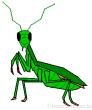
Claudine Frank, Caillois's recent editor and translator, makes two statements about his early intellectual projects that I think well summarize his promise: that "he was always seeking out new monsters" ("Introduction," Edge of Surrealism 5) and that he was engaged in composing a kind of "reverie" that could engender a "subversive, revolutionary New Science" that interrogated rather than dismissed the imaginative (12). These projects involved the displacement of homo sapiens from his assumed centrality, discovering the alien within the unraveling contours of the human. "Man is a unique case only in his own eyes," Caillois observes in his provocative essay "The Praying Mantis: From Biology to Psychoanalysis" (c.1934). Here he takes as his starting point the eternal fascination men betray with the femme fatale of the insect world (the mantis beheads her partner as a prelude to mating). Caillois acknowledges that this recurring interest may derive simply from "some obscure sense of identification" elicited by the insect's "remarkably anthropomorphic form" (73). Yet he is not satisfied by a principle of simple projection, as if by detailing the function of the mantis within male fantasies the insect's uncanniness would then stand explained. There exists in the praying mantis, he writes, an innate lyricism (74, 78), an irreducible superfluity. The mantis offers no comfortable lessons about the anthropomorphism of insects, but rather suggests the entomonous residue infecting the human, breaching the barrier between Cartesian subject and nonhuman environment. The mantis becomes proof of what Caillois calls "the systematic overdetermination of the universe" – quite a burden for a small bug to bear. The praying mantis, moreover, restores danger to the object under scientific scrutiny, allowing that the act of contemplation immediately trespasses the distinction between observer and observed, rendering them inextricable.

Caillois develops this theme further in "Mimicry and Legendary Psychasthenia," an essay that likewise explores the intimacy of the insectal. Caillois's work here was instrumental for Lacan as he formed his notion of the Mirror Stage. Against those Darwinians who see in every attribute of an animal its evolutionary use value, Caillois develops an anti-utilitarian argument in which the spatial and the corporeal interpenetrate. Mimicry, the vertiginous displacement of environment onto body, is for Caillois not a survival strategy but an unnecessary surplus, a "dangerous luxury." Predators are seldom deceived, he observes, when their prey adopt attributes of the space they inhabit, such as when a butterfly imitates a twig or a beetle disguises itself as a pebble. Most animals hunt by smell, not sight: "numerous remains of mimetic insects are found in the stomach of predators." Many inedible creatures imitate their environments needlessly (96-97). Mimicry -- whether animals becoming their worlds, or humans imitating their surroundings magically or aesthetically – is a succumbing of body and subject to the "lure of space" (99). This "dispossession" of the privilege of being one's own center spells the death of the autonomous subject, as self is scattered across landscape and landscape intermixes with self. Caillois gives the literary example of Gustave Flaubert's description of the desert-dwelling Saint Antony. The hermit rapturously witnesses the "interpenetration of the three natural kingdoms" [vegetal, animal, geological] and "disperse[s] himself everywhere, to be within everything" (101). Elizabeth Grosz writes in summation that what Caillois has identified is "a certain structural, anatomical, or behavioral superabundance, perhaps it is the very superfluity of life over and above the survival needs of the organism."

Caillois is famous for his meditations on the sex life of the praying mantis, the misfires of mimicry among animals, the power of stones to pull the thinking subject into disruptive encounters with inertia and oblivion. His work clearly resonates with my own scholarly obsessions: the monstrous, the inexcluded, the exorbitant. Most important for my project today, Caillois offers new ways of approaching medieval animals, modes of analysis that move us beyond arguments based upon agricultural, cultural, or symbolic use value. Caillois proposes what might be called aninormality: an anti-utilitarian conception of the animal that moves us beyond its normalizing function into a realm where human and animal counterinfect, where both kinds of bodies lose the rigor of their boundaries and become anomalous. Unlike Bataille, Caillois never (so far as I know) addressed medieval materials. Yet his work helps us to see that animals in the Middle Ages suggest that we have never been human.

Monstrous Beauty


Another book review that I hope is worth sharing. This one should be out in the journal Patterns of Prejudice soon. Did anyone else like this?


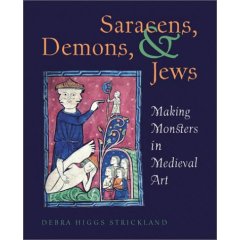
Debra Higgs Strickland
Saracens, Demons, and Jews: Making Monsters in Medieval Art
Princeton University Press, 2003


The gorgeous frontispiece to this book depicts a sinuous green devil inviting a solemn Christ to indulgence, while its back cover is populated by a rainbow of demons tormenting the damned. With its crisply reproduced images drawn from stained glass windows, manuscripts, and the plastic arts; with its oversized, glossy pages and its generously spaced, wispy typeface, Debra Higgs Strickland's Saracens, Demons and Jews is more than an outstanding work of scholarship. The book itself is a work of art.

Strickland discerns in the western depiction of monsters a movement from innocent fascination to a hatred-spurred rejection. Monsters are in the process transformed from marvels to contemplate into enemies to destroy. This metamorphosis in cultural meaning is catalyzed by Christians' burgeoning desire to distance themselves from rival ethnic and religious groups. As a result the so-called monstrous races (creatures of strange body and even stranger custom who have haunted the imaginative spaces of the west since at least the time of the early Greeks) stop referring to mythic beings that dwell in some great and ambiguous Beyond and begin to incarnate those toward whom Europeans harbored a real and growing animus. Once the vocabulary of monstrousness inherited from the classical tradition was applied to the Jews who lived among the Christians and the Muslims of Iberia and the Holy Land, the possibility that these peoples might be co-equal tended to vanish. Strickland's book, then, is less about monsters per se than about the process of monsterization, a heterogeneous set of representational practices that varies over time and place but always had the same outcome: the denial of humanity to the people represented.

Saracens, Demons, and Jews begins with a succinct preface that lucidly articulates the main themes, and contains a series of five chapters that flesh out the analytic framework through close engagement with a series of specific and usually related images. Comprised of a quick excursion through classical and Christian theories of monstrosity, the first chapter is the least innovative, covering ground that scholars have been treading for several decades. The chapter culminates, however, in the bold thesis that the classical monstrous races "with their deformed bodies, strange dwellings, barbaric habits, and sinful behaviors" were the template upon which later medieval constructions of non-Christian groups were based. This emerging tradition of monstrous religious Others was hybridized with Christianity's interest in "Demons, Darkness, and Ethiopians" (the title of chapter two), so that representations of Jews and Saracens of the Middle Ages combine the infernal with the classical. Thus in a famous antisemitic caricature of the moneylender Isaac of Norwich contained in Exchequer roll for 1233, the Jew and his wife are depicted consorting with devils.

Whenever Christians imagined Jews (chapter three), they tended to think of them as a stubborn and malicious race, unchanged since their rejection of Christ centuries earlier. Thus it is not uncommon to find illustrations of biblical Jews sporting the pileum cornutum, the horned hat that medieval Christians forced Jews to wear as a distinguishing sartorial mark. Such scenes would also reinforce the pernicious notion that contemporary Jews were just as responsible for deicide as their forebears. These negative depictions of Jews would also have had real-world effects. In a world increasingly saturated with anti-Jewish visual propaganda, it was increasingly easier to allow Jews to become victims of violence, and even of mass expulsion.

Depictions of Saracens (Muslims) and Tartars (Turks and Mongols) were hardly more positive, especially once crusading fervor had disseminated powerful fantasies of the monstrousness of these non-Christian peoples. As chapter four indicates, these groups were often depicted as dog-headed men, dark-skinned demons, and deformed giants. They were also at times granted a more ambivalent existence as physically attractive people in need of conversion. A final chapter on "Eschatological Conspiracies" examines how Saracens and Jews function in Christian thinking about the end of the world. The conclusion to the book ("What is a Monster?") undermines some of the definitiveness with which monstrousness has been analyzed, offering problematic cases of affirmative monsters and declaring that "Medieval monstrosity ... is neither positive or negative: it is both" (255).

If the book has a weakness it is in its failure to explore this positive aspect, the attraction of the monster, preferring instead to equate ugliness with simple rejection. If that were simply the case, could a book about monsters be as beautiful as this one is? So many of the illustrations that Strickland reproduces are "empirically" rather vile. They are motivated by hate and prejudice. Yet they are also strangely haunting aesthetic objects, awakening human desire and making monsterization seem a work of art. Strickland does a brilliant job of researching the cultural worlds that produced these images, and she expertly traces the historical inheritance of each image as well as its potential innovativeness. If she had only said a bit more about how desire works in these images, and about how a powerful ambivalence often lurks beneath every depiction of the monster, she would have moved a little closer to her stated goal of helping to bring about a world in which "being 'otherwise' eventually might come to be more respected than despised" (20).

Saracens, Demons and Jews is a rare book: impeccably researched, crisply penned, provocative in its findings, and handsomely produced. It will provide any readers interested in the long history of how humans have denied humanity to their fellow beings much to ponder, and probably leaving them wondering why so little has changed in the course of a millennium.

Wednesday, February 01, 2006

On one eyed monsters


Get your mind out of the gutter: that's not what I am talking about. (Though if your thoughts did turn to the lurid at the title of this post, it may simply be because you are a classicist. Ausonius took a line from the Aeneid and turned it into "monstrum horrendum, informe, ingens, cui lumen ademptum." Virgil was talking about Polyphemus; Ausonius had in mind a cyclops of a different sort).

No, I am posting about the green monocular blemmyae known as Mike from the Disney film Monsters, Inc. Lovably grouchy, Mike was the object of a long court case over copyright infringement, Miller v. Disney/Pixar. It seems that a famous illustrator known for his depictions of hot rods and psychedelia thought that Mike bore a little too much resemblance to one of his own animated eyeballs. The case just settled, and legally I can't talk about it much, but suffice it to say that sometimes a medievalist can be useful to corporate America. As an expert witness I was hired to research and compose a report on one eyed monsters throughout human history. Frankly I was surprised at how many I uncovered -- proof, I think, that the human imagination has always been haunted by body parts endowed with an unnerving autonomy. A bigger claim could even be advanced that central to the monstrous is the body in pieces, the flesh that isn't governed by a unifying soul but keeps exerting its unpredictable will.

It was fun, it was a glimpse into a world where half a billion dollars could be at stake, I got to give a deposition and be grilled about lime green versus avocado green skin and its signification, but now it is over.

It reminded me quite forcefully, too, that monsters never seem to cede their power to haunt. Gerald of Wales wrote of man-devouring toads in a way that resonates with H. G. Wells's novel The Food of the Gods and with horror films like Attack of the Giant Leeches (1959) and Them! (1954, a film populated by enormous ants). Saint Columba first spotted the Loch Ness monster in the sixth century; Nessie continues to be observed, even after a classic photograph was debunked. Monsters do change over time, but new ones -- like good old green Mike -- tend to be combinations of the old, making them more familiar than strange.