Thursday, October 11, 2007

Will Simon Armitage do for SGGK what Seamus Heaney did for Beowulf?

A great many people seem to think so.

I've just ordered this promising new translation of Sir Gawain and the Green Knight for my new course "Myths of Britain" in the spring (an introduction to the major, the course looks at the literature of early England within a paninsular, transnational frame). More here when the volume arrives.

Honestly, isn't it about time a leather-jacket clad poet got his hands on the thing?

(Thanks, Jonathan Hsy, for calling my attention to its publication).

Wednesday, October 10, 2007

At Avebury

Here is the draft opening to my new project on "The Weight of the Past." I'm attempting to frame the problem with an initially negative solution, but (you know me well, my readers) will eventually swing around to something more affirmative.

This project, I should add, is the biggest loser in the theft of my laptop: my research notebook, with the detailed scribblings, observations, outline, and bibliographic notes, vanished with that computer. I had not backed it up since August 17. But (speaking of swinging around to a more affirmative mode), the loss of the project's past has given me the chance to clear out some of the weight of that history, and to think certain components of my argument anew. That's strangely liberating, even if a buttload of work.

-----------------------------

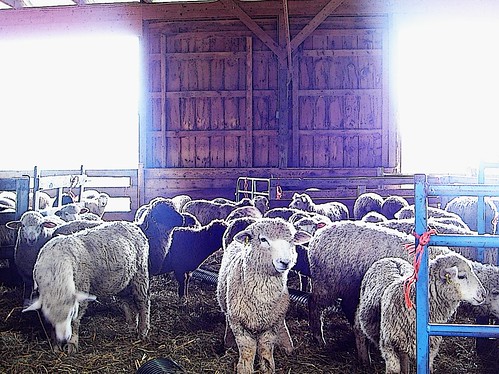
We stand beneath the megalith. Brisk winds roam the grass. The sheep are complaining. “Can you feel anything?” I ask. His palm presses against the rock as eagerly as mine. “Yes,” he whispers, fingers searching clefts and lichen. “I think I do.” He places his head against the stone and closes his eyes, as if through an intimate touch he might discern hoary secrets. He seems as certain and as joyful as when, many years ago, he used to press his head to my chest to apprehend the life of an invisible heart. In a solemn voice, as if he has absorbed from deep in the rock its enduring history, he announces “It knows it killed someone.”

I realize immediately that my son must have pilfered my copy Aubrey Burl’s Prehistoric Avebury: Second Edition. He must have been reading the volume late into the night of our London flat. “Me, too,” I say. “I definitely feel something.”

I am lying. Like my son I want to feel power in the towering stone. Not the energy of astral planes or the pull of a vortex or proximity to pagan divinity. Not whatever it is New Age druids come to Avebury seeking. Yet as in their dreams, my desire is that the stone not be inert. My son is right: this megalith did, after all, take someone’s life. After standing for millennia, the 13-ton rock crushed a man and preserved him for six centuries beneath its bulk. The weight of the past, indeed. Alexander Keiller discovered the body in 1938 when he disinterred and re-erected the stone. Archeologists hypothesize that the skeletal remains were in life an itinerant barber-surgeon. His leather purse contained some scissors, a lancet, and some coins from the early fourteenth century. He was likely witnessing or even assisting in the contemporary effort to obliterate Avebury, “mightiest in size and grandeur of all megalithic rings” until a piecemeal destruction commenced in the Middle Ages. Pits were dug beneath the standing stones so that they toppled and were buried, acts of “pious vandalism” directed at what was probably understood to be an unchristian structure. Perhaps the effort was abandoned when the accidental entombment of the barber convinced its witnesses that these stones could still exert some force. Since its re-erection eight decades ago, the megalith has been known as Barber Rock, its new name bearing witness to the life it took.

As destructive as the fourteenth-century project of toppling Avebury may have been, this attempted annihilation of an architecture four thousand years old paradoxically assisted in preserving its components. Those rocks buried by medieval vandals where they fell were shielded from fragmentation and reuse in later periods. The seventeenth and eighteenth centuries were especially brutal to the Avebury stone circle. The utter destruction of numerous megaliths was accomplished through the use of fire, cold water, and sledgehammers. We will never know how many of the rocks became, once smashed to pieces, the foundations of local farmhouses and the stuff of quotidian roadways.

My son felt power abiding in a megalith that, having celebrated thousands of birthdays as part of a Neolithic architecture, fell upon and crushed a medieval man. The stone had patiently awaited resurrection for five hundred years so that it could again tower over a verdant field, could again render the humans standing alongside it small and ephemeral. With my son I wanted to believe that histories long separated from us can endure in objects like Barber Rock – and Avebury, and Stonehenge, and the prehistoric past, and the Middle Ages. I wanted to believe that human meaning can survive across inhuman temporal gaps. Yet I knew that the body of the crushed barber-surgeon, of the man who had dared to undermine the stone and had paid for the act with his life, had been rediscovered recently in London. A new theory holds that the barber was dead before the stone toppled over him. So much for the agency of the rock, its dangerous and enduring force. Those are powers we humans yearn to observe because we suspect that they do not exist, that time brings history to an oblivion as mute as stone.

Intimations of mortality. Whatever its initial architects called it, in whatever language they spoke but could not bequeath to us, Barber Rock has perhaps always been inert. The dolmens and stone circles that tourists wander Brittany, Ireland and Britain to glimpse -- architectures we think endure from time out of memory -- are typically modern reconstructions using nearby materials, designed to look Neolithic. Avebury is no different, a product of a massive restoration in the 1930s as much as a time capsule mailed five millennia ago. My son and I touched a megalith’s cold side and felt our own desires.

So much for the weight of the past. History, it seems, is literally immemorial, “out of memory,” impossible to hold for long.

Sunday, October 07, 2007

Art Reveals More of Life than Life Does: Heterosexuality, Erotohistoriograpohy, and Our Perverse Desires for a Pleasurably Queer Medieval Studies

Figure 1. A Scene from My Youth

Were I writer, and dead, how would I love it if my life, through the pains of some friendly and detached biographer, were to reduce itself to a few details, a few preferences, a few inflections, let us say: to “biographemes” whose distinction and mobility might come to touch, like Epicurean atoms, some future body, destined to the same dispersion.
—Roland Barthes, Sade, Loyola, Fourier

Ever since James Paxson highlighted James A. Schultz's essay, “Heterosexuality as a Threat to Medieval Studies” [The Journal of the History of Sexuality 15.1 (Jan. 2006): 14-29], which is also the fourth chapter in Schultz's recent book, Courtly Love, the Love of Courtliness, and the History of Sexuality [Chicago, 2006], as a “threat-effect” that “could bear negatively on those who wish to continue studying gender and sexuality in the Middle Ages” [Paxson, comments delivered at BABEL's Kalamazoo 2007 session, “What Happened to Theory in Medieval Studies?”], I have been meaning to read Schultz's essay, and now I have. Because of the high-profile venue in which Schultz’s essay appeared [a venue, moreover, that is not pitched at medieval studies, but sexuality studies more broadly], it seems to me that this essay is important and one that all medievalists who study sexuality, and especially those who consider themselves queer theorists [in both senses of the term] should read and also debate [and I assume some of us have already—well, I hope so, but Paxson also intimated to me at Kalamazoo that it did not seem as if the essay was being talked about as much as it should be].

In short [or, however short I can make it], Schultz argues that, while many critical terms we use in our study of the Middle Ages were not, strictly speaking, available within that period, the term “heterosexuality” should not be invoked “because of the damage it does” (p. 14). Citing Karma Lochrie, who has written that, “Heterosexuality as a normative principle simply did not exist” in the Middle Ages [Covert Operations: The Medieval Uses of Secrecy, p. 225], Schultz also points out that the term is vexed even in its modern uses, which can be problematic, especially when it passes into legal decisions that affect the lives of real persons, which makes the term, paraphrasing David Halperin, incoherently empowering. One of the first problems Schultz cites with the use of the term “heterosexuality” in studies of the medieval period is that it is often reduced to reproductive sex, which “frustrates a clear understanding of the way medieval people classified sexual relations” (p. 16). Reproduction and heterosexuality, both in the past and also now, are not necessarily the same thing. Further, Schultz argues that a “system of sexuality that takes sexual object choice as the primary criterion of classification” is thoroughly modern:
if I desire men I am a homosexual, if I desire women I am a heterosexual, and it makes no difference whether I wear a necktie or dress or who does what to whom in bed. Such a standard is not only unusual among human cultures but is, even in the West, very recent. In the words of [Eve Kosofksy] Sedgwick: “The definitional narrowing . . . of sexuality as a whole to a binarized calculus of homo- or heterosexuality is a weighty but an entirely historical fact.”
“As we know,” Schultz writes, “in earlier times sexual behavior was classified according to other criteria,” such as gender roles, abstinence versus “activity,” and whether or not particular desires were “natural” or “reasonable” [especially in relation to issues of pleasure and reproduction]. Although, it is clear to me, even though Schultz is at pains to frustrate a working definition of medieval heterosexuality that would rely on sexual “object choice,” that reproductive sex and marriage between a man and a woman are still key, even in the examples of writing on sexuality that Schultz provides from Thomas Aquinas’s Summa Theologica. So I’m not entirely sure that some kind of notion of a sexuality that is “hetero” [or at least dimorphically structured] and oriented toward reproductive sexuality is not somehow operating [and also privileged] in the Middle Ages, while at the same time, I agree with Schultz that it might be very important to “think outside the terms set” by the modern “regime” of “homo/hetero,” and unless “we are willing to make this effort, we will never be able to recognize the criteria according to which medieval people understood their intimate relations. And, at the same time, we do our small part in consolidating the heterosexual norm, both as it clamps down upon the present and as it colonizes the past” (p. 20). Of course, I’m not entirely sure if Schultz’s essay doesn’t assume a too-narrow view of how the so-called homo/hetero “regime” operates in modernity [in both “straight” and more “queer” social, political, cultural, aesthetico-sexual, etc. contexts], and I think his statement that the term “heterosexual . . . conveys so little real information” regarding sexual acts in the medieval period may be overstated, but only if we are willing to agree that reproductive sex between men and women held some sort of special privilege in writing on sex in the Middle Ages—and I think it did, while I also understand, following Schultz and other scholars such as Lochrie, that what we think of today as “normal,” “heteronormative,” and “hetero-/homosexual” cannot always take into account what Lochrie terms the “overlapping modalities of desire and eroticism for women and men in the Middle Ages” [Lochrie, Heterosyncracies: Female Sexuality When Normal Wasn’t, p. xxi]. At the same time, as Lochrie writes, “the heterogeneity of medieval sexual and erotic categories does not, however, rule out the circulation of cultural anxieties about the particular trajectories of desire, especially female desire, but these anxieties are less ‘heteronormative’ in their etiology than they are ‘desiro-skeptical,’ that is, deeply suspicious of the mobility, disruptiveness, and affiliations of all forms of desire.” Further, “[i]f some categories of sexual acts, such as sodomy, exercised medieval theologians and authors of confessional summae, it is important that we not isolate the specific sexual act from its crucial affiliations with gender ideologies and political invective, both of which conditioned its meaning” [Heterosyncracies, pp. xxi-xxii]. And I would add, with social class as well, or, with “aristophilia” [this is well illustrated in Schultz’s earlier essay, “Bodies That Don’t Matter: Heterosexuality Before Heterosexuality in Gottfried’s Tristan,” in Karma Lochrie, Peggy McCracken, and James Schultz, eds., Constructing Medieval Sexuality [Minnesota, 1997], and also in Anna Kłosowska’s Queer Love in the Middle Ages [Palgrave Macmillan, 2005], pp. 131-38.

Moving on to what he terms the concept of “HeterOrientation,” Schultz argues that the Middle Ages “had no notion of sexual orientation” [p. 21], a provocative statement, indeed. Schultz’s example here is a “queer” one: Boccaccio’s commentary on the circle of sodomites in Dante’s Divine Comedy, where Boccaccio writes that Priscian’s presence there was not an indication of that teacher being guilty of “such a sin,” but rather, Dante put him there “to represent those who teach his doctrine, since the majority of them are believed to be tainted with that evil. For most of their students are young; and being young, are timorous and obey both the proper and the improper demands of their teacher. And because the students are so accessible, it is believed that the teachers often fall into this sin” [qtd. in Schultz, p. 21]. Therefore, in Schultz’s view, Priscian’s “sin” of sodomy [in a medieval writer’s mind] is not the result of a particular sexual orientation, but rather of a postlapsarian sinful orientation, an orientation that could move as easily in the direction of adultery with a married woman as it could in the direction of sex with boys. While this example is compelling, does it not also overlook the many instances in medieval texts—especially literary ones, where certain desires never fear to tread—where characters articulate, either in words or actions, certain sexual preferences, which then indicate certain orientations? Chapter 3 in Anna Kłosowska’s book Queer Love in the Middle Ages [cited above], “The Place of Homoerotic Motifs in the Medieval French Canon: Discontinuities and Displacements” [pp. 117-44], is instructive on this point. At the same time, I must say here that Kłosowska’s project in her book would not displease Schultz—she even follows his lead in several instances, regarding what Lochrie terms the “overlapping modalities” of desire and eroticism in medieval texts—while she is also very interested in de-ciphering [or de-encrypting] certain themes of same-sex eroticism and love within French medieval texts which are not always, strictly speaking just “between men” or “between women,” thereby avoiding the facile use of what Schultz would term the modern anachronisms “homosexual” and “heterosexual,” although Kłosowska does invoke the terms “heteronormative” and “heterosexual” on more than one occasion, but she mainly does so to correct traditional “heterosexist” readings of medieval fin’ amor [more on Kłoswoska below].

Assuming that medieval persons had sexual orientations can lead, in Schultz’s mind, to bad mis-readings of persons in medieval texts, such that certain scholars find lesbians or homoerotic desires or resistance to heterosexuality or heteronormative regimes where none of these things might have actually existed. In the process, sexuality and gender, both as conceptual categories and actual states of affairs, get hopelessly confused. The “local” particularities of history are also elided in favor of binary abstractions thought to link directly and neatly to hetero/homo, such as masculine/feminine or active/passive, that are wrongly assumed to be universal and even transhistorical. Schultz’s real concern is revealed in the final section of the essay, “HeteroQueer,” where he asks: “How is it that precisely those who are committed to queer medieval studies [many of them self-identified queers] remain at the same time so committed to medieval heterosexuality?” [p. 26]. According to Schultz queer medieval theorists need heterosexuality to be present in the Middle Ages because, otherwise, they cannot properly see what is queer. As Schultz puts it, for some theorists, “One can only be queer in relation to something else,” or, in the words of Carolyn Dinshaw, “Queerness articulates not a determinate thing but a relation to existent structures of power” [“Chaucer’s Queer Touches/A Queer Touches Chaucer,” Exemplaria 7.1 (1995): 75-92, here 77], or again, in the words of David Halperin, “Queer is by definition whatever is at odds with the normal, the legitimate, the dominant. . . . [I]t demarcates not a positivity but a positionality vis-à-vis the normative” [Saint Foucault: Towards a Gay Hagiography, p. 62]. According to Schultz, heterosexuality becomes the “norm” against which “queer” is measured or comes forward, but this norm “did not exist in the Middle Ages” [p. 28]. Schultz points to recent work by Lochrie [Heterosyncracies] and Glenn Burger [Chaucer’s Queer Nation] that admirably seeks to study, in Burger’s words, “medieval systems of sexuality and identity [that] are historically distinct from those structuring modern heterosexuality” [p. xviii], and in Lochrie’s words, that will “dispense” with certain notions of heteronormativity in order to “find” the queer “in much more diffuse and diverse sexual places” [pp. xix, xvi]. Ultimately, in Schultz’s view, the concept of heterosexuality is “a danger to the study of medieval sexuality because it distorts the very object of study” and also “thwarts history.” And it is not “just that the evidence of the past is distorted but that past and present are confused” [p. 29]. On a more political level [and it is precisely at this level, more so than the level of the “right” or “wrong” way to do academic scholarship on sexuality, that I think Schultz is aiming his critique], Schultz worries that our use of the term “heterosexuality” in studies of the medieval period allows heterosexuality to “escape history” and to be seen as “cosmic and inevitable” in our “contentious present” [p. 29].

For me, Schultz’s critique is cogent on some levels and not-to-be-ignored, while at the same time it also affirms that [doubtful—to me, anyway] chestnut of an older, historicist scholarship that the past is always “different” from the present, and further, that it is the alterity of the past that should be the primary object of our studies, more so than some desire we might have to see or “touch” ourselves [even, our “queer” selves] in that past. Schultz’s argument also belies what I think is a kind of wildly utopic political desire: if the past were somehow more “queer,” in the sense that heterosexuality did not really exist, perhaps that moment could be recaptured [or at least, be better historicized] in such a manner as to make our present unfold in directions that would no longer be hindered by a heteronormativity that would be proven to be ungrounded in history. Even if I were to agree that the modern notion of “heterosexuality” likely did not operate in the Middle Ages—conceptually, socially, politically, legally, psychically, aesthetically, sexually, etc.—the way it does now, my view of history is deeply rooted in the idea of the Annalistes of the longue durée, in which “[e]ach ‘current event’ beings together movements of different origins, of a different rhythm—today’s time dates from yesterday, the day before yesterday, and all former times” [Fernand Braudel, “Histoire et science sociale: La longue durée,” Annales 13 (1958): 725-53]. I have also taken, as two of the imperatives for my own historical work, Alfred North Whitehead’s dictum, “The elucidation of the meaning of the sentence ‘everything flows’ is one of metaphysics’ main tasks,” and Simone Weil’s admonition, “we must be rooted in the absence of place.” So, for me, the Middle Ages are, of course, not the same place as modernity [but then, even thinking of them as “places” or specific “times” can be misleading in so many different ways], but modernity would also not be what it is [however we define and understand it] without the so-called “Middle Ages” having been whatever it is we understand them to have been. One emerges out of the other [and even vice versa] in such a way that could even be called tragic. This does not mean that there are not all sorts of “events” in history that get left “to the side,” as it were, of certain primary “flows” and “intensities” [to crib from Deleuze and Guattari]--flows and intensities, moreover, that "arrive" as much as a result of attention as of inattention, of purpose as of accident--that lead to “how things turn out”: it may be that a queer history, and more particularly, a queer medieval studies, would attend primarily to what got left “to the side,” or was even pushed under.

In his lovely book Invisible Cities, Marco Polo describes to the Kublai Khan all of the cities he has visited. In the center of the city of Fedora, there stands “a metal building with a crystal globe in every room.” This metal building is a kind of museum of all the possible futures once imagined for Fedora, and in each globe visitors can see “a blue city, the model of a different Fedora,” which represents “the forms the city could have taken if, for one reason or another, it had not become what we see today.” For me, one of the chief tasks of any history would be the determination of how it is that Fedora could have only turned out one way, while it would also participate in the “taking stock” of all the missed turns and the subterranean rumblings [anxieties, desires, hopes, fears, unanswered needs] occasioned by those missed turns that continue to circulate “under the surface.” When I was completing my dissertation [2000-01], I made a crude architectural drawing on an index card, which I placed above my desk, of my dream university. There would be two buildings: one, the Musee Fedora, and the other, the Musee Histoire, and in between there would be a kind of bridge, simply called Lycee. In the Musee Fedora, artists would be busily building the models for the globes, working from their imagination and what they know about what did not happen in history, but could have happened. In the other building would be the archives and the historians, who would be busy writing causal narratives of “events,” from which narratives the artists have learned to take note of the gaps and omissions, which they see as their job to fill in. And in between, everyone would travel back and forth between the two buildings, affectively-intellectually “joining” together in conversation in the middle [the university, in other words, as the site of a certain kind of cultural “traffic,” in which Bill Readings’ vision of the posthistorical university as “one site among others” where “thought takes place alongside thought” would be possible and the “question of being-together” could be raised again and again within the margins of disciplinary structures which would be in continual "shift"], and each artist, historian, and student would be a citizen of each domain, with the ultimate aim of cultivating a mindful forgetfulness of which place was which, or who was who. I’ve kept this drawing [in a box under my desk with my unbound dissertation], and while it seems kind of silly in retrospect, I think it still gets at the kind of historical scholarship, and even a queer “humanities,” I hope is possible.

A recent roundtable discussion, “Theorizing Queer Temporalities,” published in GLQ 13.2-3 (2007): 177-95, can, I believe, help us to begin to sort out our “placement” as scholars interested or invested in, or desiring, a queer medieval studies, or queer humanities, and also points to some of the dangers of the hope some of us have invested in queer historicisms, or what Jonathan Goldberg and Madhavi Menon term “homohistory” or “unhistoricism,” where, “[i]nstead of being the history of homos, this history would be invested in suspending determinate sexual and chronological differences while expanding all the possibilities of the nonhetero, with all its connotations of sameness, similarity, proximity, and anachronism” [“Queering History,” PMLA 120.5 (2005): 1608-17, here 1609). This would be a queer history [which I can only assume scholars like Schultz might be willing to get behind], in which, in the words of Goldberg and Menon, homosexuality would not necessarily even be mentioned: “Rather, it suggests the impossibility of the final difference between, say, sodomy and homosexuality, even as it gestures toward the impossibility of final definition that both concepts share” [p. 1609]. In the GLQ roundtable, Carolyn Dinshaw writes that, as a graduate student, she felt “caught between the scholarly imperative, especially keen at Princeton, to view the past as other and my sense that present concerns could usefully illuminate the past for us now. My dissertation was basically an agon played out between these two positions” [pp. 177-78]. Further, she writes that the
refusal of linear historicism has freed me to think further about multiple temporalities in the present. Postcolonial historians have been most influential in this process, and the turn toward temporality has been thrilling: it opens the way for other modes of consciousness to be considered seriously—those of ghosts, for example, and mystics. But the condition of heterogeneous temporalities can be exploited for destructions as well as expansion: Ernst Bloch recounts chillingly the Nazis’ deployment of temporal asynchrony in recruiting Germans who felt backward in the face of an alien modernity. So we must take seriously temporality’s tremendous social and political force. [p. 178]
In the same roundtable discussion, Lee Edelman writes,
Opening this conversation with a series of questions presupposing a “turn toward time” already establishes as our central concern not the movement toward time but of it: the motionless “movement” of historical procession obedient to origins, intentions, and ends whose authority rules over all. And so we have the familiar demand for narrative accountings of “how and why,” for self-conscious avowals of motivation, for strategic weighings of what’s opened up in relation to what’s shut down. Implicit throughout are two assumptions: time is historical by “nature” and history demands to be understood in historicizing terms. But what if time’s collapse into history is symptomatic, not historical? What if framing this conversation in terms of a “turn toward time” preemptively reinforces the consensus that bathes the petrified river of history in the illusion of constant fluency? What if that very framing repeats the structuring of social reality that establishes heteronormativity as the guardian of temporal (re)production? [pp. 180-81]
Dinshaw, in later comments, points to the difficulties attendant upon thinking “outside linear history,” which “requires ‘the rewiring of the senses’ (Jacqui Alexander’s words) in order to apprehend an expanded range of temporal experiences—experiences not regulated by ‘clock’ time or by a conceptualization of the present as singular and fleeting; experiences not narrowed by the idea that time moves steadily forward, that it is scarce, that we live on only one temporal plane” [p. 185]. Dinshaw’s thinking here could be useful, I think, in opposing some of Schultz’s thinking that the past could only be “one way”: either a conception of heterosexuality [somewhat like we conceive of that term now] operated, on some level, in the Middle Ages, or it did not [one or the other, it seems to me, has to be true vis-à-vis Schultz’s logic]. Time can move backwards and forwards, both now and in the past, and therefore, queer, or homo-, or un-histories can also move backward and forward, and at different speeds, in different times and places. We have never been hetero. We have never been homo. We have never been modern. But where are you standing when you say that, and who [or what ghosts] are you talking to?

I don’t think we can ultimately escape the fact, as Elizabeth Freeman has outlined, that “Western ‘modernity’ . . . has represented its own forward movement against a slower premodernity figured as brown-skinned, feminine, and erotically perverse,” and therefore, “[o]n the material level, large-scale periodizing mechanisms have shaped what can be lived as a social formation, or an individual life” [“Time Binds, or Erotohistoriogaphy,” Social Text 23.3-4 (2005): 57-68, here 57]. Freeman has articulated a “version of queer” that I think I can really get behind, in which the term “queer,” on a political level, not only names “a pressure against the [modern] state’s naming apparatus, particularly against the normalizing taxonomies of male and female, heterosexual and homosexual,” but also includes “pressure against state and other market periodizing apparatuses” [p. 58]. But more importantly, her version of queer “insists, following Cesare Casarino, that ‘we need to understand and practice time as fully incorporated, as nowhere existing outside of bodies and their pleasures’.” Pleasure, therefore, “is central to the project” of a “deviant chronopolitics” in which “queers survive through the ability to invent or seize pleasurable relations between bodies,” and do so “across time” [p. 58]. Further, Freeman asks, “how might queer practices of pleasure, specifically, the bodily enjoyments that travel under the sign of queer sex, be thought of as temporal practices, even as portals to historical thinking?” “Against pain and loss [the Freudian model of ego formation],” Freeman writes, “erotohistoriography posits the value of surprise, of pleasurable interruptions and momentary fulfillments from elsewhere, other times” [p. 59]. Finally, “we might imagine ourselves haunted by ecstasy and not just by loss; residues of positive affect (erotic scenes, utopias, memories of touch) might be available for queer counter- (or para-) historiographies,” and “historicity itself might appear as a structure of tactile feeling, a mode of touch, even a sexual practice” (p. 66).

While I think many of our readers here are familiar with Dinshaw’s work on what might be called the queer “touches” of a queer historicism—of “collapsing time through affective contact” [“Theorizing Queer Temporalities,” p. 178]—I just finished reading Anna Kłosowska’s Queer Love in the Middle Ages [cited above], and would offer it as another beautiful [and perhaps under-appreciated] example of the kind of erotohistoriography that Freeman argues for [and also as a productive counter-point of sorts to Schultz’s critique of present work in medieval queer studies, although I must state, again, that I think Schultz would approve of much of Anna’s theoretically nuanced approaches to the subject of medieval sexuality]. As some may recall, Michael O’Rourke has already offered us his “love” for Anna’s book [go here], and I can only belatedly offer my own “second” to his emotion. I will not attempt to offer a full review here, as Michael has already done that for us, so much as I want to highlight how Anna highlights pleasure—especially the pleasure of “perverse” reading, which is also queer reading—as an important component of her project, which, in broad strokes, is an overview, within canonical texts of medieval French literature, of “thematic sites, or hotspots, narrative motifs or themes [which may be “supersaturated” or “underdetermined”] that produce representations of same-sex desire,” especially in relation to how certain texts suggestively [and not necessarily overtly] produce what might be called the “intimate representations” of a “surplus” of certain queer desires [pp. 3, 116], in which “surplus” we, the readers of such texts, can take pleasure, even personal pleasure.

In order to elucidate on this idea, Anna points to Roland Barthes’ The Pleasure of the Text, where Barthes “described the author, the text, and the reader as sharing the same neurosis,” one predicated [as evinced in later writings by Barthes] on a certain “perverse” homosexuality [what Barthes termed “goddess Homosexuality”] which always presides over the practice of a “queer” reading that is ethically engaged precisely because it is personal—to quote Barthes, as Anna does: “but I can always quote myself to signify an insistence, an obsession, since my own body is in question” [qtd. in Kłosowska, p. 6]. Anna notes that, while she was writing her book, “not literary or philosophical but rather historical legitimacy was the center of the debate in queer studies. It is as if the question of history became a stand-in for the question of viability, once queer medieval studies imposed themselves as a cutting edge field,” and “the question of historicity displaced the debate concerning essentialism versus constructivism” [p. 6]. Anna announces that her approach will be one that
completely evacuates the only question that might have directly related my work to that of historians: the degree of the plausibility of fiction, the proper domain of new historicism in medieval literary studies. For me, unlike historians or literary historicists, all fiction corresponds to an absolute reality—not of existence, but of desire that calls fiction into being, performed by the authors and manuscript makers; and continuing desire for it performed by the readers, a desire that sustains the book’s material presence across the centuries. That desire is incorporated in an existence. It is the backbone of an identity. It is an essential part of the bundle of motives that lie behind all that the body does. A part essential because it is retrievable, but also because it is privileged: art reveals more of life than life does. [p. 7]
Ultimately, for Anna, medieval studies “are an intellectual space where, by and large, we have safeguarded the right not to seek pleasure in a text,” and Barthes’ practice of a “perverse” or “homosexual” reading would help us, “not to document the existence of homosexuality in the Middle Ages, but rather to experience ultimate pleasure in reading the text, while appreciating the Middle Ages in the fullness of their difference” [p. 146]. Anna’s conclusion includes a very complex discussion, following Freud, Lacan, Deleuze and Guattari, and Laplanche-on-Freud, on what might be called the psychoanalytics of the signifying "signals" of desire, to which I cannot do justice here; suffice to say, and hopefully not misreading Anna’s argument, Anna’s book shows us how one of the most intimate relations of all is that between our desires [which are always situated in bodies—ours and others] and the realm of the imaginary. Literature provides access, finally, not only to “official” cultures, but also to their queer obverse and "unofficial" wishes, desires, & bodies, and even to that which, even today, still remains unthought, untouched, and therefore, unfelt.

UPDATE [10/8/07]: For Tim, and anyone else who cares, my crude rendering of Fedora/Lycee/Histoire [and please remember that this is juvenalia of a sort]:

Friday, October 05, 2007

They came dressed in green

I'm in transit from Ithaca to Rochester NY, having just given a talk on the Green Children for the Quod Libet series at Cornell. Remarkably, about half the audience arrived dressed in some shade of green. It was like St Patrick's day as celebrated by the non-Irish in an autumnal upstate New York setting. And without the green booze. There was, however, a very nice wine and cheese reception, at which this picture was snapped using my cell phone. That's me and Carol V. Kaske. She is wearing a dark but verdant shirt. I, likewise, am wearing green.

Despite the fact that my paper had been swiped along with my laptop, somehow I muttered something semi-comprehensible (I think). It has been great to be in a place with such a lively, engaged group of medievalists that spans undergraduates to graduate students to junior and senior faculty.

Wednesday, October 03, 2007

On losing a computer

Yesterday between 9:30 and 10 AM a thief entered my office (even though the door was closed), severed the security cable securing my MacBook Pro to my desk, and made off with both my laptop and a significant portion of my life. The office manager was seated directly across from my office, but with her back turned as she worked on her own computer. She heard nothing but a rustle as someone brushed against the papers on my door; she assumed it was me returning and, being quite bored of me at this point in our relationship, did not turn around.

Now that rage has turned to mourning has turned to acceptance, I learned several things by having the computer stolen:
(1) It is very easy for a prepared thief to grab a laptop, despite any cable that might give the illusion of security.
(2) It is pretty stupid to keep things like old tax returns on your laptop. If they must be there, they ought to be encrypted. In fact, why did I save passwords and enable automatic logins?
(3) Why keep a hard drive if you don't back up your work religiously? (Last complete back up for me: 8/17/07). I need to buy software that automates the process.
(4) When friends and colleagues learn that your laptop has been stolen, they will both personalize it and treat you as if you have been bereaved.
(5) I lost a proverbial shitload of work, the most irreplaceable being my research notebook and the administrative materials I'd generated since August (especially letters of recommendation I'd labored over, but also memos and such).
(6) Still, it was just a computer. Yes, I will have to work extra hard now that much of the material I'd been working on has vanished (if that thief can read medieval Latin, I'm screwed -- I'll be scooped in all my findings about 12th C historiography!). It puts me way behind for several essays and some lectures. But I'll cope -- and it really was just a computer.
(7) I truly hope the thief enjoys listening to the four versions of "Puff the Magic Dragon" my daughter uploaded to my iTunes library.
(8) It is amazing what a foul mouthed being I was transformed into at 10 AM yesterday. My expletive filled tirade lasted all of fifteen minutes as I ran around the corridors seeking blood.
(9) It is amazing, too, how sympathetic, helpful, and downright kind my colleagues have been.

Monday, October 01, 2007

Escape to Witch Mountain

Despite my son's pleas to see Pan's Labyrinth, the fact that the child-eating demon who keeps his eyeballs on a plate can still give me nightmares means he's going to have to wait a looooong time until that viewing. Ever-helpful Netflix suggested a family friendly alternative: the 1970s Disney schlockfest Escape to Witch Mountain, in which little orphans Tony and Tia seek their destiny. The film's main message seems to be that, unlike anything Charles Dickens or J. K. Rowling might have suggested, orphanages and foster families are wonderful things, abounding in love and growth opportunities (the former are especially good, watched over by grandmotherly figures and situated in cheerful mansions with mountain views). Also, when the kids do run away, the open road is full of crusty but lovable father figures like Eddie Albert rather than serial killers and pedophiles as we would expect.

Anyway, what my son realized long before I did is that the film is a retelling of the story of the Green Children. In this case the aliens arrived from another world in a spinning metallic flying saucer (oh I love the 70s), and they were never green ... but the boy and girl found themselves in an unfamiliar culture where they could not speak the language and had to be slowly assimilated, never quite blending into their new world. The happy ending here that the medieval version lacks is that a portly uncle eventually arrives to put them back in the saucer and take them to the colony on Witch Mountain.

I didn't have the the stamina to let me son know that it was a double DVD with Return from Witch Mountain included. I do have limits.

Friday, September 28, 2007

God, omniscience, The Knight's Tale, Nebraska, my brother

In my undergraduate Chaucer class we've just finished our read of The Knight's Tale. We wondered if its genre (romance) actually offers a structure adequate to answering the philosophical questions Chaucer introduces into the story from Boethius. We wondered about Palamon's complaint against the cruelty of the gods, Arcite's deathbed ruminations on "What is this world?" and Emily's desire to drop out of the story completely. We wondered, in short, about fate, chance, providence, fortune, predestination, omniscience and divinity.

My brother has been wondering the same thing. Only he is a lawyer/journalist/MBA and much more clever than I am. And he is addicted to puns.

update: frater meus gets medieval: on magna carta and h. ross perot

Thursday, September 27, 2007

For no particular reason


I would simply like to announce how happy I am to have three such erudite and humane co-bloggers. It has been an honor to be In the Middle with you.

I'd also like to express my gratitude to our lively cadre of readers and commentators. You've helped us to create a serious, playful and affirmative community. Thanks!

(image of "Stuck in the Middle" from here; thanks, srj, for putting that song in my head!)

Wednesday, September 26, 2007

Tuesday, September 25, 2007

Ephemera: Song Lyrics

UPDATE Spelling corrected. And apparently Eileen and I were writing our posts at the same time. Don't get so caught up in my silly post that you miss her post below!
"Cortaysé," quoth I, "I leve,
And charyté grete be yow among.
Bot my speche that yow ne greve,
. . . . .
Thyself in heven over hygh thou heve
To make thee quen that was so yonge.
What more honour moghte he acheve
That hade endured in worlde stronge
And lyved in penaunce hys lyves longe
Wyth bodyly bale hym blysse to byye?
What more worschyp moght he fonge
Then corounde be kyng by cortaysé? (469-480)

In the midst of lecturing on Pearl today, I glossed the above stanza with The Smiths, "You Just Haven't Earned It Yet Baby":
You just haven't earned it yet, baby
You just haven't earned it, son
You just haven't earned it yet, baby
You must suffer and cry for a longer time
It just popped out, and then, of course, I realized that most of my students had probably been born after The Smiths broke up. To their credit, or my chagrin, some laughed.

A silly question: what song lyrics have found their way, on purpose or no, into your conversations with students?

A Terrible Beauty is Not Reborn: Is Catharsis, or Tragedy, Still Possible?

Random Notes Toward an Understanding of Violence and Catharsis

Part I. A Time to Kill [Bill]


My current issue of Entertainment Weekly [28 Sep. 2007] announces that "Violence is in the air as Hollywood comes out blazing with a season of brutal and bloody movies." To whit:
In Sweeny Todd, a murderous barber's victims are baked into pies. Go see Rendition, and you'll be treated to the story of an Egyptian-born chemical engineer who gets intercepted in a D.C. airport, taken to a secret detention facility, and tortured. And then there's Agent 47, the genetically enhanced assasin-for-hire and star of Hitman, who's always down for blowing out some brains. . . . "These are dark, disturbing times," says director Neil Jordan, whose vigilante drama The Brave One debuted at $13.5 million last weekend. "Movies have to reflect the times we live in. [The Brave One] is about violence, pure and simple. It struck me as the appropriate theme at the moment."
And what is "the moment," exactly? Apparently, according to the gurus at EW, these movies [which also include the recently released Eastern Promises, which includes a delightful "naked fight" scene with a buff and bruised Viggio Mortensen--yay! say some, but not me--3:10 to Yuma, The Assassination of Jesse James by the Coward Robert Ford, Resident Evil: Extinction, The Kingdom, and No Country for Old Men, among others] are some kind of artistic reaction to our collective frustration with the war in Iraq. According to Paul Schrader, who wrote Taxi Driver, "It has to be tied to Iraq. These are furious times. People feel impotent. People are resigned to the system not working, and that manifests itself in these violent fantasies." Another screenwriter, John Logan, explains, "Audiences have always been drawn to the catharsis of violence."

I want to set aside for a moment the fact that the current season of new releases is somehow more drenched in blood than previous seasons or has reached some kind of critical mass of killing and drilling [um, let's see: Sin City, every other Resident Evil film, The Hostel, The Saw trilogy, FOX's 24, HBO's Rome and The Sopranos and Deadwood, F/X's The Shield and Nip/Tuck, insert your Quentin Tarantino or John Woo or David Cronenberg or Robert Rodriguez or Brian de Palma film here, Fight Club, Gladiator, 300, The History of Violence, Grindhouse, Casino Royale, Pan's Labyrinth, the Mission Impossible trilogy, the Bourne trilogy, etc. etc.], and turn to the question of what kind or type of violence might be important here, and how that contributes [or doesn't] to catharsis, and whether we even know what we mean anymore when we talk about catharsis [or even, tragedy]. I mean, seriously, is The Brave One or Rendition really going to help me achieve catharsis for our collective sins in places like Abu Ghraib and Guantanamo Bay? Wouldn't that be like saying these films would help me accomplish a kind of metaphorical revenge, and against who or what, exactly? I'm already drenched in fear and anxiety and despair over what's happening in the cells at Guantanamo Bay: how does Jodie Foster holstering up as a vigilante killer on the streets of New York City help me?

Since I am currently teaching, in my British Literature survey course a trilogy of Shakespeare plays--Titus Andronicus, Macbeth, and King Lear--that I specifically chose to teach as a trilogy because of their emphasis on both the spectacle and trauma of violence [especially in relation to issues of the polis and politics], I think it is worth considering with my students what Aristotle might have thought about catharsis in relation to what Entertainment Weekly, and by extension, we, think about it now. I want to start with the provocative statement that catharsis, through the staged spectacle of "beautiful" and "tragic" violence, may no longer be possible [partly because we don't "get" beauty in the same terms that Aristotle did when he was talking about tragedy, and furthermore, we don't "get" tragedy, either, or rather, we prefer violence shorn of any tragic dimension that might "touch" us]. Tarantino's Kill Bill double-feature is, by any account, a gorgeous and extremely violent and lushly designed and shot film which made me feel when I watched it . . . . absolutely nothing. It washed over me like a stunning shower of cherry blossoms tinged with blood and hacked, flying limbs whirling all around me in a gorgeous steely tableau of crisp snow-flecked . . . nothingness.

What does it mean to say a film's violence is beautiful, yet unmoving, and why might that matter? In the current climate, where we can watch, one right after the other, a streaming online video of a real beheading, devoid of a narrative frame, in Iraq or Pakistan, a film like The Hostel where people pay money to watch abducted women being tortured in private rooms, and the fictitious Jack Bauer [played by Kiefer Sutherland] on 24 power-drill a terrorist suspect in the groin, is it still possible to be moved, through fear and pity, by the beautiful spectacle of violence, and to what end? The key for me, is to refocus on the function of beauty [often overlooked when many of us are teaching tragedy, I think, in favor of concentrating on the related functions of fear and pity], especially as Aristotle relates that term, not just to catharis, but to wonder [rhaumaston].

Part II. Those are pearls that were his eyes; / Nothing of him that doth fade / But doth suffer a sea change / Into something rich and strange

One of the most beautiful scenes in film, that is also violent and tragic, is Julie Taymor's staging of the final banquet scene in Shakespeare's Titus Andronicus [a "revenge tragedy," which puts it in the same class as Tarantino's Kill Bill; at least, that's what I tell my students]. The original play cannot be called great art--it is an early effort on Shakespeare's part and may have even had a co-author. On the page, it isn't very powerful and is also overly contrived, but in Taymor's hands, and largely due to the superb acting of Anthony Hopkins, Jessica Lange, Harry Lennix, and Alan Cummings in the chief roles, it is elevated [I believe] to high [and moving] art. From the serving to the empress Tamora of her two sons, Chiron and Demetrius, who have had their throats cut by Titus and baked into two meat pies, to Titus breaking the neck of his own daughter, the ravished and mutilated Lavinia, in front of his dinner guests, saying, "die, Lavinia, die, and thy shame with thee," and then, after telling Tamora what she has just eaten, stabbing her in the neck with her own cutlery, after which the emperor Saturnine leaps across the long table and plunges the sharp ends of a candelabra into Titus's chest, after which Titus's son Lucius slides Saturnine backwards along the table to his chair and then plunges a long spoon down his throat, spits on him, and shoots him in the head, we witness a gorgeous and highly stylized sequence of the eruption of violence and despair. Taymor chooses to freeze the frame--a la the style of the Wachowski brothers in The Matrix--just at the moment Lucius' spittle is flying, in slow motion, toward Saturnine's face, after which semi-still moment, the camera pulls sharply back to reveal Titus's villa dining room transported to the center of the ruins of the Roman coliseum, in the seats of which sit modern spectators [in other words, you and me]. My students love this scene, and some even cheer at the moments when Tamora is stabbed and Saturnine is spit upon, but they are also in completely quiet and dumbfounded shock when Titus breaks the neck of his daughter, Lavinia, while embracing and kissing her.

No matter how many times I myself have watched this scene, I never cease to marvel at it, and also be moved. [And, as Taymor, stages Lavinia's murder, everyone at the dinner table is also struck with wonder.] Indeed, I would argue, that my students and I are struck with wonder at this scene, a wonder which, in the words of Joe Sachs [who teaches Aristotle's Poetics at St. John's College in Annapolis, and who is also a translator of Aristotle's works], places us "in the power of another for awhile" and "the sight of an illusion works real and durable changes in us" as "we merge into something rich and strange." Quite obviously, by pulling back to show the corpses littered around the dinner table in the middle of the coliseum in which the spectators of the aftermath are, in essence, the contemporary moviegoers, Taymor asks us to ask ourselves, "why are we watching this, astonished and rapt in silence?"

It is difficult, I must say, for either I or my students to "connect," through pity, with the characters in Shakespeare's play. They are just too remote from our world and speak in a manner that is overly formal and archaic [never mind the occasional flights of beautiful poetry, which to our students' ears is often just "greek"]. I typically have a hard time getting my students to, say, empathize with an Oedipus or a Macbeth, such that they could palpably feel their fear and worry about their predicaments and lament their violent ends [and then somehow feel "purged" by the image of Oedipus weeping through bloody eyes as he embraces his daughters or by Macbeth's decapitated head landing on the ground]. And yet, again, the murder of Lavinia, and also the scene in which Taymor stages Lavinia after she has been raped and had her hands and tongue cut off by Chiron and Demetrius, who have also placed twigs into the stumps of her arms [the image of Lavinia, standing on a tree stump, branches crossed over her breasts and bending forward into the camera with blood flowing out of her speechless mouth is stunning], always arrests them. Somehow, more than the scenes they have watched over and over again in films like Saw and Grindhouse and Kill Bill [movies they love, and can even laugh at], these scenes both frighten them and make them sit still with astonishment. Somehow, and I can't put my finger on it exactly, both pity and fear suddenly rush in at these moments. They have to arrive together, because fear without pity is a cheap thrill, and pity without the recognition of the possibility of shared pain, is simply an empty sentiment. The idea that the violation done to another person is somehow also a violation to ourselves is the beginning of the true understanding of pity [or perhaps we should say, empathy, or compassion]. Something magic is at work in the film that it could have the capacity to grab my students' attention in this way [it happens every semester, believe me], and that magic is Taymor's art--more precisely, it is her ability to render violence in a way that is so beautiful, while also being so rawly intimate [let's give the actors credit here], that we cannot look away nor pretend it isn't us. And this is fiction, right?

To try to explain what I think is happening here, I turn [again] to Joe Sachs, who has generously shared his thoughts on tragedy and catharsis, via Aristotle's Poetics, on the Internet Encyclopedia of Philosophy. In his notes there [not all of which I agree with], he writes,
The character Alonso, in the power of the magician Prospero, spends the length of the play in the illusion that his son has drowned. To have him alive again, Alonso says, "I wish Myself were muddled in that oozy bed / Where my son lies" (V.i.150-52). But he has already been there for three hours in his imagination; he says earlier "my son i' th' ooze is bedded; and I'll seek him deeper than e'er plummet sounded / And with him there lie mudded" (III.iii.100-2). What is this muddy ooze? It is Alonso's grief, and his regret for exposing his son to danger, and his self-reproach for his own past crime against Prospero and Prospero's baby daughter, which made his son a just target for divine retribution; the ooze is Alonso's repentance, which feels futile to him since it only comes after he has lost the thing he cares about the most. But the spirit Ariel sings a song to Alonso's son: "Full fathom five thy father lies; / Of his bones are coral made; / Those are pearls that were his eyes; / Nothing of him that doth fade / But doth suffer a sea change / Into something rich and strange" (I.ii.397-402). Alonso's grief is aroused by an illusion, an imitation of an action, but his repentance is real, and is slowly trasnforming him into a different man. Who is this new man? Let us take counsel from the "honest old councilor" Gonzalo, who always has the clearest sight in the play. He tells us that on this voyage, when so much seemed lost, every traveller found himself "When no man was his own" (V.i.206-13).
The way in which the beautiful spectacle of violence, artfully staged and performed, could bring us to this revelation, voiced by Shakespeare's Gonzalo, seems crucial to me if we want to understand how, in the contemporary movie theater, catharsis could ever be possible. But what sorts of violent and so-called tragic films do this today? According to the political theorist Jane Bennett, the enactment of ethical aspirations “requires bodily movements in space, mobilizations of heat and energy,” and “a distinctive assemblage of affective propulsions,” and further, ethical rules, by themselves, are not sufficient to the task of nurturing “the spirit of generosity that must suffuse ethical codes if they are to be responsive to the surprises that regularly punctuate life.” It is the argument of Bennett’s book, The Enchantment of Modern Life, that the contemporary world, contrary to certain narratives of a disenchanted world, does “retain the power to enchant humans and that humans can cultivate themselves so as to experience more of that effect.” Further, her “wager” is that, “to some small but irreducible extent, one must be enamored with existence and occasionally even enchanted in the face of it in order to be capable of donating some of one’s scarce mortal resources to the service of others.” As regards either medieval or contemporary art [which includes film], what sites of enchantment are available to us, and to our students, that would help them, through various beautiful [and sometimes terrible] spectacles, to be moved, through wonder, out of and back to themselves in a way that would help them to see, they were never just themselves, after all? And neither were we.

Monday, September 24, 2007

QOTD: Chrulew on Derrida in Eden

Speaking of Science Fiction writers, last week, Matthew Chrulew (who, so far as I can determine, is a doctoral student at Monash University) did me the honor of letting me read his excellent article "Feline Divinanimality: Derrida and the Discourse of Species in Genesis," published in what looks to be a fascinating journal, The Bible and Critical Theory. I very much enjoyed it, and what's more, I experienced a not wholly unwelcome feeling of uncanniness: Chrulew's conclusion and my dissertation's epilogue have much in common:
Interestingly, Derrida does not name his cat, but, in denying with his appeals to its reality all of the appropriations that necessarily accompany its appearance in his essay, he seeks to retain only the untranslatable pro-noun that marks its individuality: ‘It is a matter … of rendering oneself to the truth of the name, to the thing itself such as it must be named by the name, that is, beyond the name. The thing, save the name’ (Derrida 1995b: 68; see also 58, 89; see also Derrida 1995a: 67). What ultimately guides these (un)namings is the ‘paradisaic bestiary’ (Derrida 2002: 405/287) that haunts Derrida’s philosophy, the vision of an unfallen language more paradisaic even than both the Priestly and Yahwistic creation accounts, which naturalised from the first the cultural distinction between wild animals and livestock (Gen 1:24-25, 2:20). In seeking, chimerically and impossibly, naked words in Eden, he evokes a spectral naming to haunt our relationships with animals: a truly Adamic naming in which man would not differentiate himself (through his shame) from ‘the Animal’ as such, but rather be (unashamedly) in relation to all of the animot in their multiplicity, according to their differences: as species, perhaps, but also as unsubstitutable singularities with their own point(s) of view, every singular existent called by his/her/its proper name. Through this prophetic and profoundly anti-anthropocentric vision, we might approach an unconditional hospitality open to the absolute exemplarity of the unsubstitutable other, in which tout autre est tout autre. Such a naming-to-come would erase the name in search of ‘the proper name in its pure possibility (it’s to you, yourself, that I say “come,” “enter,” “whoever you are and whatever your name, your language, your sex, your species may be, be you human, animal, or divine…”)’ (Derrida and Dufourmantelle 2000: 137–139). It would be in this sense, mythic and nude, that we should inhabit Eden, where ‘whatever the man call[s] each living creature, that [is] its name’ (Gen 2:19).

What's next for all this? At my defense, Samuel Moyn suggested: "nominalism." Strikes me as a good idea.

Sunday, September 23, 2007

Ted Chiang, Stories of Your Life and Others

I am having lunch with frequent ITM commentator (and former GW undergrad) Liza tomorrow -- she whom I always make nervous through my penetrating glare. So that she won't feel like she's wandered into Torquemada's Truth Extraction disguised as a cordial repast, I've been re-reading an absolutely wonderful book she gave me when she left DC for Cambridge, England, last year. Instead of grilling her on her current seminars and life as a NYC intellectual, I'll ask if she really does believe that tentacled and multi-eyed aliens might speak a language that unmoors them from the chain of time.

Ted Chiang's Stories of Your Life and Others is described on its jacket as science fiction, but that isn't really accurate: "cerebral speculative fiction" captures the trajectories of the these short stories better. With a humane touch, a love for words, and the ability to hybridize a jarring realism with disconcerting speculation, Chiang stages a series of thought-experiments that answer questions like: What if the Tower of Babel actually pierced the vault of heaven? What if in learning an alien's language, one were thereby so transformed by its syntax that it could alter the relationship between cause and effect, between being and time? What if nineteenth century pseudoscience was true? What is God, his angels, and hell carelessly manifested themselves from time to time, effecting fatalities and cures with a seemingly careless abandon?

Great fun to read.

Wednesday, September 19, 2007

Endangered Languages, Dying Wor(l)ds

I was browsing the New York Times online this evening and stumbled across an article I found interesting, which for once intersects in very specific ways with my own interests.

In "Languages Die but Not Their Last Words", journalist John Noble Wiliford talks about the endangered languages in the world today, noting that an endangered language falls out of use approximately every two weeks. An excerpt:
Some languages vanish in an instant, at the death of the sole surviving speaker. Others are lost gradually in bilingual cultures, as indigenous tongues are overwhelmed by the dominant language at school, in the marketplace and on television.

New research, reported yesterday, has found the five regions where languages are disappearing most rapidly: northern Australia, central South America, North America’s upper Pacific coastal zone, eastern Siberia, and Oklahoma and the southwestern United States. All have indigenous people speaking diverse languages, in falling numbers.
It's a bit disconcerting to see the language in which so much of the article is couched. I'm much more used to "endangered species" than "endangered languages." However, there's something about the urgency in the article that touched me:
In a teleconference with reporters yesterday, K. David Harrison, an associate professor of linguistics at Swarthmore, said that more than half the languages had no written form and were “vulnerable to loss and being forgotten.” Their loss leaves no dictionary, no text, no record of the accumulated knowledge and history of a vanished culture.
It seems like a part of what's at stake in the article isn't simply the languages that are threatened; rather, there's a very specific, human cost in their loss. I'm inclined to think that there's a degree to which this shares some focus with other recent posts and comment threads here. The idea of a "deep past" that precedes written history is transformed in this article about languages, leaving open the possibility that there is, increasingly, access to entire histories and peoples lost with the passing of the spoken languages that preserved them.

In a talk with friend (and sometime commenter on this blog) LJS this afternoon over coffee, the subject turned to translation. I've been studying, and attempting to produce, literary translations of Old English poetry over the past year -- a side-effect of participating in two translation workshops, as well as the presence of the new Center for Literary Translation here. I've come to explain my difficulties with literary translation as a problem with poetics: I can be a very good writer, but only of a specific genre (literary criticism). I will, in short, never be a poet.

LJS's response was interesting. He discounted genre as a factor -- rather, he explained my problems with translation as a function of loving language. More precisely, a function of loving Old English more than I'll ever be able to love modern English. I'd never really thought the problem through in those terms, but it makes some sense. I nearly always go for the too-close-to-the-original in my translations. I think it's because I'm worried what my inability to be truly faithful to the original language I'll lose something vital. Or worse yet -- something still living in the dead language.

The end of the article suggests that a large part of the loss of these languages is due to languages that, like modern English, have acheived global use:
Another measure of the threat to many relatively unknown languages, Dr. Harrison said, is that 83 languages with “global” influence are spoken and written by 80 percent of the world population. Most of the others face extinction at a rate, the researchers said, that exceeds that of birds, mammals, fish and plants.
I spend a lot of time with dead languages. In fact, I probably spend too much time with them, given that I prefer to think of them as languages not currently in use. Thinking about my difficulty with translation and Old English, I can't help but wonder if my ambivalence with translation of late is a part of the larger problem: I don't know if the necessity of translation helps or hurts these dying languages, particularly when there is no way to keep them from being pushed out of linguistic currency by the 83 global languages.

In some sense, I think I'm feeling the sadness of losing access to the worlds these languages point to -- the histories that will never be told, the stories that won't be passed down. The worlds that will be left behind, forgotten, because the voices that could speak them fell silent. Preserving the languages is important, and these linguists are performing a service to future study, but how much can they really preserve?

I can't help wondering -- with no hope of even a (silent) fossilized remnant to be interpreted (correctly or incorrectly) afterwards, what happens to stories that aren't passed down? And when these languages die what happens to the worlds and peoples they -- however partially and fragmentedly -- represent?

File that under questions I'm not sure how to even begin answering.

Cross posted at Old English in New York

Bib Request: Phoenix Bleg?

I'm writing a short piece on "The Phoenix and the Turtle" for Madhavi Menon's collection Shakesqueer. As a draft is due in February, I thought now would be a good time to start. Here's my abstract:
"Number there in love was slain."

"The Phoenix and the Turtle" presents two lovers in whose intensity "neither two nor one was called." In and against its confusion at this wonder, Reason offers up a funeral oration, its "threnos," to close up its subjects in proper being. I identify the "treble-dated" crow as the other chief agent of funerality: it is the figure of an already known past, present, and foreclosed future, a figure of life as inexorable motion towards death ("with the breath thou giv'st and tak'st"); clothed in "sable," it is the chief mourner and hence chief enthusiast for a ritual that accepts and promotes death "as that which gives 'meaning' to life, or is the precondition for the 'true' life of man" (Marcuse, "Ideology of Death"). I argue that the mourners and the poem itself are looking in the wrong place. The Phoenix and Turtledove are not, as Reason declaims, "here enclosed...in cinders"; they are not in the urn over which Reason urges all those "true or fair" to pray. The lovers have "fled / in a mutual flame from hence." By "reject[ing] personhood, a status that the law needs in order to discipline us" (Bersani, Homos), they have slipped from the poem's sad progress. I want to imagine (not identify) the unnamed "bird of loudest lay" of the opening line as an amalgam of Phoenix and Turtledove, who, by slaying number, can sing at their own funeral, unknowable but perhaps not unheard for a procession that wants Reason to have the last word.

As it stands, I'm afraid I've proposed a sort of a boilerplate queer reading, although (I'm almost certain) that it's at least a new interpretation. Since I'm hardly a master of queer theory, or anything, I'm asking for some bibliographic assistance. As you see, I've read the Bersani (both Homos and Forms of Being), but I've yet to read Edelman. Following Michael O'Rourke's suggestion, I read the GLQ "Queer Temporalities" issue. My task might be as simple, and difficult, as reading everything Eileen points to in her Notes Toward an Enamored Medieval Studies, but certainly there's something I'm missing, either on qt or deathism or something else.

Thanks in advance.