Showing posts with label middle english. Show all posts

Thursday, February 18, 2016

Purity is a Proud Toad's Game, a Fable from Jacques de Vitry

La Fontaine, Book I, Fable 3. Chauveau illustrations, 1668.
by KARL STEEL

While doing some philological noodling with the word "fabulous" (because what else does one do on sabbatical?), I found, in this entry in the Middle English dictionary, a citation from a Middle English translation of Jacques de Vitry's Life of Marie of Oignies:
"I telle a fabil not fabulos and sey fals not falsly."
I was hooked. Yesterday, I responded to copy edits for my entry on "Beast Fables" for the Wiley Blackwell Encyclopedia of Medieval Literature in Britain, where I write:
The obvious fictionality of fables, as well as the youth of their first audience, inspired debates over their utility: Seneca thought them frivolous and William of Conches meaningless, and Conrad of Hirsau and Boccaccio thought them suitable for teaching only rustics and children. While the word “fable” itself comes simply from the Latin fabulor, “to talk” (which eventually provides, for example, the French parler and the Spanish hablar), it also came to stand in for fiction as a whole or even, with the sense of moral condemnation, as a false story, a use that appears even in fable collections themselves. 
"A fabil not fabulos"! What treasures awaited me in Marie? What had I (dammit) omitted from my encyclopedia entry? Read on. My translation from Carl Horstmann's edition with some help from the Latin (because I don't have Brown's on hand: lo how lapsed copyright preserves old scholarship!): the story of a monk first led to anhedonia, then depression, and then, for a monk, the worst sin of all, disobedience. If only the monk had been a happy toad, content in its batrachoidal squalor.
It happened that Cistercian monk had such a great zeal and love of innocence and purity, but not of wisdom, that he strove with a fervent spirit come to the same state as the first father, Adam.
And when after much vain effort, tormenting himself in fasting, vigils, and prayers he could not recover the first state of innocence, he fell first into a heaviness and sloth (that is, he became depressed). For he would eat his food, but would feel no sensible delight; he devoted himself not only to refraining from, but also from fully quenching the first stirrings of sensuality and bodily feeling; and so he devoted himself to keeping his life in perfect purity without any venial sin.
And so by the temptation of the noonday demon, he aspired to impossible things, but no matter how much he had labored, he could not in any way have what he wanted: at last in sorrow he slid into the ditch of despair, so much so that he expected he could not be saved at all in the state of corruption that he was in, as he counted venial sins as deadly — and venial sins cannot be avoided in this life. Therefore he would not take the Eucharist on those days his order ordained for this. Behold to how much misfortune and how much and what manner of wretched ruin that ancient enemy dragged a simple soul under the color of the good [Ecce ad quantum infortunium, ad quantam & quam miserabilem ruinam, sub specie boni hostis ille antiquus simplicem illam traxerat animam], so that the sick one fled salvation, and he who had once forsook his own will, took off the yoke of obedience. 
And about that I tell a fable that is not fabulous, and say something fictional but not false [Ut autem fabulam non fabulose referam, nec falsa non fallaciter interseram {such a nice metaphor for tale-telling!}]:
This monk who tried to come to the same state of the first father, he is like a toad that in seeing a handsome and strong ox, wanted to become like that very ox; she tried with great force to stretch and to inflate herself; but in vain, for even if she had burst, she might not have taken on the quality of that ox.
And so that brother, while he would have enhanced himself above himself, fell wretchedly into despair under himself [the Latin's sharper: Frater autem ille dum se supra se extollere voluit, infra se miserabiliter per desperationem corruit]
[Hit happenyd þat a monke of Cisteus ordyr hadde so grete 3ele and loue of Innocens and clennesse, þof not after sciens, þat hee enforced and bisyed hym wiþ feruour of spirite to come as to þe euenlik state of the firste fadir Adam.
And whan longe wiþ ful myche laboure, but veyne, turmentynge hym-selfe in fastynge, wakynges and prayers hee myghte not recuuir þe firste state of Innocens, he felle firste into an henynesse and slouþe. For hee woldde ete his mete, but he wolde not fele no sensible delite, while he eet; hee studyed not oonly to refreyne, but to qwenche fully þe firste stirynges of sensualite 7 bodily felynge; he studyed als to kepe his lyfe in parfite clannes wiþ-outen any venyalle synne.
And so by entisynge of þe myddaye fende, while he desyred impossibil, nor, how so mykelle he hadde labored, he myghte on no manere haue hadde þat hee wolde: atte laste for sorowe hee slode in to þe dyche of dispaire, in so myche þat hee hopyd to gete saluacyone no-wyse in þe state of corrupcyone þat hee was in, as he þat countid deedly synnes þoos þat are venyalle -- þe whiche wee maye not wante in þis lyfe. Wherefore hee wolde not receyue Crystes body any-maner, not þoos dayes þat were ordayned þere-to in þe ordyr. Lo, to how grete unhappe and to how mikel and how myserabil fal under þe coloure of gode þat olde enmye drowe a symple soule, þat was sieke and fledde salue, 7 þat onys hadde forsaken his owne wille, putte aweye from hym þe 3ok of obedyens.
And, atte I telle a fabil not fabulous and sey fals not falsly, 
þis monke þat assyed to come to þe euenlike state of þe firste fadir, to whome is hee like but vnto a paddoke, þat seynge an ox of grete strengthe and fayre quantite, wolde haue comen to þe gretnnesse of hym and hane be like to þe same ox; þen she bygan wiþ grete enfors to streke hir and blowe hir-selfe abrode; but in veyne: for þos she hadde brosten, she myghte not haue taken þe quantite of þe ox.
And so þat broþer, while hee wolde haue enhaunced hym-selfe aboue hymselfe, felle wrecchidly be dispeyre vndir hym-selfe.]
The lesson of the fable is as conservative as usual (from Caxton's version, "The poure ought not to compare hym self to hym which is ryche and myghty").

I'm struck less by the strangeness of comparing an overfastidious monk to a toad than I am by the greater lesson: this life here demands not purity but a reasonable accommodation with corruption. Impurity can only be managed.

Maybe it's just because I'm an ecocritical crank, but with Jacques de Vitry, and with a good awareness of enmeshment in this Naufragocene (more on Steve Mentz's great new book, later), I think the lesson of the toad and ox fable, secularized, could be: "The corruptible ought not to compare hym self to hym which is incorruptible."

The conservative lesson of the fables, so seemingly poisonous from a gender, Marxist, or sexuality studies perspective, is, from an ecological perspective, the key lesson: you must make do, but don't expect miracles. Don't expect an escape. As our friend Steve writes:
Shipwreck is not something to prepare for, something that is about to happen. It is happening. Now. We are inside it,  not waiting for it. Castaways, that name belongs to our present and our future both. (163)

So, hello fellow toads! Let's do what we toads can.

Monday, August 31, 2015

CFP: Method and the Middle English Text

by JONATHAN HSY

[Happy first day of classes to those of you who are starting a new term today! Check out Karl's SMALL THINGS syllabus.]

Quick note to ITM readers: I've updated my grand collation of deadlines for upcoming medievalist things adding a few new items (many of them related to disability studies), so feel free to check it out. I also call your attention to this just-publicized CFP for "Method at the Middle English Text" to be held at UVA on April 8-9, 2016.

Quoting from the conference website:


The Graduate Medieval Colloquium at the University of Virginia, along with organizers from the University of Pennsylvania and UC Berkeley, invites submissions for a graduate student conference and colloquium: 
Method and the Middle English TextApril 8-9, 2016The University of Virginia in Charlottesville 
Keynote speakers: Andrew Cole (Princeton University), Alexandra Gillespie (University of Toronto), Patricia Ingham (University of Indiana, Bloomington), Steven Justice (UC Berkeley), Kellie Robertson (University of Maryland), Emily Steiner (University of Pennsylvania). 
The study of Middle English literature has long been characterized by methodological debate. In the 1960s, E. T. Donaldson’s medievalist new criticism contended with D. W. Robertson’s exegetical criticism; in the 1990s, the relative merits of psychoanalysis and historicism were repeatedly weighed in the pages of Speculum. Today, though the camps are more fluid and the range of methods more diverse, a similar division obtains between the practitioners of “old” and “new” methodologies. On the one hand are the more traditional practices of philology, codicology, paleography, lexicography, biography, and forms of historicism, materialist and other. On the other hand are the newer methodologies, such as ecocriticism, object-oriented ontology, new materialism, affect studies, new formalism, disability studies, queer theory, and the digital humanities. 
Advocates of methods both old and new have not hesitated to argue for the merits of their respective approaches. Missing from these discussions, however, is a sense of how these different methods and intellectual investments can operate together as a scholarly praxis. How, for instance, can one combine an interest in codicology with an interest in ecocriticism, biographical readings with affect studies, materialist historicism with the new materialisms, philology with new formalism? This conference aims to produce just such scholarship. Our goal is not to correct or affirm any specific view or theoretical model. Rather, we desire a scholarly disposition of both/and, rather than either/or. 
The conference will address these questions through three thematic strands led by the plenary speakers: Modes of Knowledge (Alexandra Gillespie and Patricia Ingham), History and Literature (Steven Justice and Emily Steiner), and Philosophy and Form (Andrew Cole and Kellie Robertson). 
Submissions addressing one of these three thematic strands are sought from graduate students for: 
  • Abstracts for twenty-minute papers that combine at least one old and one new methodology, to be organized in sessions.
  • Abstracts for roundtables centered on one or two set primary texts. Instead of using these texts in order to apply some theoretical method, we ask that roundtable presenters treat these texts as theoretical works in themselves. What methods, in other words, do the texts themselves ask us to consider? What can they teach us about medieval or modern theoretical methods?
Presenters will also be invited to participate in seminars, conducted by the plenaries and conference organizers and dedicated to discussion of a selection of critical texts. These seminars are designed to complement the roundtables and panels, addressing the methodological questions, cruxes, and problems from the theme of each strand. 
Please submit abstracts of one page in length to methodandme@gmail.com by November 1, 2015. Preliminary inquiries and expressions of interest are most welcome.
For more information (including the full lineup of plenary pairings), visit the conference website!

Wednesday, July 02, 2014

The Middle English Disputation between a Christian and a Jew: Materiality, or not.

by KARL STEEL


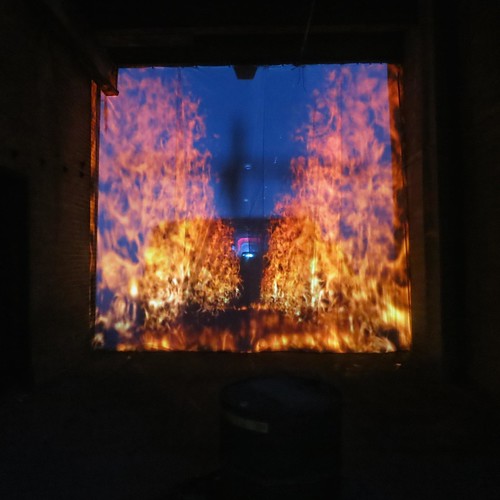
Eric Corriel at LUMEN 2014
Because the field's so crowded, I'm reluctant to call the "Disputisoun bytwene a cristenmon and a jew" [Disputation between a Christian and a Jew, hereafter DCJ] one of the stranger Middle English poems; but it is a particularly weird one. Here's a recent summary:
[DCJ tells] how an English and a Jewish theologian disputed in vain at Paris. The Christian argues the Virgin Birth and the redemption through Christ's crucifixion and the Jew favors a God who has no son. In order to convince the Christian the Jew suggests he will prove the power of his religion by showing the Christian a vision of Christ on the cross. They travel to the Otherworld where the Christian proves the vision of the crucifixion to be a false one by confronting it with a consecrated host. The Jew admits the errors of his ways and converts to Christianity. At this point the Christian is identified as Sir Walter of Berwick, who was made a penitentiary by the pope.
Among these otherworld encounters are Arthur and his Round Table (!), a dinner with nuns, squires, and the recital of romances, and, finally, what turns out to be a fake crucifixion (a crucifiction?). [For another summary, see my comment to this 2008 blog post]

Luuk Houwen, whose summary I quote above, offers us one of the only articles on the DCJ, and, so far as I know, the only one published this century. I'm convinced by his argument, which is essentially an identification of its genre: the poem's not a romance, but a religious vision, developed from one of the many exempla designed to prove the sanctity of the Eucharistic Host.

Houwen, however, doesn't do much with the Jewishness of the disputant, and probably for good reason: Thomas of Cantimpré's exemplum, a likely source, features a contest between a heretic and a Christian; in another analog, from a Life of St Wolfram, it's pagans and a not-quite-yet Christian. The DCJ adds Arthur, the Nuns, and the other elements of what we might call a specifically British otherworld. But, apart from calling its figure of unbelief a Jew, it doesn't explicitly add anything to the tradition that's clearly about the Christian engagement with Judaism.

Still,some other differences from the analogs demand our attention. There's the Jew's similarity to Chaucer's Clerk of Orleans, in the Franklin's Tale, who similarly conjures up a chivalric entertainments:
he shewed hym, er he wente to sopeer,
Forestes, parkes ful of wilde deer;
Ther saugh he hertes with hir hornes hye,
The gretteste that evere were seyn with ye.
He saugh of hem an hondred slayn with houndes,
And somme with arwes blede of bittre woundes.
He saugh, whan voyded were thise wilde deer,
Thise fauconers upon a fair ryver,
That with hir haukes han the heron slayn.
tho saugh he knyghtes justyng in a playn;
And after this he dide hym swich plesaunce
That he hym shewed his lady on a daunce,
On which hymself he daunced, as hym thoughte.
And whan this maister that this magyk wroughte
Saugh it was tyme, he clapte his handes two,
And farewel! al oure revel was ago,
And yet remoeved they nevere out of the hous.
That's certainly a connection worth developing, perhaps having to do with the relationship between preachers, sorcerers, and storytellers; here, though, I'll just suggest that we put the poem in conversation with the medieval relationship between Jews and materiality, specifically, the way that medieval Christianity tended to insult Jews by associating them with materiality. For Christians, Jews were excessively literal, concerned only with brute facts and not with spiritual truths, stone-hearted, driven by instinct rather than choice, with bodies that were excessively corporeal: stinky, prone to bloody fluxes and--in the Siege of Jerusalem among others--dismemberment (see Steven Kruger's The Spectral Jew and Suzanne Conklin Akbari's Idols in the East). One of the goals of the new materialisms is, or should be, to drain the material insult of its force by, at once, recognizing the presumptively human/Christian/whatever as material too and the material as more agential or, at least, less foundational ("the ground of our discussion is" etc). More wobbly on the material side, less free on the human/etc side, with a serious reassessment of what we mean when we use the word "agency." Things like that.

That's important, but it's harder to implement in this case. What's strange in the DCJ is that the Jew isn't obviously associated with materiality, but with illusion; it's the Christian who wields the material object, the consecrated Host, that -- like the clap of the Orleans' Clerk--bursts the illusion apart, returning us to the world of dark, solid matter:
Whon he was schewed to the siht,
He barst þe Buyldynge so briht.
Bote was derk as the niht,
Heore sonne and heore mone.
If we just take the Jew as being made to stand in for the general unbeliever, that's not a problem, except, of course, for the general fact of its prejudice. But if we take the Jew seriously as a Jew in a Christian poem then we need to work harder.

Host desecration stories with Jewish desecrators, like the Croxton Play of the Sacrament, which Houwen cites, or several exempla in British Library, Royal 18.B.23, feature a kind of profane belief in the material sanctity of the Host. The Jews obtain a Host, by theft or purchase or deception, and then mistreat it until the Host reveals its truth. A sample, since BL Royal 18.B.23 isn't online. A Jew bets a Christian 20 pounds that his dog would eat a consecrated Host. The Christian accepts the bet, and then, by pretending to be sick, tricks a priest into slipping him the goods. When he extracts the uneaten Host from under his tongue and delivers it to the Jew, here's what happens:
Þan [the Jew] toke þe Hoste, þat was in þe purs, and cast it a-fore þe dogge. And a-noon þe dogge fled and wold haue renne owte of þe hous. Þan þe Iewe cached hym a3eyn and chereshed hym, and euermore he drewe a-bake. Þan þe Iewe saw þat he wold not for no cherishynge take itt, þan he bette hym. And anone þe dogge fell downe on all iiij knees and did as he couthe reuerence to þe Sacramente. Þan þe Iewe was wode wrouthe and toke a staffe and bette þe dogge, and toke þe dogge in is armes and put hym þer-to. And þe dogge felte þat he wold haue mad hym to haue eten itt. And sothely he stirte vp to is þrote and voried hym. 
Þan anoon þe Cristen man ranne to þe preeste þe wiche þat houseled hym, and told hym how it was and of þe dogge, suche an vnresonable beeste, how þat he did is dewe reuerence to Goddes bodie in þe forme of brede. 
So be þis meracle þou may be stered to beleue þer-on in þat, þat an vnresonable beeste do dud, þat neuer had techynge of holychurche. (130)
This isn't at all what happens in DCJ. Its Jew doesn't have any particular belief either way in the Host. He doesn't want to do things to it to prove that it's mere material. He's even, before its reveal, indifferent to it. Rather -- and this proposal is probably where I'll open discussion the next time I teach it -- the Jew in the DCJ champions visible immateriality, and the Christian invisible materiality. The DCJ isn't so much a dispute between materiality and its other (whether this is spirit, choice, free interpretation, immortal stability, &c) as it is between the falseness of visible things and the true materiality of invisible things. On the other side of (false) vision, we haven't arrived exactly at the realm of spirit, but at the one, true materiality of the Real Presence.

The trick, which I'll leave to my students, and to you, is to make this frankly rather dull reading more interesting.

[for more on/in the Vernon Manuscript, see here; and for a full TOC, here]

Tuesday, June 17, 2014

Two points: Digital Piers; Marsilius of Padua and the problem of "agency"

Ghada Amer at Cheim + Read
by KARL STEEL

Two quick points:

ONE. First, if you're a medievalist, particularly a digital humanities medievalist, and you're not reading Angie Bennett Segler's Material Piers blog, you're making a terrible mistake.

Piers Plowman doesn't get a lot of love around these parts. I'm not sure any of us here have ever taught it. For that reason, alone, you should be reading Material Piers. You know, to expiate our guilt. Or at least my guilt.

Here's a sample:
At present, it’s relatively established that the Vernon [manuscript] cannot possibly  be dated to prior to 1395. Good, fine. No problem. That’s the fourteenth century. BUT, and for me this is a big “but,” the Vernon is SO MASSIVE that it seems pretty much insane to me to date it to any year.  The majority of the manuscript, along with its almost as large sister the Simeon, was copied by a single scribe!! A.I. Doyle estimates that even moving at his fastest he couldn’t have completed the pair of them in under  FOUR YEARS, and it may well have taken up to eight. On top of that, there is the lavish decoration scheme with borders, initials, gilding and two full cycles of miniatures. The idea that the manuscript was both started and completed in the fourteenth century borders on preposterous.
That, frankly, is why I prefer dating V to “ca. 1400.” Because the “circa” itself implies a possible range of time. And in the case of the Vernon, that range is incredibly important. But more than that, it acknowledges the imprecision in dating manuscripts altogether. “Ca. 1400″ allows us to think about the slipperiness of dating things belonging that far in the past and about the time it takes to hand-make a material-textual object, to bring it into being one folio, one line, one letter, one stroke at a time. So, unless a manuscript is clearly and definitively datable to a certain decade, I prefer to leave it with its ambiguous date.
And here's a chart. which you can understand if you click through to the blog!


Why am I demanding that you read this Material Piers post in particular? Because it offers you the chance to do a bit of digital humanities work yourself. Read the post; lend a hand; and join me in swimming in a Piers-and-everything-else manuscript. I'll be doing that myself this afternoon.


TWO. The various so-called "new" materialisms tend to use the word "agency" a lot without doing much to figure out what the word actually means. My second Kalamazoo2014 paper, on spontaneous generation and "automatic" agency, tried to get directly at the problem by arguing, ultimately, that only a random break with mechanical causality can be recognized as truly agential. My solution has the posthuman advantage of moving questions of agency away from rationality and anthropomorphism, thereby avoiding the implicit humanizing at the center of many discussions of agency. It also has the dubious -- and predictable -- advantage of discovering an aporia at the agency's heart.

All this is by way of setting up a passage from Marsilius of Padua's Defensor Pacis:
This term "ownership" is used to refer to the human will or freedom in itself with its organic executive or motive power unimpeded. For it is through these that we are capable of certain acts and their opposites. It is for this reason too that man alone among the animals is said to have ownership or control of his acts; this control belongs to him by nature, it is not acquired through an act of will or choice. (II.12.16, p. 193)
Adhuc dicitur nomen dominii de humana voluntate seu libertate secundum se, cum ipsius executiva seu motiva organica potestate non impedita. Hiis enim possumus in actus aliquos et ipsorum oppositos. Propter quod eciam dicitur homo inter animalium cetera suorum actuum habere dominium; quod siquidem a natura inest homini, non voluntarie seu eleccione quesitum. (MGH 271)
The origin of human agency ("ownership of control of his acts") isn't human agency itself. Rather, it's inherent to humans, unchosen. Agency itself therefore is free from human choice at its root. Still, it's determined, somehow, by "nature." If the power of choice is instinctual, then it's hard to imagine that humans have "complete freedom" ("libertas," I think). This problem of the origin of agency is a problem, especially, for Marsilius, as he's well-known for arguing that "the supreme power resides in the body of the citizens [and not the Church], who make the laws, and choose the form of government, etc [and that t]he prince rules by the authority of the whole body of citizens": what is the origin of the people's will?

But the problem is also general to agency and to human agency especially, perhaps the paragon and model of agency in any discussion of the term. The problem of agency intersects with a host of other problems, of materialism, humanism, racism, and indeed the history of antisemitism.1 It's a problem whether we're talking about rats or stones or garbage or the tedious Pauline differentiation between Christian spiritual reading and Jewish literal reading or, for that matter, the whole spirit versus matter binary that's inherent to all considerations of agency. For any of these, the power of agency simply doesn't seem to be reducible to any first cause. Otherwise, it wouldn't be agency but rather the beginning of another mechanical chain.

In short, any clear claim to agency strikes me as unwarranted. And the same goes for any scorn of materialisms or posthumanisms because their "discovery" of agency in nonhuman objects.

It's obviously ironic that I should end up so automatically in an identifiably deconstructive aporia. I'm very much back in Derrida's critique of the "auto" of autobiography in, for example, The Animal that Therefore I am, where he does his Derridean thing with the "ipseity, indeed sui-referential egoity, auto-affection and automotion, autokinesis, [and] autonomy" (65) of the presumptive presence of the self-generated automatic I, and with the pretense of "auto-motricity, a spontaneity that is capable of movement, of organizing itself and affecting itself, marking, tracing, and affecting itself with traces of its self" (49). You can imagine what happens to agency when Derrida finishes with it.

Maybe commentators can suggest another way forward?


1 Or, for that matter, colonialism and its various justifications. See this new post from Corey Robin, on the dangers of presidential boredom, where he recalls Tocqueville's enthusiasm for the Opium War: "So at last the mobility of Europe has come to grips with Chinese immobility!"

Friday, June 06, 2014

SATISFACTION: Interested; Omnipotent; Implacable

by KARL STEEL

First, of course, read Jeffrey on Allan Mitchell's Becoming Human, which I'm co-endorsing as a masterpiece. I'm promising you my own, briefer post on it, now.

Second! A Kalamazoo paper, nearly a month on, from the second Impossible Words session, summarized by Jeffrey like this:
Some fragments: BLISS as an infusion of being as well as a theological colonization of joy (Randy Schiff); places can survive when human settlements do not, so that SURVIVAL is enwrapped in a plural physics, a tale of migration (Dan Remein); an afterlife tells us that our actions have consequences beyond human calculability, beyond SATISFACTION, a knowledge that resonates with ecology's inhumanism (Karl Steel); within the "I" might be excavated a humble flicker of multiplicity to hold onto (Chris Piuma); TOLERANCE operates at every scale and within every discipline (from cancer to justice to botany) and exceeds them, as supplement (Laurie Finke); COMMUNITY is impossibly built of a with (cum-) and an obligation (-munus), we are incapable of paying the debt of distance from self that community demands, and yet a kind of infinite perishing shows another way (George Edmondson); if we are not gobsmacked, then who are we as a COLLECTIVE (Anne Harris)? The Q&A were fantastic, and a topic for next year's roundtable even spontaneously emerged, "Lost Words."
To which I'd only add that the Q/A circled around the horror of collectives. Many of us felt that the call and response of the Material Collective was a bit "creepy."

My paper follows:

Those of us who do Middle English know that Pearl offers a picture of the “more and more” of God’s grace. In its 101 stanzas -- notably, not the expected 100 -- merely commercial economies, represented so neatly by the grieving jeweler, break open to make way for God’s unending generosity. Pearl teaches us that life, at its best, isn’t fair, and thank goodness for that.

So, Pearl gives us two ways of not being satisfied , the one insufficient, the other beyond sufficiency. We have the disatisfaction of the jeweler, greedy, malcontent, envious, impatient on his side of the river, sad at the death of what might be his daughter, more than a bit jealous that she’s made such a good match; and then there’s God’s infinite unsatisfiability, always able to do more than what’s required, always exceeding what’s on order, an unsatisfiability whose eternal grace keeps on coming, because -- to paraphrase Anselm -- it’s its own cause, its own power, its own necessity.1

But for a fuller picture of God’s unsatisfiability, we have to take another trip to the otherworld, travelling, as you might expect, in the other direction: our guide will also hail from the late fourteenth century, the Middle English translation of the Vision of Tundale, a representative medieval best-seller if ever there was one, with some 150 Latin manuscripts and translations into at least 12 vernaculars. It’s sometimes taught. As you might recall, Tundale’s a wicked Irish merchant, keen on collecting debts, who, after falling into a coma, travels first to hell and then, more briefly, into heaven.

The vision says that God’s mercy “passes all things” (39; 813), while the demons, watching Tundale elude their grasp, complain that God “should reward each man according to what he has done” (275-6), that God, in other words, should just do the right thing, and only that. God being God of course does more. The deeper Tundale’s infernal journey, the deeper the pain: “he thought the pain seem to be more than all the pain he had encountered before: that pain surpassed all other pains” (403-5; see also 760-64), and the more he encounters “souls in pain without end” (1128), “in endless pain” (1163), who can do nothing but cry "welaway" (462; 1130), who can suffer “yet might they not fully die” (1080).

As we might expect, doctrinal debates worried over the justness of such eternal punishment. Hugh of St Victor’s De sacramentis explains that sinners wanted to sin eternally, so of course they should be punished eternally; while Aquinas heaps up a jumble of reasons, including that sin “offends God Who is infinite,” and since “punishment cannot be infinite in intensity, because the creature is incapable of an infinite quality, it must needs be infinite at least in duration.”2 Here, presumably, the antecedent, the it, refers to the duration of both punishment and sinner, who endures, “infinite in duration,” without ever fully dying.

Now, it’s easy to see how the same door that opens to infinite mercy also opens to infinite suffering: God is the sovereign, whose unregulated, self-generated goodness at once establishes and suspends the order of justice, with everything that follows from that.3 But this operation, which, essentially, flips or reverse engineers Schmitt’s Political Theology away from the secular and back towards the theological, makes God human, just as awesome and frightening as any other king.

God’s inhuman infinity requires that we not be satisfied with that. To grasp God’s inhuman horror more fully, we have to get him off his throne and sense the impossible, how he’s invisibly and impalpably everywhere. God’s time is beyond ours; his order beyond ours; his realm one that none of us, at least not here, can penetrate fully: you’ll remember what happens to the Pearl-dreamer when he tries, in his frenzy, to slip across the river, while Tundale just as badly fails in trying to get into the furthest reaches of heaven.

I’m saying that God offers a chance to get totally inhuman. He’s so much more than a sovereign. He--or the divine it--operates at a scale that no human action, no human conceptualization, could ever satisfy. And yet this It still takes an relentless interest, condemning us or saving us according to its own unlimited ends, far beyond anything that we could think just.

Timothy Morton’s Hyperobjects, on the topic of Very Large Finitudes, says that there’s “a real sense in which it is far easier to conceive of 'forever' than very large finitude. Forever makes you feel important. One hundred thousand years makes you wonder whether you can imagine one hundred thousand anything.”4 Fair enough, but here’s a counterproposal: what the afterlife tells us is that our actions have consequences far beyond anything we could ever imagine. Something out there is taking an interest, disproportionate to our comprehension, but proportionate to Its own, rewarding or condemning us according to calculations that we will enjoy, or suffer, undergoing without understanding, and -- given that this is an eternity -- without ever giving us an out. Without ever being satisfied that we will have done enough for It, in It.

Having run my human time out, I’ll leave it to you to develop the ecological consequences.


1 Anselm of Canterbury, Cur Deus Homo, Chapter V, in a dizzying attempt to save God from having something so compulsory as a motive: “God does nothing of necessity, since nothing whatever can coerce or restrain him in his actions. And when we say that God does something by necessity, as it were, of avoiding dishonor--which, in any case, he need not fear--it is better to interpret this as meaning that he does thing from the necessity of preserving his honor. Now this necessity is nothing but his own changeless honor, which he has from himself and not from another, and on that account it is improper to call it necessity.” In Eugene Fairweather, ed, A Scholastic Miscellany: Anselm to Ockham (Philadelphia: Westminster Press, 1956), 150. [see also Aquinas ST 1a 2ae 112 art 1, “Nothing can act beyond its species, since the cause must always be more powerful than its effect. Now the gift of grace surpasses every capability of created nature, since it is nothing short of a partaking of the Divine Nature, which exceeds every other nature. And thus it is impossible that any creature should cause grace.”
2 Hugh of Saint Victor, On the Sacraments of the Christian Faith (De Sacramentis), trans. Roy J. Deferrari (Cambridge, MA: Mediaeval Academy of America, 1951), 468. Also see Aquinas ST ss 99, Art. 1, "quia per eam contra Deum, qui est infinitus, peccatur. Unde, cum non posset esse infinita poena per intensionem, quia creatura non est capax alicuius qualitatis infinitae; requiritur quod sit saltem duratione infinita"
3 Carl Schmitt, Political Theology: Four Chapters on the Concept of Sovereignty, trans George Schwab (Chicago: University of Chicago Press, 2005), 38.
4 Timothy Morton, Hyperobjects: Philosophy and Ecology After the End of the World (Minneapolis: University of Minnesota Press, 2013), Kindle location 1095. Obviously, medievalists would lean on this point a bit with the way that Very Large Numbers work in, for example, the Chansons de geste.

Wednesday, February 12, 2014

The insects and the miller / The krycket & þe greshope

From the sketchbook of Villard de Honnecourt.
by KARL STEEL

(oops! as I was writing this, Jeffrey was writing a post himself, which you should read NOW).

Here's a macaronic, presumably late 15th-century poem from Peniarth MS 356b, which I ran across yesterday in Robbins' Secular Lyrics of the XIVth and XVth Centuries (2nd. ed), p. 104.

The krycket & þe greshope wentyn here to fy3ght,
With helme and haburyone all redy dy3ght;
The flee bare þe baner as a du3ty kny3th,
The cherubud trumpyt with all hys my3th.
Salamandraque cicada domitatum perereterunt,
Galiaque cum lorica presto se parauerunt;
Musca vexillum portabat vt miles egregius,
Scarabius buccinauit totis suis viribus.
The hare seyte a-pon þe hyll & chappynd here schone,
And swere by the knappes wich were þer a-pon,
That scho wowld not ryse ne gon
Tyll sche se xx howndes and a won.
Lepus super montem se ipsum collocauit,
Et suos sotulares laquitissinauit,
Et per laquitissos ipsequen iurauit
De lustro surgere nec ire voluit
quousque vigenti canis vnum videret.
Þe myler sedet o-pon the hull
and all þe hennes off the town drew hym tyll;
The mylner sayd, 'schew, henne, schew!
I may not schake my bage for you.'
Molendinarius super montem sedebat,
gallinarum ville ad se copia currebat;
Molendinarius inquit, 'sco, galina, sco!
Meum saccum pro uobis vrcillare non possum.'
I love this little poem, written in the end--I think--of a grammar, and therefore, perhaps, intended for children (at least per Nicholas Orme, "The Culture of Children in Medieval England," Past & Present 148 (1995): 48-88 [82]).

I couldn't tell you much more than what you see here. Crickets and Grasshoppers go together, as in this children's natural history, or in this recent nature poem by Dan Beachy-Quick ("The poetry of the earth never ceases / Ceasing" &c., which edit I'm chagrined to have to be reminded, is a play on a little poem by a not-exactly-minor poet by the name of John Keats, as David Hadbawnik had to remind me), and also in scripture, Leviticus 11:22, although not in any version of the Bible, so far as I know, that would have been known in fifteenth-century Wales (Vulgate here; Wycliffite here, for example).

In the absence of any criticism, in the absence of being able to consult the manuscript online, and therefore in the absence of much of the needed cultural context, what can we do with this poem? On twitter, I called it "A great little macaronic poem of manuscript marginalia come to life" (a point, minus the "great," already made by Douglas Gray), and that might be enough, alone.

If we want to take this as a children's poem, and still respect it for all that (and why not?), and if we want to take this as a kind of nursery rhyme, with many of the features of the genre, we might observe the close relationship of children and insects, the very small, and the nervous (the hare awaiting the 21 dogs). Children work at a different time than we adults (presuming on my audience!), and a different scale. They're more vulnerable, smaller, faster, with time moving more slowly (my birthday comes around so quickly these days). My wife recently introduced me to Delmore Schwartz's "Dogs Are Shakespearean, Children Are Strangers," whose first line is just that, and whose entirety you really, really need to read if you don't already know it.

We might take this little poem, in its bizarre resistance to interpretation, as just that, a stranger.

Or we might do more with it, paying attention to its language, form (why the five-line stanza in the middle?), and vocabulary. What, if anything, would you do with it?

(on children and animals, see Jeffrey's ancient blog post, since turned into an article, most recently reprinted here. And for more on Villard de Honnecourt, see Haylie Swenson's essay in postmedieval 4.3)

Wednesday, October 23, 2013

Hearing Kneeling - snapshot from tonight's Friar's Tale Teaching

by KARL STEEL

Jeffrey's inspired me to uncork my blogging a bit more. Read his post, here, and also have fun with this one too. And for the sake of W00t! get your hands on Fradenburg's new book. And then come back.

From the Friar's Tale, Jill Mann ed.

"Thow lixt! quod she, 'By my savacioun,
Ne was I nevere er now, widwe ne wif,
Somoned unto youre court in al my lif,
Ne nevere I nas but of my body trewe.
Unto the devel blak and rough of hewe
Yeve I thy body, and my panne also!'
     And when the devl herde hire cursen so
Upon her knees, he seide in this manere: &c.

When the devil HEARD her curse UPON HER KNEES. He heard her on her knees. Really?

I told my students to close their eyes, and I got down on my knees behind my desk and menaced them with a whispered, "Damn you all to hell!"

"So, was I on my knees or not?"

They pretended not to be sure.

How do we know if the old widow's sincere? I mean, apart from the whole medieval culture of gesture, what kind of synaesthesia does certainty require, when the voice has to be supplemented with gesture in order to be believed? And is this tale, so much about intention vs. words, resolved with action, neo-Donatist or not?

That was tonight's class. The secret kneeling: highly recommended. The move into demonic synaesthesia: even more recommended.

Monday, July 26, 2010

Erkenwald and the Muslims

by KARL STEEL

For thoughts on NCS, please continue reading Jeffrey's post below, late edit, Derrick Pitard at "Gladly Wolde He" for late medieval devotion at NCS, and, as well, Miglior Acque, who writes:
the highlight of the conference, and certainly among the conference's most important papers, was one that was never mentioned again. This is most curious considering how much time we spent talking about manuscripts, theorizing about manuscripts, salivating over manuscript illuminations. Estelle Stubbs gave a paper on the morning of the first day in which she identified the famous 'Scribe D' as John Marchant. The importance of this scribe in copying work by Chaucer has always been recognized, but his identification now allows us to place this copying in a much more specific context (and Stubbs threw the Guildhall into relief in this respect). It was a groundbreaking piece of work, compellingly and elegantly presented, and should have been the talk of the conference.
Now, back to me.

If you were up at 9am on a Siena Monday, and decided to head out to the train station, you might have heard the latest work on my continuing Erkenwald project (earlier versions here and here). The paper? "The Past as Past is its Disappearance: Erkenwald and the Jews": the interested may look for the whole paper elsewhere, but my argument, in essence, was to assert that the past Erkenwald creates (and erases) is not only pagan but also (what it figures as) Jewish, and that it figures this Jewish past as past (which is to say static and ultimately untouchable by the 'present'). I offered only an implicit connection to the "Touching the Past" theme. To elaborate more, briefly: it's Erkenwald v. Faulkner.

Some evidence:
  • Erkenwald's opening explodes with multiple temporalities, which it just as quickly resolves into two times: the past (time of law) and present (time of grace), as if the poem explicitly illustrates how to condense the heterogeneity of time into coherent temporal polities;
  • Among the "pagan" temples the poem converts to Christianity is "Þe Synagoge of þe Sonne," which is "sett to oure Lady" (21): since Gollancz the criticism has ignored the "Synagogue" or apprehended it as yet another pagan temple. I read it, however, as signaling a particular building, a synagogue taken by King Henry in 1243, given to the Brethren of Saint Anthony [paranoiacs will suspect a porcine insult in this dedication] and rededicated as a chapel of Mary (Close Rolls Henry III, 1242-47, 142), an event recalled in the sixteenth and seventeenth centuries and perhaps also in the intervening centuries (follow the link above to the paper itself for a tendentious sophisticated exegesis of the "Synagogue" being off-kilter from the central site of the poem, the demolished [not converted] temple where St Paul's would be built);
  • As Erkenwald criticism knows, the closest analogue for its unbaptized righteous judge appears in the Trajan material of either Piers Plowman B.XII.270-95 (Schmidt ed.) and C.XIV.194-217 (Pearsall ed.), or, more exactly, commentaries on Purgatorio 10.73-75, either by an Anonymous Lombard (1325) or by Iacobo della Lanna. Trajan's righteousness? He has his own son executed for murdering a widow's son. Trajan includes himself wholly within the law, utterly committed to following it even if doing so means destroying his own progeny. He is therefore at once a figure and victim of merciless justice, of law that offers only destruction, no expiation. Erkenwald's judge is likewise a figure of justice without grace, exit, or future: the substitution of pagan emperor for pagan judge thus intensifies judicial elements already present in the original story or indeed in Pauline doctrine as it tended to be understood by medieval Christianity (key texts: Romans 4:14 and Galatians 5:4-5);
  • Finally, because honestly I could go on, Harley 2250 (made in 1477), a miscellany of exempla, clerical guides, and saints' lives (partial listing here; thanks to Alan Stewart for sending me a more complete list), where our sole surviving copy of the poem resides, contains little or no reference to England's pagan past, barring its Alban legend (I think the same as Laud 108 South English Legendary version), of interest no doubt because it is an English martyrdom. It does, however, include (at least) three works concerned with Jews: one on the conversion of the Jews of Beirut, another on a Jew robbed between Bristol and Wilton, saved by the virgin, who converts, and another, notably, on the Jews' vain attempts to rebuild their temple. No doubt I will talk more about this at the 2011 MLA Convention in an Erkenwald session organized by Philip Schwyzer and starring Seeta Chaganti, Naomi Howell (U of Exeter), and me, your most humble of sinners.
Read on for the Muslim question!

The converted temples of Erkenwald's opening also include these: "Þat ere was of Appolyn is now of Saynt Petre, / Mahoun to Saynt Margrete oþir Maudelayne" (19-20, that which was dedicated to Apollyon [or Appolo] is now dedicated to Saint Peter, and Mohammed to either Saint Margaret or Magdalene).

I'm asking you, blog readers, lurkers and otherwise, to weigh in. As Sarah Salih asked (and I paraphrase: apologies for memory slips), in Erkenwald's grand narrative of past and present, of creating the past and separating it from what it wants to be present/presence, what do we make of the continuing present of Islam, this most recent of world faiths, situated here in the distant past of London as it is situated in the now of Christianity? What to make of these, given my arguments about the "past as past"? No doubt Mary Kate's paper on Chaucer and the Anglo-Saxons could help here.

My answer was, I have to say, a bit weak. I had read "Synagoge" closely, so in all fairness I couldn't just read past the Mohammed reference. So: I answered by speaking of the poem's "Islamic idol" as further figuring the inability to close off the past as past; more simply, the Mohammed reference might suggest the resolution of all non-Christian faiths into one homogeneous glob: pagans, Jews, and Muslims are all equally lost; alternately alternately, we might understand that Erkenwald grants Islam an antiquity medieval Christianity tended to deny it, thus undercutting one of the key arguments against Islam, namely, its newfangledness.

Surely, though, there's more that could be done?

(postscript: for the image, above: I read Erkenwald as medieval kindred to John Stow's early modern account of a discovery made during repairs to Ludgate in 1586: here, mixed in with the supposed remnant of London's legendary foundation by the pagan King Lud, workers discover a stone “grauen in Hebrewe caracters,” the very image of what Christianity understood to be its foundational, superseded past.)

Tuesday, October 14, 2008

Weeping with Erkenwald, or, Complicit with Grace

by KARL STEEL

During Steven Kruger's plenary at SEMA, I got to thinking about the dynamic of supersessionarity in St. Erkenwald. I'm sure K. Biddick has handled this somewhere, or probably any number of Erkenwald's many critics, so apologies in advance, and also apologies for not having a copy in the house of the poem in Middle English.

If you don't remember Erkenwald offhand, here's the plot, cribbed from the very first paper I wrote at Columbia, back in 1999:
A group of masons discover a tomb while renovating St. Paul’s. In the tomb is an incorrupt body dressed as a king. Efforts to determine the identity of this supposed king prove unsuccessful, so the Bishop of London, Erkenwald, is summoned back from a visitation. After mass and prayer, the corpse speaks, revealing itself as the most righteous of judges under the pre-Roman kings “Sir Belyn [and] Ser Berynge . . . his brothire” (l. 213). Despite his righteousness, the soul of the nameless judge is still in Hell. Erkenwald prays for the soul, weeps in compassion, and the formula of baptism and a single tear baptizes the judge. The judge’s soul ascends to heaven, his body disappears into dust, and Erkenwald and the community of London are united in praise of the inscrutable mercy of God.

The poem begins "Not long after / Christ suffered on the cross and sanctified Christendom, / The city had a saintly and sanctified bishop; / And it happened that Erkenwald was the holy man's name." It then turns to Augustine's conversion of the Insular pagans, when in London

" at that time the temple most eminent
Was partly pulled down and purified by dedication,
Having been heathen in the days of Hengist"

Apollo's temple becomes St. Peter's church, Mahomet's St. Margaret's, Jupiter and Juno become Jesus or James, and the "Þe synagoge of þe Sonne was sett to oure Lady." The note to my sad Penguin edition explains "'Synagogue' in Middle English was used to describe any heathen temple. Probably the identifications in this stanza were determined by alliterative needs." (17 n5), a point supported, just barely, by the MED.

But in that synagogue, converted to a church of "oure Lady," I can't help think of St. Mary’s in Jewry, which Robert Stacey (“The Conversion of Jews in Thirteenth-Century England.” Speculum 67 (1992), 265) tells me was a converted synagogue (anyone have pictures? Know if it's still around? Know what happened to it?).

And, driven by that thought, I wonder at the very opening of the poem: I know Middle English poetry is not notable for its historical precision, but the historical Erkenwald was bishop some 700 years after the purported death of Christ. But if he's set "not long after" the death of Christ, Erkenwald very closely follows the cruxifixion and resurrection and thus the supersession of Judaism by Christianity. Why not understand London's converted heathen architecture as the converted Jewish architecture of post-Expulsion England (something to think through for your stone project, Jeffrey?)? Why not take "synagoge" literally instead of as a cheap metrical filler (after all, another word might have done the trick just as well, or as poorly). Why not imagine that the builders discover in the foundation the foundation of their faith, the Jewish bedrock that literally held up several London structures? Why not hear in the noise of the bells that end the poem a triumphant counter to the enforced silence of London Jewry in the 13th century, who were first told they had to worship quietly before being expelled altogether a few decades later? Why not hear in the "New Werke" the New Work of Grace? I realize the poem probably dates to the 1390s, which is rather late for all this, but, otherwise, why not?

All this is by way of setting up the question I asked Kruger after his talk: "Why a judge?" The story's normally about Trajan, an emperor, so why make the change? Why a judge rather than a king? I remember suggesting (which is not to say I actually suggested anything of the sort at that moment!), clearly this is a supersessionary narrative about the passing away of the Law, represented by the good judge, in the time of grace, represented by Erkenwald's weeping affect. The potency of his tears utterly dissolves the Law, pagan, or Jewish (which, barring the Natural Law that predated the Mosaic Law, is virtually coterminous with "the Law"), or even the Christian Law that left the righteous judge languishing in Hell (note, I prefer to aim at a reading of utter dissolution of any Law to what I recall as the standard approach to the crux of the judge's salvation, viz., to snap the miracle back into some clear doctrine and so to give it back to a law while taking away the truly miraculous).

This reading of the poem as a supersessionary allegory leads me to my final question: our philosophical interests at ITM tend towards affect and affirmation; we tend towards refusing the "said" or "being" in favor of the "saying" or "becoming"; we tend to find the rigorous application of any one critical model, particularly models of the Law (stereotypically psychoanalysis), interesting at best, but often enervating. We find ourselves on the side of the miraculous, l'avenir, on the side of surprise. And if not "we," then certainly "I." If I had to place myself anywhere in St. Erkenwald, I would find myself in Erkenwald himself, surprised by the efficacy of my own tears, unsure what to do other than praise the moment and what it wrought. I would linger in the liquefaction of the Judge, of the bodily contact between the Bishop and the Corpse in this in-between zone of fluids. But given how I have read the poem, to what degree am I conditioned by or complicit in ongoing supersessionary narratives? In whose camp do I fall when I refuse the Law?