... to Kofi Omoniyi Sylvanus Campbell for (1) winning the proliferation of middle names game and (2) having Literature and Culture in the Black Atlantic: From Pre- to Postcolonial now in print.
My copy just arrived. It's a handsome book, and if you follow the link above you'll see why I recommend it so highly.
Tuesday, August 08, 2006


Time's Machines
In honor of NCS and what Carolyn Dinshaw called the "multiple and
heterogeneous temporalities" of medieval culture in her admirable
paper, here is a short excerpt from Medieval Identity Machines (2003, but this particular chapter was initially composed in the wee hours of the morning about a year after Kid #1 was born, so c. 1998). In this initial section I was trying to survey some work on the subject and demonstrate how it might be of use to medievalists who'd like to think history outside of unidirectional models such as "time's arrow," as Stephen Hawking called that relentless figuration.
Note that these paragraphs are amply footnoted in the book, but I've lopped the notes off here for ease of reading.
----------------
Although the adjective "exciting" is not often linked to the noun
"medieval studies" in the popular imagination, these are in fact
invigorating times in the field. Anyone who has kept abreast of the
recent proliferation in journal articles, edited collections and
monographs surely recognizes that as a discipline medieval studies is
critically engaged in a process of self-reinvention. A geography that
had begun to seem too familiar feels somehow new, capable of inspiring
that wonder (admiratio) so prized by medieval writers themselves. Yet
however occupied medievalists have been with rethinking interpretive
practices and idées reçues, we have yet to undertake a sustained
examination of the very thing which distances medieval studies from
more contemporary-focused disciplines. We have not yet approached
critically the question of time. With a few notable exceptions, time
has been doomed to the vast realm of that which is unthought, perhaps
because it at once seems so obvious (as did gender and race, until
recently), and on closer examination seems impossible. "What then is
time?" Augustine of Hippo famously wondered. "Provided that no one
asks me, I know. If I want to explain it to an inquirer, I do not
know" (Confessions XI.xiv). Few of us would dare second guess
Augustine, especially because whenever something new arrives in
critical theory, it so often turns out that the African bishop was
there long before. To speak of time is difficult, if not baffling, and
for that reason alone time deserves closer analysis.
Contemporaneous to but not yet intersecting with the recent vigor of
medieval studies is a burgeoning critical literature on temporality,
an interdisciplinary dialogue to which philosophers, feminists,
physicists, cultural theorists, social psychologists, and literary
scholars have been contributing. This chapter examines some of this
recent work in its potential relevance to the study of the Middle
Ages. Medieval writers were just as enamoured of investigating the
complexities of both temporality (the nature and working of time) and
history (the transformation of time into narrative) as recent
theorists have been. Medievalists have in turn adroitly examined the
topic in monographs, scholarly essays, and editions and translations
of texts. My aim here, however, is not to analyze medieval time "from
the inside," employing an authentic conceptual language drawn from
surviving treatises on the subject in an attempt to get medieval time
"right." This introductory chapter might instead be described as
Boethian in its methodological ambitions. The author of five orthodox
tractates on theology, Boethius decided in his Consolation of
Philosophy not to employ the language of Christian exegesis, but
utilized exclusively the terminology and imagery of classical
philosophoi and auctores. Within this estranging discourse he
meditated upon divine providence and the relation of a single man's
suffering to the eternity of time in which it is encased. By thinking
the system from its exterior, by employing an unfaithful conceptual
mode which could only by the fifth century be labeled anachronistic,
Boethius was able to ponder the structure of the world anew. More
humbly, my intention is to survey recent critical work on temporality
to discover how time might be thought beyond some of its conventional
parameters, outside of reduction into a monologic history (especially
when "history" is understood as either simple context or a chain of
flat, serial causality); outside of enchainment into progress
narratives, with their "ever upwards" movement of evolutionary
betterment and abandonment of the past for a predestined, superior
futures; and outside of linearization, the weary process through which
a past is not encountered for its own possibilities, but either
distanced as mere antecedent or explored only to understand better the
present and to render predictable the future. In fidelity to the
themes of this book, I am most interested in engagements with time
that stress the open-ended movements of becoming over the
immobililities of being, that stress mutating interconnections over
the stabilities of form.
By rethinking temporality as "unfinished," intimately entwining the
past within "the future we must live" (Lee Patterson, Negotiating
the Past 45), medieval studies can productively form alliances
with three closely related schools of analysis: critical temporal
studies, a field of inquiry which receives its inspiration from
sources as diverse as continental philosophy and particle physics;
postcolonial theory, not only in its traditionally invoked arena of
English India, but also within an analytical frame derived (for
example) from the study of the Caribbean; and corporeal theory, that
disparate field devoted to the exploration of the human body in all
its perverse potential. The common thread that I will follow through
these intertwined discourses is their shared interest in Gilles
Deleuze and Félix Guattari's work on machinic assemblages, on what I
have been calling identity machines, ever-active conglomerations of
animated parts which resist constitution into those bounded and
eternal wholes that fascinated Augustine and Boethius. One of the most
important texts on medieval chronology, Bede's Little Book
Concerning the Fleeting and Wave-tossed Course of Time (known in
English succinctly but unpoetically as The Reckoning of Time)
concludes, naturally enough, with a discussion of "the eternal
stability and stable eternity" of paradise (71). Time's machines offer
no such "blessed repose," but operate in ceaseless motion, in strange
middle spaces unperturbed by questions of delineative beginnings or
definitive ends.
Nonlinear Dynamics
Time, it is often assumed, is an autonomous stream of unfolding
events, a unidirectional movement organizing past, present, and
future. This horizontal alignment is often referred to as "time's
arrow" or "clock time." In highly industrialized countries, the
omnipresent wristwatches, wall clocks, and digital displays attached
to everything from the exteriors of banks to microwave ovens and cell
phones assume that time is discrete and quantifiable. Time might flow
unceasingly in the chronologic model, but it can nonetheless be
arrested via division into measurable units of recordable duration and
regular repetition (I am writing these words at 5:17 AM, according to
the menu bar clock on my laptop, a time which will repeat in precisely
twenty-four hours, ad infinitum). Because it is part of a system of
culture, clock time can also be exchanged for other things which come
to be closely associated with it, such as money (via labor) or
redemption (via prayer). With its insistence on universality and
predictability, clock time is the indispensable base of any capitalist
society: how could interest be compounded or appointments kept without
a division of temporal flow into years, months, minutes, hours,
seconds? Jacques Le Goff labels the medieval version of clock time
"merchant's time," and sees in the twelfth century fairs of Champagne
an international nexus of commerce obsessed with precise temporal
measurement, integral to "the orderly conduct of business"
("Merchant's Time and Church's Time in the Middle Ages"). Merchants
who reaped profits from speculation and credit were condemned by
clerics for selling time, which belonged to God alone, but both groups
were united in their faith that time consisted of a past and present
organized by an immutable eschatology. The church and the laity
likewise agreed that lived time was knowable through computus, the
science of constructing an accurate calendar. Even if it could be
fragmented into potentially commidifiable pieces, medieval time was
ultimately a totalized system, bounded by eternity (Augustine's nunc
stans, the celestial "immutable now" from which temporal, created
beings were excluded) and guaranteed by an omniscient divinity who
dwelled, like all master signifiers, at that system's exterior.
Such standardized and reassuringly stable conceptualizations bear
little resemblance to temporality as described by contemporary
philosophers, scientists, and some non-Western societies. Clifford
Geertz argued that time in Balinese culture does not move, but exists
in a kind of eternal present (The Interpretation of Cultures). The
Kachin and the Hopi, according to Edward Hall, speak languages that do
not employ verb tenses. They represent time not as quantity but as
intensity ("summer is a condition: hot"). Biological time like the
circadian rhythms, pulsing in their primal regularity, is composed of
interlaced cycles that are not synchronous with the twenty-four hours
of the clock's day. Julia Kristeva uses a psychoanalytic framework to
argue that female subjectivity partakes of a uniquely gendered time
very different from the linear modalities of masculinist history and
civilization. Against "monumental temporality, without cleavage or
escape," Kristeva posits women's time, cyclic repetitions that are at
once extrasubjective, pre- or anti-human, and profoundly maternal
("Women's Time"). According to physics, time is irregular and not
strictly predictable in its flows. Relative rather than absolute, time
can speed up, slow down, grind almost to a standstill. Stephen Hawking
even writes of "imaginary time" in which there is no difference
between forward and backward (Brief History of Time 148). Bruno Latour
goes so far as to dismiss as a modernist fantasy the idea that time
ineluctably progresses. An effect rather than a cause, time (Latour
argues) is "not a general framework but a provisional result of the
connection among entities." History and periodization are therefore
the byproducts of such networks, "collectives of humans and nonhumans"
in which ideas and entities circulate, mutate, vanish and re-emerge
but do not inevitably ameliorate or evolve (We Have Never Been Modern
77). In Latour's formulation, time is unloosed from the flat space of
teleology, from determinative reference to origin and destiny. "No one
has ever been modern," he declares in his confidently nonprogressivist
mode, "Modernity has never begun" (47).
"Do we live in the same time or different times?" With this
disarmingly simple question Rita Felski identifies what might be
called the temporal crux: is time universal and uniform, or
multiplicitous and particular? Do we inhabit shared or incommensurable
worlds, coeval or discontinuous moments? "Is it possible," Felski
wonders, "to carve up the continuum of time into segments, to talk
meaningfully about men's time and women's time, Western time and
non-Western time?" (Doing Time 1). Such an articulation of temporality
may seem postmodern, with its delight in difference and the power of
the partial. Yet postmodernism, Felski argues, disavows "overarching
laws of development governing temporal processes" while nonetheless
deploying a problematic model of history. Conceptualizing time as a
triumphal succession of epochal stages (medieval to modern to
postmodern) and attendant sequences of enlightenment, postmodernism
has been unjust to women and minorities because it has for the most
part denied these groups temporal depth. Time might lose its arrow in
the postmodern model, lose its unidirectional purposivenes, yet
postmodernism's new and "dazzling plurality" is, according to Felski,
content to imagine that the disenfranchised possess only a present,
never a deep history (3). Felski's feminist intervention into the
problem of doing justice to the past is to advance a vertical model of
temporality. Like Latour, she rejects the purity of periodization and
the isolating force of epochs for a messy but mappable interlacement:
Felski refuses the traditional metaphor of a singular "river of time"
because the narrow banks of such a waterway would reduce the world's
immensity into a normative evolutionary framework. Yet Felski's
alternative figuration of numerous but "distinct and separate"
temporal streams fails an argument which stresses sameness within
difference. Her interpretive frame implies temporal contiguities while
metaphorically disallowing them. Streams, after all, have both an
origin and a clearly discernable end, the arche of a mountainous
source and the telos of the ocean's embrace.
Perhaps time is not in fact possessed of some fluvial purity, but
finds its companion element in the liquid solidity of lava, in
geological strata, in sedimentations of rocks. Hybridizing physics and
history, Manuel De Landa argues that time is possessed of a nonlinear
dynamic. History, in this formulation, does not have an exterior, is
not possessed by goals outside itself such as evolutionary progress,
equilibrium, or a drive towards advanced civilization. De Landa labels
the familiar stages of human culture (hunter-gatherer,
agriculturalist, city dweller) as phase transitions which are not
amenable to a simple developmental hierarchy:
Time, according to De Landa, can therefore be described as geological.
It flows in places, hardens in others, irregularly, with frequent
crystalizations (individuated moments of self-organization), drift,
unpredictable movements toward increased or decreased complexity. As
the sheer materiality of these images makes clear, this
conceptualization of time contains within it the possibility for
temporal short circuits. The present, always a work in progress, might
encounter within itself the sedimented past, thence to erupt with the
intensity of an unanticipated future. Gilles Deleuze, a philosopher
instrumental to De Landa's work, has similarly argued that "the past
and the present do not denote two successive moments, but two elements
which coexist: One is the present, which does not cease to pass, and
the other is the past, which does not cease to be but through which
all presents pass" (Bergsonism 59).
De Landa is among a growing cadre of philosophers engaged in a
rigorous rethinking of temporality by abandoning traditional
chronometrics and chronology, describing time instead as movement and
becoming. Building on the work of Nietzsche, Bergson, and (of course)
Deleuze, Elizabeth Grosz likewise writes that clock time is not
abstracted from scientific observation or analysis, but is instead the
imposition of a regularizing structure ("Thinking the New" 17). She
argues that time is activity, difference, and "a repetition [which] is
never the generation of the same but the motor of the new" ("Becoming"
5). A model which is at once "wholistic and fragmentary," Grosz's
articulation of temporality has as its main strength the ability to
conceptualize outside of some pregiven relation the interlacement of
past, present, and future. Time becomes an "intrication and
elaboration … that frees up, undetermines, and deflects rather than
causes" or mechanistically repeats ("Thinking the New" 28), opening
the present to difference, upsetting and resorting a past which is
many-layered, complex, too full, as well as pregnant with possible
futures.
To "free up" and "undetermine" the Middle Ages is precisely the goal
of those medievalists who have begun to realize that in order to
transform their discipline, they will have to supplant the
predictability of history with philosophically complex notions of
temporality. In the memorable words of Lee Patterson, historicism, the
dominant impulse in the field, "is always discontented" (Negotiating
the Past xiii). D. Vance Smith has therefore called for what he
describes as "irregular histories," accounts of oblivion rather than
of memory, of the possible rather than of the predictable or the
supposedly inevitable. "To think differently about the Middle Ages,"
he writes, "may amount to thinking differently about the world"
("Irregular Histories" 178). Louise O. A. Fradenburg argues that
psychoanalysis can move medievalists, "specialists in temporal
alterity," to a more complex engagement with the past than the
boundary-drawing mediations of historicism ("Psychoanalysis, Medieval
Studies and Religion"). Carolyn Dinshaw argues for time-bending "queer
histories," glossed as "affective relations across time" (Getting
Medieval 142) which touch the past "to build selves and communities
now and into the future" (206). Nicholas Watson likewise negotiates
the temporal intricacies of the past's life in and for the present
through an affective "zigzag" reading which embraces history's
tactility ("Desire for the Past"), while Paul Strohm argues that
medieval texts like Chaucer's Troilus are composed of multiple, "alien
temporalities," or "residues of an unexhausted past" provocatively
conjoined to "intimations of an uncompleted or unrealized future"
(Chaucer's Troilus as Temporal Archive"). Michelle Warren locates
medieval historiography in a border zone that is as temporal as
geographic(History on the Edge). Catherine Brown in a special issue of
the Journal of Medieval and Early Modern Studies devoted to
"Decolonizing the Middle Ages" convolutes the temporal trajectory of
the journal's theme and ponders what it would "feel like to be
colonized by the Middle Ages" ("In the Middle" 551). What if "time
turns around on itself," she asks, what if the medieval and modern are
coeval? After all, having careful studied the dynamics of chronology
(consideratis temporibus), Augustine concluded that Plato took all his
good ideas from Christ.
Critical temporal studies holds much promise for renewing the
medieval, but as an emergent discipline it has both weaknesses and
blind spots, especially in its unthought presentism and its difficulty
relating time to historical bodies. Grosz tends to privilege the
unforeseen future and the emergence of the new to such an extent that
she deracinates both. The past is often either wholly omitted from
consideration or becomes so abstract that it lacks any particular
content. Manuel De Landa argues that time is not only geological but
biological, a circulation of flesh, genes, and "biomass," yet the
section of A Thousand Years of Nonlinear History on
"Biological History" (103-79) is mainly about medieval towns in their
dependence upon nonhuman life and their "conversion of the world into
a supply region to fuel economic growth" (106). The flesh and genes
which he describes includes bodies, plants, and microorganisms in
their relation to urban structures, climate, ecosystem -- an exuberant
commingling in which some of the raced and gendered specificities of
human bodies are unfortunately lost. I would like to conclude this
section on critical temporal studies by considering an apparently
minor episode in a recent, best-selling book on time's malleability to
reassert the medievalist mantra that history matters. Even when
certain transtemporal claims have been accepted about time (about its
openness, about its lack of a fixed trajectory or eschatos), the
localized cultural matrix or meshwork within which time moves cannot
be disregarded. Time unfolds and enfolds within "individuations,"
creating what Duns Scotus called "haecceities," historical
differentiations and particulars. Time therefore cannot be divorced
from the material and social world, from particular significations and
from particular bodies.
The social psychologist Robert Levine has gained an international
reputation for his studies of how various cultures keep time
differently. In A Geography of Time, Levine concludes that
time is variable across culture because tempo ("the pace of life" "the
flow or movement of time") is culturally relative. Temporal flow is
quickest, Levine concludes, within industrialized cities possessed of
booming economies, large populations, cool climates, and "a cultural
orientation toward individualism" (Geography of Time 9). Tempo for
Levine is a measurable phenomenon, extracted via observation of
quotidian events like the speed at which a randomly selected
pedestrian traverses a crowded street. If time is discernable in the
movement of bodies across space, we should expect Levine to conclude
that time is, therefore, an embodied phenomenon. As he details the
different temporal flows of Rio, Boston, Japan, African villages,
however, one of the surprises of Levine's research is that his
devotion to detailing the velocity of human bodies in abstract
aggregates prevents him from examining the contingent and the local.
In New York, for example, the researcher encounters insurmountable
resistance as he attempts to replicate one of his standardized
transactions for measuring time, a protest which when taken seriously
casts his project of transforming bodies into temporal quantities in a
very different light. In an experiment conducted in numerous cities
throughout the United States and in thirty other countries, a single
postage stamp of standard denomination is purchased using a
handwritten note in the local language. Payment is always made with
the equivalent of a five dollar bill. The transaction is timed,
recorded, and compared with the identical transactions which have been
performed elsewhere in order to discover which locales have the
fastest tempo. When conducted at a post office in New York City,
however, the experiment does not unfold according to plan:
The episode is presented in Levine's text as a humorous anecdote, and
indeed it is quite amusing in context. But anyone who, like Levine,
bought a postage stamp in midtown Manhattan during the early 1990s is
likely to suspect something more lies behind the story than a typical
illustration of infamous "New Yawker" rudeness. Levine steps to the
woman's window and says nothing. He presents her with a note asking
for a single stamp and pays with a large sum of money relative to the
meager purchase. He expects her to comply without question, comment,
or evaluation (she is not supposed to have input into his experiment;
she exists purely in order to record the amount of time her body
consumes in order to fulfill a task, and within the parameters of the
exercise possesses no history or desires). One gets the feeling that
what Levine really wants from this postal worker in New York City is
the "luxury service" which he encountered in Japan, where clerks
wrapped stamps in little packages and provided receipts, unbidden
(133). What he receives instead are the angry words of a specific
person in a specific place whose refusal to play along with his demand
for silence and obedient service condemns his abstract experiment's
blindness to its context of gender, of class, and -- more likely than
not -- of race at an especially troubled time in the city's history.
Levine exorcises the embodied rebuke of this New York moment to the
abstract time in which the experiment supposedly unfolds by
transforming it into a humorous anecdote, by dissipating its force
into dismissive laughter.
Despite absorption into decorporealized abstraction, time remains a
phenomenon of the body, a possibility and a constraint of specific
bodies in historically explicable relations. These are lessons in
temporality which Levine could have learned from that burgeoning
conglomeration of fields known as postcolonial studies, a loosely
affiliated set of disciplinary practices that finds as one common
value the necessity of localizing identity machines, of excavating
their embedment in histories of race and gender and unequal
distributions of power, of seeing in their functioning processes of
cultural admixture, conflict, hybridization.
-------------
[The chapter continues with a discussion of postcolonial theory and temporality, then concludes with a consideration of a Foucault's fascination with a madman's lethal temporal-material-inscription device, a calibene]
heterogeneous temporalities" of medieval culture in her admirable
paper, here is a short excerpt from Medieval Identity Machines (2003, but this particular chapter was initially composed in the wee hours of the morning about a year after Kid #1 was born, so c. 1998). In this initial section I was trying to survey some work on the subject and demonstrate how it might be of use to medievalists who'd like to think history outside of unidirectional models such as "time's arrow," as Stephen Hawking called that relentless figuration.
Note that these paragraphs are amply footnoted in the book, but I've lopped the notes off here for ease of reading.
----------------
How to think of direction or trajectory without being able
to anticipate a destination?
-- Elizabeth Grosz, "Thinking the New"
I confess to you, Lord, that I still do not know what time
is, and I further confess to you, Lord, that as I say this I know
myself to be conditioned by time.
-- Augustine of Hippo, Confessions
Although the adjective "exciting" is not often linked to the noun
"medieval studies" in the popular imagination, these are in fact
invigorating times in the field. Anyone who has kept abreast of the
recent proliferation in journal articles, edited collections and
monographs surely recognizes that as a discipline medieval studies is
critically engaged in a process of self-reinvention. A geography that
had begun to seem too familiar feels somehow new, capable of inspiring
that wonder (admiratio) so prized by medieval writers themselves. Yet
however occupied medievalists have been with rethinking interpretive
practices and idées reçues, we have yet to undertake a sustained
examination of the very thing which distances medieval studies from
more contemporary-focused disciplines. We have not yet approached
critically the question of time. With a few notable exceptions, time
has been doomed to the vast realm of that which is unthought, perhaps
because it at once seems so obvious (as did gender and race, until
recently), and on closer examination seems impossible. "What then is
time?" Augustine of Hippo famously wondered. "Provided that no one
asks me, I know. If I want to explain it to an inquirer, I do not
know" (Confessions XI.xiv). Few of us would dare second guess
Augustine, especially because whenever something new arrives in
critical theory, it so often turns out that the African bishop was
there long before. To speak of time is difficult, if not baffling, and
for that reason alone time deserves closer analysis.
Contemporaneous to but not yet intersecting with the recent vigor of
medieval studies is a burgeoning critical literature on temporality,
an interdisciplinary dialogue to which philosophers, feminists,
physicists, cultural theorists, social psychologists, and literary
scholars have been contributing. This chapter examines some of this
recent work in its potential relevance to the study of the Middle
Ages. Medieval writers were just as enamoured of investigating the
complexities of both temporality (the nature and working of time) and
history (the transformation of time into narrative) as recent
theorists have been. Medievalists have in turn adroitly examined the
topic in monographs, scholarly essays, and editions and translations
of texts. My aim here, however, is not to analyze medieval time "from
the inside," employing an authentic conceptual language drawn from
surviving treatises on the subject in an attempt to get medieval time
"right." This introductory chapter might instead be described as
Boethian in its methodological ambitions. The author of five orthodox
tractates on theology, Boethius decided in his Consolation of
Philosophy not to employ the language of Christian exegesis, but
utilized exclusively the terminology and imagery of classical
philosophoi and auctores. Within this estranging discourse he
meditated upon divine providence and the relation of a single man's
suffering to the eternity of time in which it is encased. By thinking
the system from its exterior, by employing an unfaithful conceptual
mode which could only by the fifth century be labeled anachronistic,
Boethius was able to ponder the structure of the world anew. More
humbly, my intention is to survey recent critical work on temporality
to discover how time might be thought beyond some of its conventional
parameters, outside of reduction into a monologic history (especially
when "history" is understood as either simple context or a chain of
flat, serial causality); outside of enchainment into progress
narratives, with their "ever upwards" movement of evolutionary
betterment and abandonment of the past for a predestined, superior
futures; and outside of linearization, the weary process through which
a past is not encountered for its own possibilities, but either
distanced as mere antecedent or explored only to understand better the
present and to render predictable the future. In fidelity to the
themes of this book, I am most interested in engagements with time
that stress the open-ended movements of becoming over the
immobililities of being, that stress mutating interconnections over
the stabilities of form.
By rethinking temporality as "unfinished," intimately entwining the
past within "the future we must live" (Lee Patterson, Negotiating
the Past 45), medieval studies can productively form alliances
with three closely related schools of analysis: critical temporal
studies, a field of inquiry which receives its inspiration from
sources as diverse as continental philosophy and particle physics;
postcolonial theory, not only in its traditionally invoked arena of
English India, but also within an analytical frame derived (for
example) from the study of the Caribbean; and corporeal theory, that
disparate field devoted to the exploration of the human body in all
its perverse potential. The common thread that I will follow through
these intertwined discourses is their shared interest in Gilles
Deleuze and Félix Guattari's work on machinic assemblages, on what I
have been calling identity machines, ever-active conglomerations of
animated parts which resist constitution into those bounded and
eternal wholes that fascinated Augustine and Boethius. One of the most
important texts on medieval chronology, Bede's Little Book
Concerning the Fleeting and Wave-tossed Course of Time (known in
English succinctly but unpoetically as The Reckoning of Time)
concludes, naturally enough, with a discussion of "the eternal
stability and stable eternity" of paradise (71). Time's machines offer
no such "blessed repose," but operate in ceaseless motion, in strange
middle spaces unperturbed by questions of delineative beginnings or
definitive ends.
Nonlinear Dynamics
Time is not a whole, for the simple reason that it is
itself the instance that prevents the whole.
-- Gilles Deleuze, Proust & Signs
Time, it is often assumed, is an autonomous stream of unfolding
events, a unidirectional movement organizing past, present, and
future. This horizontal alignment is often referred to as "time's
arrow" or "clock time." In highly industrialized countries, the
omnipresent wristwatches, wall clocks, and digital displays attached
to everything from the exteriors of banks to microwave ovens and cell
phones assume that time is discrete and quantifiable. Time might flow
unceasingly in the chronologic model, but it can nonetheless be
arrested via division into measurable units of recordable duration and
regular repetition (I am writing these words at 5:17 AM, according to
the menu bar clock on my laptop, a time which will repeat in precisely
twenty-four hours, ad infinitum). Because it is part of a system of
culture, clock time can also be exchanged for other things which come
to be closely associated with it, such as money (via labor) or
redemption (via prayer). With its insistence on universality and
predictability, clock time is the indispensable base of any capitalist
society: how could interest be compounded or appointments kept without
a division of temporal flow into years, months, minutes, hours,
seconds? Jacques Le Goff labels the medieval version of clock time
"merchant's time," and sees in the twelfth century fairs of Champagne
an international nexus of commerce obsessed with precise temporal
measurement, integral to "the orderly conduct of business"
("Merchant's Time and Church's Time in the Middle Ages"). Merchants
who reaped profits from speculation and credit were condemned by
clerics for selling time, which belonged to God alone, but both groups
were united in their faith that time consisted of a past and present
organized by an immutable eschatology. The church and the laity
likewise agreed that lived time was knowable through computus, the
science of constructing an accurate calendar. Even if it could be
fragmented into potentially commidifiable pieces, medieval time was
ultimately a totalized system, bounded by eternity (Augustine's nunc
stans, the celestial "immutable now" from which temporal, created
beings were excluded) and guaranteed by an omniscient divinity who
dwelled, like all master signifiers, at that system's exterior.
Such standardized and reassuringly stable conceptualizations bear
little resemblance to temporality as described by contemporary
philosophers, scientists, and some non-Western societies. Clifford
Geertz argued that time in Balinese culture does not move, but exists
in a kind of eternal present (The Interpretation of Cultures). The
Kachin and the Hopi, according to Edward Hall, speak languages that do
not employ verb tenses. They represent time not as quantity but as
intensity ("summer is a condition: hot"). Biological time like the
circadian rhythms, pulsing in their primal regularity, is composed of
interlaced cycles that are not synchronous with the twenty-four hours
of the clock's day. Julia Kristeva uses a psychoanalytic framework to
argue that female subjectivity partakes of a uniquely gendered time
very different from the linear modalities of masculinist history and
civilization. Against "monumental temporality, without cleavage or
escape," Kristeva posits women's time, cyclic repetitions that are at
once extrasubjective, pre- or anti-human, and profoundly maternal
("Women's Time"). According to physics, time is irregular and not
strictly predictable in its flows. Relative rather than absolute, time
can speed up, slow down, grind almost to a standstill. Stephen Hawking
even writes of "imaginary time" in which there is no difference
between forward and backward (Brief History of Time 148). Bruno Latour
goes so far as to dismiss as a modernist fantasy the idea that time
ineluctably progresses. An effect rather than a cause, time (Latour
argues) is "not a general framework but a provisional result of the
connection among entities." History and periodization are therefore
the byproducts of such networks, "collectives of humans and nonhumans"
in which ideas and entities circulate, mutate, vanish and re-emerge
but do not inevitably ameliorate or evolve (We Have Never Been Modern
77). In Latour's formulation, time is unloosed from the flat space of
teleology, from determinative reference to origin and destiny. "No one
has ever been modern," he declares in his confidently nonprogressivist
mode, "Modernity has never begun" (47).
"Do we live in the same time or different times?" With this
disarmingly simple question Rita Felski identifies what might be
called the temporal crux: is time universal and uniform, or
multiplicitous and particular? Do we inhabit shared or incommensurable
worlds, coeval or discontinuous moments? "Is it possible," Felski
wonders, "to carve up the continuum of time into segments, to talk
meaningfully about men's time and women's time, Western time and
non-Western time?" (Doing Time 1). Such an articulation of temporality
may seem postmodern, with its delight in difference and the power of
the partial. Yet postmodernism, Felski argues, disavows "overarching
laws of development governing temporal processes" while nonetheless
deploying a problematic model of history. Conceptualizing time as a
triumphal succession of epochal stages (medieval to modern to
postmodern) and attendant sequences of enlightenment, postmodernism
has been unjust to women and minorities because it has for the most
part denied these groups temporal depth. Time might lose its arrow in
the postmodern model, lose its unidirectional purposivenes, yet
postmodernism's new and "dazzling plurality" is, according to Felski,
content to imagine that the disenfranchised possess only a present,
never a deep history (3). Felski's feminist intervention into the
problem of doing justice to the past is to advance a vertical model of
temporality. Like Latour, she rejects the purity of periodization and
the isolating force of epochs for a messy but mappable interlacement:
Individual groups have their own distinct histories, rhythms, and temporalities quite apart from traditional forms of periodization. History is not one broad river, but a number of distinct and separate streams, each moving at its own pace and tempo … Women qua women, for example, have a unique relationship to time outside conventional, male-centered forms. Feminine difference pervades the entirety of history rather than being confined to a particular epoch. (Doing Time 3)
Felski refuses the traditional metaphor of a singular "river of time"
because the narrow banks of such a waterway would reduce the world's
immensity into a normative evolutionary framework. Yet Felski's
alternative figuration of numerous but "distinct and separate"
temporal streams fails an argument which stresses sameness within
difference. Her interpretive frame implies temporal contiguities while
metaphorically disallowing them. Streams, after all, have both an
origin and a clearly discernable end, the arche of a mountainous
source and the telos of the ocean's embrace.
Perhaps time is not in fact possessed of some fluvial purity, but
finds its companion element in the liquid solidity of lava, in
geological strata, in sedimentations of rocks. Hybridizing physics and
history, Manuel De Landa argues that time is possessed of a nonlinear
dynamic. History, in this formulation, does not have an exterior, is
not possessed by goals outside itself such as evolutionary progress,
equilibrium, or a drive towards advanced civilization. De Landa labels
the familiar stages of human culture (hunter-gatherer,
agriculturalist, city dweller) as phase transitions which are not
amenable to a simple developmental hierarchy:
Much as water's solid, liquid, and gas phases may coexist, so each new human phase simply added itself to the other ones, coexisting and interacting with them without leaving them in the past. Moreover, much as given material may solidify in alternative ways (as ice or snowflake, as crystal or glass), so humanity liquefied and later solidified in different forms … In other words, human history did not follow a straight line, as if everything pointed toward civilized societies as humanity's ultimate goal. On the contrary, at each bifurcation alternative stable states were possible, and once actualized, they coexisted and interacted with one another. (A Thousand Years of Nonlinear History)
Time, according to De Landa, can therefore be described as geological.
It flows in places, hardens in others, irregularly, with frequent
crystalizations (individuated moments of self-organization), drift,
unpredictable movements toward increased or decreased complexity. As
the sheer materiality of these images makes clear, this
conceptualization of time contains within it the possibility for
temporal short circuits. The present, always a work in progress, might
encounter within itself the sedimented past, thence to erupt with the
intensity of an unanticipated future. Gilles Deleuze, a philosopher
instrumental to De Landa's work, has similarly argued that "the past
and the present do not denote two successive moments, but two elements
which coexist: One is the present, which does not cease to pass, and
the other is the past, which does not cease to be but through which
all presents pass" (Bergsonism 59).
De Landa is among a growing cadre of philosophers engaged in a
rigorous rethinking of temporality by abandoning traditional
chronometrics and chronology, describing time instead as movement and
becoming. Building on the work of Nietzsche, Bergson, and (of course)
Deleuze, Elizabeth Grosz likewise writes that clock time is not
abstracted from scientific observation or analysis, but is instead the
imposition of a regularizing structure ("Thinking the New" 17). She
argues that time is activity, difference, and "a repetition [which] is
never the generation of the same but the motor of the new" ("Becoming"
5). A model which is at once "wholistic and fragmentary," Grosz's
articulation of temporality has as its main strength the ability to
conceptualize outside of some pregiven relation the interlacement of
past, present, and future. Time becomes an "intrication and
elaboration … that frees up, undetermines, and deflects rather than
causes" or mechanistically repeats ("Thinking the New" 28), opening
the present to difference, upsetting and resorting a past which is
many-layered, complex, too full, as well as pregnant with possible
futures.
To "free up" and "undetermine" the Middle Ages is precisely the goal
of those medievalists who have begun to realize that in order to
transform their discipline, they will have to supplant the
predictability of history with philosophically complex notions of
temporality. In the memorable words of Lee Patterson, historicism, the
dominant impulse in the field, "is always discontented" (Negotiating
the Past xiii). D. Vance Smith has therefore called for what he
describes as "irregular histories," accounts of oblivion rather than
of memory, of the possible rather than of the predictable or the
supposedly inevitable. "To think differently about the Middle Ages,"
he writes, "may amount to thinking differently about the world"
("Irregular Histories" 178). Louise O. A. Fradenburg argues that
psychoanalysis can move medievalists, "specialists in temporal
alterity," to a more complex engagement with the past than the
boundary-drawing mediations of historicism ("Psychoanalysis, Medieval
Studies and Religion"). Carolyn Dinshaw argues for time-bending "queer
histories," glossed as "affective relations across time" (Getting
Medieval 142) which touch the past "to build selves and communities
now and into the future" (206). Nicholas Watson likewise negotiates
the temporal intricacies of the past's life in and for the present
through an affective "zigzag" reading which embraces history's
tactility ("Desire for the Past"), while Paul Strohm argues that
medieval texts like Chaucer's Troilus are composed of multiple, "alien
temporalities," or "residues of an unexhausted past" provocatively
conjoined to "intimations of an uncompleted or unrealized future"
(Chaucer's Troilus as Temporal Archive"). Michelle Warren locates
medieval historiography in a border zone that is as temporal as
geographic(History on the Edge). Catherine Brown in a special issue of
the Journal of Medieval and Early Modern Studies devoted to
"Decolonizing the Middle Ages" convolutes the temporal trajectory of
the journal's theme and ponders what it would "feel like to be
colonized by the Middle Ages" ("In the Middle" 551). What if "time
turns around on itself," she asks, what if the medieval and modern are
coeval? After all, having careful studied the dynamics of chronology
(consideratis temporibus), Augustine concluded that Plato took all his
good ideas from Christ.
Critical temporal studies holds much promise for renewing the
medieval, but as an emergent discipline it has both weaknesses and
blind spots, especially in its unthought presentism and its difficulty
relating time to historical bodies. Grosz tends to privilege the
unforeseen future and the emergence of the new to such an extent that
she deracinates both. The past is often either wholly omitted from
consideration or becomes so abstract that it lacks any particular
content. Manuel De Landa argues that time is not only geological but
biological, a circulation of flesh, genes, and "biomass," yet the
section of A Thousand Years of Nonlinear History on
"Biological History" (103-79) is mainly about medieval towns in their
dependence upon nonhuman life and their "conversion of the world into
a supply region to fuel economic growth" (106). The flesh and genes
which he describes includes bodies, plants, and microorganisms in
their relation to urban structures, climate, ecosystem -- an exuberant
commingling in which some of the raced and gendered specificities of
human bodies are unfortunately lost. I would like to conclude this
section on critical temporal studies by considering an apparently
minor episode in a recent, best-selling book on time's malleability to
reassert the medievalist mantra that history matters. Even when
certain transtemporal claims have been accepted about time (about its
openness, about its lack of a fixed trajectory or eschatos), the
localized cultural matrix or meshwork within which time moves cannot
be disregarded. Time unfolds and enfolds within "individuations,"
creating what Duns Scotus called "haecceities," historical
differentiations and particulars. Time therefore cannot be divorced
from the material and social world, from particular significations and
from particular bodies.
The social psychologist Robert Levine has gained an international
reputation for his studies of how various cultures keep time
differently. In A Geography of Time, Levine concludes that
time is variable across culture because tempo ("the pace of life" "the
flow or movement of time") is culturally relative. Temporal flow is
quickest, Levine concludes, within industrialized cities possessed of
booming economies, large populations, cool climates, and "a cultural
orientation toward individualism" (Geography of Time 9). Tempo for
Levine is a measurable phenomenon, extracted via observation of
quotidian events like the speed at which a randomly selected
pedestrian traverses a crowded street. If time is discernable in the
movement of bodies across space, we should expect Levine to conclude
that time is, therefore, an embodied phenomenon. As he details the
different temporal flows of Rio, Boston, Japan, African villages,
however, one of the surprises of Levine's research is that his
devotion to detailing the velocity of human bodies in abstract
aggregates prevents him from examining the contingent and the local.
In New York, for example, the researcher encounters insurmountable
resistance as he attempts to replicate one of his standardized
transactions for measuring time, a protest which when taken seriously
casts his project of transforming bodies into temporal quantities in a
very different light. In an experiment conducted in numerous cities
throughout the United States and in thirty other countries, a single
postage stamp of standard denomination is purchased using a
handwritten note in the local language. Payment is always made with
the equivalent of a five dollar bill. The transaction is timed,
recorded, and compared with the identical transactions which have been
performed elsewhere in order to discover which locales have the
fastest tempo. When conducted at a post office in New York City,
however, the experiment does not unfold according to plan:
In the main post office (the proud owner of zip code 10001), one clerk held my note over her head, and proceeded to announce, very slowly and very loudly, to the line behind me and to much of midtown Manhattan: "YOU … MEAN … TO … TELL … ME … THAT … YOU …WANT … ONE … LOUSY … STAMP … AND … YOU'RE … GIVING … ME … A …[speaking even more slowly and loudly now, her cadence beginning to sound like the score from Bolero] … FIVE … DOLLAR … BILL?" After a short pause, and a handful of double takes at both the note and me, she cranked up the volume a few more decibels, announcing "GOD, HOW I HATE THIS CITY." Not only was this my most embarrassing moment as a researcher, but her speech so frightened me I forgot to time her progress. (133-34)
The episode is presented in Levine's text as a humorous anecdote, and
indeed it is quite amusing in context. But anyone who, like Levine,
bought a postage stamp in midtown Manhattan during the early 1990s is
likely to suspect something more lies behind the story than a typical
illustration of infamous "New Yawker" rudeness. Levine steps to the
woman's window and says nothing. He presents her with a note asking
for a single stamp and pays with a large sum of money relative to the
meager purchase. He expects her to comply without question, comment,
or evaluation (she is not supposed to have input into his experiment;
she exists purely in order to record the amount of time her body
consumes in order to fulfill a task, and within the parameters of the
exercise possesses no history or desires). One gets the feeling that
what Levine really wants from this postal worker in New York City is
the "luxury service" which he encountered in Japan, where clerks
wrapped stamps in little packages and provided receipts, unbidden
(133). What he receives instead are the angry words of a specific
person in a specific place whose refusal to play along with his demand
for silence and obedient service condemns his abstract experiment's
blindness to its context of gender, of class, and -- more likely than
not -- of race at an especially troubled time in the city's history.
Levine exorcises the embodied rebuke of this New York moment to the
abstract time in which the experiment supposedly unfolds by
transforming it into a humorous anecdote, by dissipating its force
into dismissive laughter.
Despite absorption into decorporealized abstraction, time remains a
phenomenon of the body, a possibility and a constraint of specific
bodies in historically explicable relations. These are lessons in
temporality which Levine could have learned from that burgeoning
conglomeration of fields known as postcolonial studies, a loosely
affiliated set of disciplinary practices that finds as one common
value the necessity of localizing identity machines, of excavating
their embedment in histories of race and gender and unequal
distributions of power, of seeing in their functioning processes of
cultural admixture, conflict, hybridization.
-------------
[The chapter continues with a discussion of postcolonial theory and temporality, then concludes with a consideration of a Foucault's fascination with a madman's lethal temporal-material-inscription device, a calibene]
Monday, August 07, 2006
Tiny Mix Tapes Redux: Yet Another Experiment in Medievalism in Honor of Jeffrey Jerome Cohen
 Well, one week has passed since my request to Tiny Mix Tapes' online Automatic Mixtape Generator for a rock/punk/rage "getting medieval" mixtape [in honor of Stephanie Trigg's talk at the NCS meeting], and since the mixers [or mix robots as Tiny Mix Tapes calls them] are all volunteers, you have to be patient, and if your request is not deemed "interesting enough," it may not get done at all. Since I put in my initial request, new mixtapes have been made for some really interesting themes, such as "Hey, you're beautiful and fucked up a bit, but at least fucked up in the same ways I am, so maybe I can help, and date you to boot" and "songs for the imaginary life I want to spend on a porch, in the woods, near a lake, off a dirt road, reading and writing and playing music with a boy who is in love with someone else," some not so interesting ones, such as "songs for sleeping in a hammock" and "songs for painting squares, circles and triangles," and some really scary ones, such as "I want the human race to die." It might interest everyone to know that the person who provided the mixtape for that last request indicated that, since there are many different ways of hating the world, that he felt the need to subdivide the theme [and songs] into four thematic categories: "music to commit mass genocide to," "music to sulk in your hate to," "music for when you realize how fucked we are as a race," and "bonus track: for when you just want to forget the world." Needless to say, a lot of Meat Puppets and Joy Division on this one.
In the spirit of "keeping it interesting" for the robot mixers [and also to hedge my bets], I have submitted another request, which I share here:
"songs for a really cool professor of medieval studies who writes books about sex, monsters, human-animal machines, masochistic knights, women who have visions and cry a lot, and saints who fight demons in bogs"
Let's wait a week and see what happens.
Friday, August 04, 2006
Domesday Book

To honor the fact that Domesday Book is now online via the National Archives website, here is a short bit on Domesday and colonialism, a slimmer version of which found its way into Hybridity, Monstrosity and Identity:
In talking about the Norman subjugation of England, there is good precedent for seeing writing as inextricable from the project of conquest. An anonymous author contributing to a version of what is now called the Anglo-Saxon Chronicle insisted that William the Conqueror was so enamored of documentation that he would not allow a single cow grazing in his new possessions to go unrecorded. William orders the great accounting of English land and wealth called the Domesday Book to ensure that the land and its contents are transformed into and possessed as text:
1085. The king had much thought and very deep discussion with his council about this country -- how it was occupied or with what sort of people. Then he sent his men over all England into every shire and had them find out how many hundred hides there were in the shire, or what land and cattle the king himself had in the country, or what dues he ought to have in twelve months from the shire. Also he had a record made of how much land his archbishops had, and his bishops and his abbots and his earls -- and though I relate it at too great length -- what or how much everybody had who was occupying land in England, in land or cattle, and how much money it was worth. So very narrowly did he have it investigated, that there was no single hide nor virgate of land, nor indeed (it is a shame to relate but it seemed no shame for him to do) one ox nor one cow nor one pig which was there left out, and not put down in his record; and all these records were brought to him afterwards. [EHR 2 168]
Domesday is here figured as a colonial device, transforming into the permanence of writing a Norman hold on the land that extends to every mill, farm, and beast, down to the single pig. The conquest began in blood at Hastings, but the English author of this entry makes it clear that it continued through more abstract, symbolic, but nonetheless deeply wounding modes. No text, of course, no matter how penetrating, can in fact provide the kind of all-encompassing account that the chronicler describes and to which, perhaps, Domesday actually aspired. Time itself would have to be brought to a standstill for oxen and swine to be registered permanent Norman data. In attempting to capture the sheer diversity of England into a single register, the Domesday project reveals both a sangfroid and a hubris that deeply troubled the English chronicler, a writer who clearly believes that the project's effects will be efficient, profound, and enduring. Perhaps that is why, according to the Dialogue of the Exchequer, the native English christened the book Domesdai, "judgment day": in its penetrative gaze "it seemed to them like the Last Judgment described in Revelation" (M. T. Clanchy, From Memory to Written Record 18). By 1085 the foreign-born king and his compatriots were transforming England in ways that could never have been anticipated two decades earlier.
Thursday, August 03, 2006
On the nonexistence of race
Race does not, scientifically speaking, exist. It belongs to the realm of fantasy, where it demonstrates a powerful ability to give substance to what is ultimately insubstantial.
I wrote that in the post below. In the comments section Eileen wondered what might be behind such a bald statement:
And here's the problem: race is exceptionally difficult to define. Everyone knows what they mean by race, but ask them try to articulate what they mean by the word and "race" dissolves into contradiction and incoherence (kind of like Augustine complaining about defining "time"). Is race skin color? Physiology? Susceptibility to certain diseases? Geographic origin? Genetic variation? It's tough to make the concept stick to any of those categories in a coherent way, except via fantasy and unexamined belief.
Don't buy that? My colleague at GW, Gayle Wald, provides from a cultural studies point of view a succinct survey of race as a mode of representation rather than an essence. See the introduction to her book Crossing the Line: racial passing in 20th C US Literature and Culture. The starting point for much of the influential field of criticism called Critical Legal Studies is likewise that race is a category that must be constantly reified (especially legislatively) because it doesn't actually pre-exist such reification, except as an incoherent mass of assumption tacked to shifting physical criteria.
The American Anthropological Association issued a Statement on "Race" in 1998 that rebuked most common conceptualizations of what race consists of, implicitly rejecting the category's utility. The New England Journal of Medicine published an editorial in 2001 that stated bluntly "race is a social construct, not a scientific classification" (NEJM 344 [2001] 1392-93). Nature Genetics published a special, web-available issue on "Genetics for the Human Race" that looks closely at race and the human genome. Most of the articles conclude that race is not an easily identified genetic presence. Here is an excerpt from the foreword by Ari Patrinos:
Some of the essays that follow in this special issue conclude that "race" might be useful from a patient-centered viewpoint because of concerns about neglected populations and effective care, but most are extremely cautious about linking race to a genetic reality. "Genetic variation, classification and 'race'" by Lynn B Jorde & Stephen P Wooding is typical:
The scientific question of race is obviously not settled, and probably won't be in the near future -- mainly because the word is so damn shifty. My own take on race is that, even though it seems so chimerical from so many points of view, nonetheless it has a long history of linkage to (1) inequality and (2) corporeality that in fact make it more useful for describing how medieval groups conceptualized themselves and others than terms which are supposedly more neutral.
I wrote that in the post below. In the comments section Eileen wondered what might be behind such a bald statement:
JJC--can you elaborate on this, especially in relation to excerpt I shared from Pinker? I was thinking, too, especially viz. Meg's comments: do we need to define more precisely what we mean by "race"? ... I feel that there is a kind of bio-spectral leftover we're still not dealing with quite adequately somehow.
And here's the problem: race is exceptionally difficult to define. Everyone knows what they mean by race, but ask them try to articulate what they mean by the word and "race" dissolves into contradiction and incoherence (kind of like Augustine complaining about defining "time"). Is race skin color? Physiology? Susceptibility to certain diseases? Geographic origin? Genetic variation? It's tough to make the concept stick to any of those categories in a coherent way, except via fantasy and unexamined belief.
Don't buy that? My colleague at GW, Gayle Wald, provides from a cultural studies point of view a succinct survey of race as a mode of representation rather than an essence. See the introduction to her book Crossing the Line: racial passing in 20th C US Literature and Culture. The starting point for much of the influential field of criticism called Critical Legal Studies is likewise that race is a category that must be constantly reified (especially legislatively) because it doesn't actually pre-exist such reification, except as an incoherent mass of assumption tacked to shifting physical criteria.
The American Anthropological Association issued a Statement on "Race" in 1998 that rebuked most common conceptualizations of what race consists of, implicitly rejecting the category's utility. The New England Journal of Medicine published an editorial in 2001 that stated bluntly "race is a social construct, not a scientific classification" (NEJM 344 [2001] 1392-93). Nature Genetics published a special, web-available issue on "Genetics for the Human Race" that looks closely at race and the human genome. Most of the articles conclude that race is not an easily identified genetic presence. Here is an excerpt from the foreword by Ari Patrinos:
If 'race' as a concept is oversimplified, what can or should we use to describe and define our heritage or familial lineage? Ethnicity, genetics, ancestry, lineage and family all denote something about our origins, but what? Perhaps the more immediate question is whether the completed Human Genome Project will define a concept of race that is scientifically credible and useful. Can a more thorough look at the genetic complement, the actual DNA sequences we each carry, clarify and inform our history and relationships? At the simplest level, each of us carries a set of genes that affects the color of his or her skin (often a surrogate for race). The exact number of these genes isn't known (PLoS Biology 1, 19−22; 2003), but they represent only a small fraction of the estimated 30,000 total genes in our genomes (Nature 409, 860−921; 2001; and Science 291, 1304−1351; 2001). We are genetically far more nuanced and variable than is reflected in just skin coloration. With more data, can we build a comprehensive understanding of ourselves, backed by societal strictures that encourage the beneficent use of the resulting knowledge rather than an urge to discriminate? Can we follow Aristotle's advice to "...venture on the study of every kind of animal without distaste; for each and all will reveal to us something natural and something beautiful. Absence of haphazard, and conduciveness of everything to an end, are to be found in Nature's works in the highest degree, and the resultant end of her generation and combinations is a form of the beautiful." (On the Parts of Animals, Oxford, 1911)?
Some of the essays that follow in this special issue conclude that "race" might be useful from a patient-centered viewpoint because of concerns about neglected populations and effective care, but most are extremely cautious about linking race to a genetic reality. "Genetic variation, classification and 'race'" by Lynn B Jorde & Stephen P Wooding is typical:
New genetic data has enabled scientists to re-examine the relationship between human genetic variation and 'race'. We review the results of genetic analyses that show that human genetic variation is geographically structured, in accord with historical patterns of gene flow and genetic drift. Analysis of many loci now yields reasonably accurate estimates of genetic similarity among individuals, rather than populations. Clustering of individuals is correlated with geographic origin or ancestry. These clusters are also correlated with some traditional concepts of race, but the correlations are imperfect because genetic variation tends to be distributed in a continuous, overlapping fashion among populations. Therefore, ancestry, or even race, may in some cases prove useful in the biomedical setting, but direct assessment of disease-related genetic variation will ultimately yield more accurate and beneficial information.
The scientific question of race is obviously not settled, and probably won't be in the near future -- mainly because the word is so damn shifty. My own take on race is that, even though it seems so chimerical from so many points of view, nonetheless it has a long history of linkage to (1) inequality and (2) corporeality that in fact make it more useful for describing how medieval groups conceptualized themselves and others than terms which are supposedly more neutral.
Wednesday, August 02, 2006
On medieval race
Following upon the rich posts Eileen made on The Redress Project and Anglo-Saxons Were Apartheid Racists!, here is small bit on race that I was forced to cull from Hybridity, Identity and Monstrosity, the victim of my own prolixity. Compare it to a much earlier piece I did on race for the Dictionary of the Middle Ages, when I hadn't read quite as much of the anthropological work on the subject.
"Race is a dangerous word."
Thus Rees Davies initiated his Cecil-Williams lecture of 1973, and his declaration holds even more true three decades later. Despite its inherent perils Davies did not back down from employing the word, arguing that race is the only descriptive noun able to capture the profundity of the differences imagined to distinguish the medieval Welsh from the English, differences held to be "elemental" ("Race Relations in Post-Conquest Wales" 32). With Davies I will argue that the word race is appropriate to a medieval context, especially in eleventh- and twelfth-century Britain, but not only because distinctions among the island's peoples were believed congenital. Race is the only contemporary term which foregrounds the inextricability of bodily and group identity. It is the term that best conveys the uneven structures of power within which identities are formed, represented, made solid. Race is a word often rejected by contemporary scholars because of its association with the body and with injustice. Although it has no natural or inherent connection to either, I employ it because it is always haunted by both, making it the only noun adequate to convey the way in which group identity was imagined and experienced in twelfth-century Britain.
Race does not, scientifically speaking, exist. It belongs to the realm of fantasy, where it demonstrates a powerful ability to give substance to what is ultimately insubstantial. Despite its seemingly chimerical nature, however, race is as bluntly corporeal as it is emotionally wounding (or satisfying, depending on one's perspective). Race is an identity system that anchors difference to the flesh, and not simply through inert signs like the shape of one's nose or variations in skin color. We often associate race with charts of bodily difference or (in the Middle Ages) manuscript illustrations that call attention to somatic otherness. Yet race is not some lifeless residuum, some essence discernable through the observation of faces and skin. Writing about race -- medieval and modern -- tends to be obsessed with race in action, race as performance. Medieval ethnographers "discovered" race most frequently in the vivacious realm of corporeal praxis, where it exerts a constant power to differentiate and reveal. Race is therefore evinced in such highly visible actions as the choice, preparation and consumption of food; patterns of speech and use of language; customs and ritual; the practice of sexuality.
Race is paradoxical. Although it may seem an impermeable boundary, solid and constraining, over time it tends to be elastic, altering its contours as it is adopted and adapted to specific uses. This performability of race can allow a previously divided or heterogeneous group to cohere. It can also enable the foisting of such union upon peoples who do not necessarily desire such delineation. Should this people then find themselves subordinated politically, the construction of race that has been bestowed upon them tends to harden into an imprisoning category, locking them in alien terms and subaltern status. Embrace of a racial designator by a dominating group, on the other hand, frequently relies upon the potential plasticity of the category, enabling a series of strategic inclusions and exclusions according to political expedience. In the twelfth-century, the Welsh, Irish, and to a lesser degree the Scots found themselves trapped in the suffocating embrace of an English circumscription of their racial identity. The Normans, meanwhile, insinuated themselves into the Englishness of the nation they had conquered, eventually disappearing into that identity and strengthening its dominance.
Race is a sorting mechanism. Its power to differentiate and hierarchize can be glimpsed in some of the earliest writing about cultural clash in Britain, the Commentaries on the Gallic Wars of Julius Caesar. It can also be seen a century or so thereafter, when Britain had become a distant province of the Roman empire. A man named Julius Agricola served as the commander of this hinterland's legion, returning later in life as the island's governor, and subduing with vigor the native peoples. Agricola's son-in-law, Cornelius Tacitus, wrote an admiring account of the governor's life, a narrative in which Britain is a land clearly divided between conquering Romans and British tribes who either wisely submit or foolishly rebel. The reality, of course, was rather different. As in all frontier societies, it must have been difficult to maintain cultural separation. Many Britons were being slowly Romanized, while those citizens of the empire who had settled into newly built villas must have felt the pull of indigenous ways. Yet the Agricola confidently divides the world, envisioning an island where the distinctions among peoples are clean and self-evident. Tacitus famously praised the solitude of the races when, in the Germania, he composed a sympathetic account of a barbarian people who limned the edges of the Roman empire:
Even if they preferred to imagine that their forebears were blonds rather than redheads, the racialists of the nineteenth and twentieth centuries saw themselves in Tacitus's description of these primal Germans, just as separate, just as pure. No matter that Tacitus was describing a people who could not have bestowed some unalloyed cultural or genetic heritage to modern Germany. Like all ancient and medieval peoples, the Germans Tacitus describes were undoubtedly a mongrel solidarity that would in time promiscuously intermingle with other peoples. What mattered was that Tacitus made the Germans, like the Britons and the Romans, seem a race set neatly apart from all others. That he allied race to purity and condemned intermingling as the loss of identity probably says less about the ancient Germans (whoever they actually were) than about Tacitus's nostalgia for a thing that never existed, a Roman culture that could be as pristine as it was unchanging. As numerous scholars have pointed out, the Germania is not an unbiased ethnographic text but a work composed to reform the lax morals of the contemporary Roman empire. Little did Tacitus know that he was introducing a fantasy of race in which the Nationalist Socialists would one day espy a Blut und Boden to anchor their present to an uncontaminated past, an "eternal stream of blood" that "binds across the ages" [see John Moreland in "Ethncity, Power and the English" 23]
The connection between Tacitus's dream of racial purity and the myths embraced by the Nazis underscores the perils race poses. Living in the wake of the Holocaust, living with the effects of chattel slavery still daily visible in places like the United States, it is difficult to use the term and not participate uncritically in some of the most damaging discourses humans have ever elaborated. Not only does the word seem innately pernicious, moreover, its potential applicability to the analysis of the Middle Ages is suspect. The genocide conceived by the Nazis may have had a parallel in medieval pogroms, but it may also be the case (as David Nirenberg has argued) that yoking such events to each other inhibits our ability to understand the specific historical conditions under which such violence arises [see Communities of Violence: Persecution of Minorities in the Middle Ages , a book which advances a strong argument for local rather than transhistorical contexts for the deployment of intergroup violence]. It could also be argued that a period that did not inherit the legacy of institutionalized slavery based upon skin color could not possibly have conceptualized race in our contemporary sense of the word. Perhaps, then, scholars ought to employ some other, less tainted term to describe medieval collectivities. Perhaps the conceptualization of race that the western Middle Ages inherited from the classical past is closer to what is today meant by the term ethnicity. Robert Bartlett argues that since race is not a biological category during the time period, and since "ethnicity and race both refer to the identifications made by individuals about the groups they belong to" ("Concepts of Race and Ethnicity" 41), the words ought to be treated as synonyms. William Chester Jordan, on the other hand, has rejected Bartlett's argument for this equivalence:
Race is contaminated by the histories that lay behind its use. Employing it in medieval contexts, Jordan argues, will inevitably attract the modern associations that render it repugnant. Ethnicity, he implies, does not carry this taint, and perhaps better conveys the fact that identity formation is open ended, perpetually in process.
Ethnicity certainly seems the preferred term at the moment, especially among the medievalists who investigate what has conventionally been called the Age of Migrations. It used to be assumed, as the medieval sources themselves insist, that as Rome dissolved Europe was invaded by new, culturally homogenous groups of people like the Goths. The large scale movements of these barbarians, it was thought, wholly displaced aboriginal populations. Recently, however, medievalists like Walter Pohl have emphasized the process of ethnogenesis, stressing the adoptability of collective identities over time. Ethnogenesis typically works when a minority warrior elite imposes its culture upon a subjugated native population. Invaded peoples are not eradicated but absorbed into this newly dominating identity. Much contemporary work on the movements of the peoples who eventually became known as the Britons, the Anglo-Saxons, and the Danes of the Danelaw stresses that the number of immigrants to the British Islands was likely to have been small. Freshly arriving warriors would have intermarried into the indigenous populations, impressing upon them their art, religion, values, culture, making it appear that what was in biological fact a mixed community constituted a fairly unified group of "Britons" or "Anglo-Saxons." The idea that a native population can be transformed at the hands of parvenu conquerors has gained wide acceptance. To underscore the malleability of these group identities and their origins in adoptable culture, the plastic term ethnicity is used rather than the more intractable, physical, historically dubious term race.
So why adopt a word as troubled and as dangerous in its contemporary meanings as race to examine the Britain of the Middle Ages? Following Jordan and Pohl, dissimilarities between the Welsh and the English, the Irish and the Vikings, the Germans and the Slavs, it could be argued, are exclusively ethnic differences, if ethnicity is the proper term to describe the nonbiological variations which distinguish population groups, and if race refers to the distribution (real or imagined) of corporeal markers throughout human populations. Thus in his recent work on Norman and English identities, Hugh M. Thomas writes
Ethnicity, it seems, is identity as expressed in culture. Race, on the other hand, is identity lodged in the body, no matter how speciously. Ethnicity is adoptable, malleable, and ethically neutral. Race is enfleshed, immutable, and haunted by history.
Yet to differentiate between ethnicity and race by asserting that one is free-floating, socially constructed, while the other is corporeal engenders immense difficulties. First and foremost, even if ethnicity has replaced race in much scholarly discourse because it seems disembodied, in actual practice ethnicity becomes just as attached to corporeality as does race. When the Greeks and Romans described the Ethiopians, Indians, Germans and Celts, they were in general not only conveying that these peoples varied from them in language, customs, and geographic origin, but asserting their own cultural, intellectual, and physical superiority. They believed, in the words of one recent critic, that there was "a direct link between physical and nonphysical characteristics (which were explicitly or implicitly considered as inferior or superior)." This link, David M. Goldenberg continues, is "a crucial component – in fact, the lifeblood – of racist thinking" ("The Development of the Idea of Race" 562). The humoral and environmental model of biological determinism was inherited by the Middle Ages, taking on a renewed vitality as classical texts were translated from Arabic into Latin in the twelfth century. Even today, ethnicity is still popularly tied to "phenotypic traits," to readable bodily designators, and seldom in practice retains its supposedly judgment-free status. [Andrew Tyrrell makes this point well in "Early Medieval Bodies and Corporeal Identity" 140]. We could not have the phenomenon of ethnic cleansing if ethnicity were merely a neutral word for cultural variation. Indeed, it is impossible to imagine any term that hopes to delineate group differences (real or imagined) that could be disinterested or apolitical.
As Florin Curta stresses in his summary of recent anthropological work on ethnicity, group identity may be culturally constructed, but it is not thereby insubstantial: "ethnicity is not innate, but individuals are born with it ... it is not biologically reproduced, but individuals are linked to it through cultural constructions of biology" [Curta, review of Medieval Europeans]. No matter how cultural in their origin, differences among medieval peoples were inevitably imagined in corporeal terms, employing language that attached difference in customs, laws, and language to the body. I therefore choose to use the word race rather than ethnicity to emphasize the sheer embodiedness of group differentiation. By this I mean to include differences imagined as innate (such as national character), differences in biology (such as humoral imbalance), differences in bodily features (such as dark skin or a hooked nose), differences in descent or origin still evident in contemporary identity; and especially differences that are visible only as they are performed by bodies in motion (ritual, custom, legal or hospitality codes not in their abstract existence but in their concrete expression).
Despite an enduring interest in how communities form and sustain themselves, medievalists are only now turning to an investigation of what race might mean for the Middle Ages.* In part, of course, this interest marks a kind of return, necessarily haunted by the specters of histories that once sought untainted Germanic purities in works like the Nibelungenlied and Tacitus's Germania. Recent work in medieval studies rejects such fantasies and explores how race (in the words of Thomas Hahn) as a "category comes into being, and how the difference it signifies varies according to cultural circumstances" ("The Difference the Middle Ages Makes"). Medievalists like Suzanne Conklin Akbari, Robert Bartlett, Geraldine Heng, Sharon Kinoshita, Stephen Kruger and Claire Sponsler grant race its instability, its contextual determination, its power of mutability.
It is my hope that my use of race will not be seen as a throwback to the racist ethnographies and philological nationalisms of the not too distant past. I employ the word in the same cautious way as do my colleagues in anthropology and critical race studies, for whom race is a shifting, ultimately unreifable category that nonetheless passes itself off as possessing an essence and a historical durability. Race is a construct, but
As Faye V. Harrison has pointed out, even after "race's conceptual validity" has been dismantled, what remains to be done is "a sustained examination and theorizing of the ideological and material processes that engender the social construction of race under ... historically specific circumstances and cultural logic" ["Expanding the Discourse on 'Race'" 611]. A cultural product that seems in some ways artificial and abstract, race is nonetheless bound to the flesh -- not because the body will (as racialists believe) always betray the congenital signs that allow natural categorizations, but because the body is the battleground where identities are perpetually sought, forced, expressed. Race has no pre-existent truth that awaits recognition. Race is instead the product of a discriminatory system of power that intertwines identity and embodiment.
In the introduction to study of racial passing in American culture, Gayle Wald usefully summarizes much recent work in what is commonly known as critical race studies: a rejection of biological and physiological models of racial sorting; an insistence upon race's historical mutability (the Irish in America, for example, were initially classified as Negroid but eventually came to be as white as anyone who had sailed aboard the Mayflower); and an interest in the social mechanisms through which race becomes real and takes on a life of its own [Crossing the Line: Racial Passing in Twentieth-Century U. S. Literature and Culture 6-7. Though such observations seem most frequently applied to constructions of subaltern race, they apply no less truly to those for whom race is empowering; see, e.g., Ruth Frankenberg, White Women, Race Matters: The Social Construction of Whiteness]. The novelist Charles W. Chesnutt wrote trenchantly in 1900 that "We make our customs lightly; once made, like our sins, they grip us in bands of steel; we become the creatures of our creation" (The House Behind the Cedars). As Wald points out, race works in exactly the same way, never existing as some intellectual abstraction but always taking restrictive physical form. A bluntly physical system with grave human consequences, race is as solid as Chesnutt's chain of custom, an effective and enduring means to privilege some groups, denigrate and disempower others.
Thus even if the contemporary terms race and ethnicity can often be used interchangeably in the study of medieval groups, it could be reasonably asserted that when imbalances of power exist, and especially when physical, mental, and ethical differences are held to differentiate a powerful group from those over whom a superiority is being actually or imaginatively asserted, race must be the preferred term. The same argument holds for the supposedly neutral term that many historians - including R. R. Davies and Hugh M. Thomas - use instead of ethnicity, "people." Other words could be adopted (communities, solidarities, collectivities), but neutrality of designation does not seem to me to be the point here. Race is not rendered useless because it is so highly charged, so inevitably haunted by racism. Because race can never be morally neutral, because history has ensured that it is inextricable from hierarchy and injustice, because race is always connected to corporeality, and because it is at once mutable and permanent, race captures the differentiation of medieval peoples far better than more innocuous terms ever can. Walter Pohl has written that early medieval ethnicity had two functions, integration and distinction. Ethnicity made a collective of people who differed among themselves and who may not have differed much from those it excluded; it proliferated in a nonsystematic and often confusing way a multitude of criteria for distinguishing self from other; and it seldom waivered in its underlying conviction that lines of demarcation among the world's peoples were clean and self-evident ("Introduction: Strategies of Distinction" 4-5). As a force of both cohesion and exclusion, race in twelfth-century Britain clearly performed the same functions, but its use in what follows will stress the embodiedness of medieval collective identities in a way that ethnicity may not. Race is difference in its inequality, its violence, and its sheer corporeality.
-----------------
* It is admittedly somewhat disingenuous to make such a bald statement. Medievalists have long been examining many of the issues clustered around race, especially as they apply to the formation of ethnic identities in the waning of the Roman empire. For an indication of the vigor of this analysis as well as the copious bibliography it has generated, see the essays collected by Richard Corradini et al., The Construction of Communities in the Early Middle Ages and by Andrew Gillett, On Barbarian Identity: Critical Approaches to Ethnicity in the Early Middle Ages. By using the word race, however, it is my intention to call attention to the embodied aspects of medieval community, especially in their relation to blood.
-------------------
BIBLIOGRAPHY
Bartlett, Robert. "Medieval and Modern Concepts of Race and Ethnicity." JMEMS 31.1 (2001): 39-56.
Curta, Florin. Review of Medieval Europeans: Studies in Ethnic Identity and National Perspectives, ed. Alfred Smyth. The Medieval Review 99.03.06
Davies, Rees R. "Race Relations in Post-Conquest Wales: Confrontation and Compromise." Transactions of the Honourable Society of Cymmrodorion (1974-75) 32-56.
Frankenberg, Ruth. White Women, Race Matters: The Social Construction of Whiteness (Minneapolis: University of Minnesota Press, 1993).
Jordan, William Chester. "Why 'Race'?" JMEMS 31.1 (2001) 165-73.
Goldenberg, David M. "The Development of the Idea of Race: Classical Paradigms and Medieval Elaborations" [review of Ivan Hannaford, Race: The History of an Idea in the West]. International Journal of the Classical Tradition 5 (1999) 561-70.
Hahn, Thomas. "The Difference the Middle Ages Makes: Color and Race Before the Modern World." Journal of Medieval and Early Modern Studies 31 (2001) 1-37.
Harrison, Faye V. "Expanding the Discourse on 'Race.'" American Anthropologist 100 (1998) 609-31.
Lampert, Lisa. "Race, Periodicity, and the (Neo-) Middle Ages." Modern Language Quarterly 65 (2004) 391-421.
Moreland, John. "Ethnicity, Power and the English," Social Identity in Early Medieval England, ed. William O. Frazer and Andrew Tyrrell (London: Leicester University Press, 2000) 23-51.
Nirenberg, David. Communities of Violence: Persecution of Minorities in the Middle Ages (Princeton: Princeton University Press, 1996).
Pohl, Walter. "Introduction: Strategies of Distinction." Strategies of Distinction: The Construction of Ethnic Communities, 300-800, ed. Walter Pohl (Leiden: Brill, 1998) 1-15.
Reynolds, Susan. "What Do We Mean by 'Anglo-Saxon' and 'Anglo-Saxons'?" Journal of British Studies 24 (1985) 395-414.
Tacitus, Cornelius. The Agricola and the Germania, trans. H. Mattingly, rev. S. A. Handford (London: Penguin, 1970).
Thomas, Hugh M. The English and the Normans: Ethnic Hostility, Assimilation, and Identity, 1066-c.1220 (Oxford: Oxford University Press, 2003).
Tyrrell, Andrew. "Corpus Saxonum: Early Medieval Bodies and Identity." Social Identity in Early Medieval England, ed. William O. Frazer and Andrew Tyrrell (London: Leicester University Press, 2000) 137-55.
Wald, Gayle. Crossing the Line: Racial Passing in Twentieth-Century U. S. Literature and Culture (Durham: Duke University Press, 2000).
"Race is a dangerous word."
Thus Rees Davies initiated his Cecil-Williams lecture of 1973, and his declaration holds even more true three decades later. Despite its inherent perils Davies did not back down from employing the word, arguing that race is the only descriptive noun able to capture the profundity of the differences imagined to distinguish the medieval Welsh from the English, differences held to be "elemental" ("Race Relations in Post-Conquest Wales" 32). With Davies I will argue that the word race is appropriate to a medieval context, especially in eleventh- and twelfth-century Britain, but not only because distinctions among the island's peoples were believed congenital. Race is the only contemporary term which foregrounds the inextricability of bodily and group identity. It is the term that best conveys the uneven structures of power within which identities are formed, represented, made solid. Race is a word often rejected by contemporary scholars because of its association with the body and with injustice. Although it has no natural or inherent connection to either, I employ it because it is always haunted by both, making it the only noun adequate to convey the way in which group identity was imagined and experienced in twelfth-century Britain.
Race does not, scientifically speaking, exist. It belongs to the realm of fantasy, where it demonstrates a powerful ability to give substance to what is ultimately insubstantial. Despite its seemingly chimerical nature, however, race is as bluntly corporeal as it is emotionally wounding (or satisfying, depending on one's perspective). Race is an identity system that anchors difference to the flesh, and not simply through inert signs like the shape of one's nose or variations in skin color. We often associate race with charts of bodily difference or (in the Middle Ages) manuscript illustrations that call attention to somatic otherness. Yet race is not some lifeless residuum, some essence discernable through the observation of faces and skin. Writing about race -- medieval and modern -- tends to be obsessed with race in action, race as performance. Medieval ethnographers "discovered" race most frequently in the vivacious realm of corporeal praxis, where it exerts a constant power to differentiate and reveal. Race is therefore evinced in such highly visible actions as the choice, preparation and consumption of food; patterns of speech and use of language; customs and ritual; the practice of sexuality.
Race is paradoxical. Although it may seem an impermeable boundary, solid and constraining, over time it tends to be elastic, altering its contours as it is adopted and adapted to specific uses. This performability of race can allow a previously divided or heterogeneous group to cohere. It can also enable the foisting of such union upon peoples who do not necessarily desire such delineation. Should this people then find themselves subordinated politically, the construction of race that has been bestowed upon them tends to harden into an imprisoning category, locking them in alien terms and subaltern status. Embrace of a racial designator by a dominating group, on the other hand, frequently relies upon the potential plasticity of the category, enabling a series of strategic inclusions and exclusions according to political expedience. In the twelfth-century, the Welsh, Irish, and to a lesser degree the Scots found themselves trapped in the suffocating embrace of an English circumscription of their racial identity. The Normans, meanwhile, insinuated themselves into the Englishness of the nation they had conquered, eventually disappearing into that identity and strengthening its dominance.
Race is a sorting mechanism. Its power to differentiate and hierarchize can be glimpsed in some of the earliest writing about cultural clash in Britain, the Commentaries on the Gallic Wars of Julius Caesar. It can also be seen a century or so thereafter, when Britain had become a distant province of the Roman empire. A man named Julius Agricola served as the commander of this hinterland's legion, returning later in life as the island's governor, and subduing with vigor the native peoples. Agricola's son-in-law, Cornelius Tacitus, wrote an admiring account of the governor's life, a narrative in which Britain is a land clearly divided between conquering Romans and British tribes who either wisely submit or foolishly rebel. The reality, of course, was rather different. As in all frontier societies, it must have been difficult to maintain cultural separation. Many Britons were being slowly Romanized, while those citizens of the empire who had settled into newly built villas must have felt the pull of indigenous ways. Yet the Agricola confidently divides the world, envisioning an island where the distinctions among peoples are clean and self-evident. Tacitus famously praised the solitude of the races when, in the Germania, he composed a sympathetic account of a barbarian people who limned the edges of the Roman empire:
For myself, I accept the view that the peoples of Germany have never contaminated themselves by intermarriage with foreigners but remain of pure blood, distinct and unlike any other nation. One result of this is that their physical characteristics, in so far as one can generalize about such a large population, are always the same: fierce-looking blue eyes, reddish hair, and big frames. (4)
Even if they preferred to imagine that their forebears were blonds rather than redheads, the racialists of the nineteenth and twentieth centuries saw themselves in Tacitus's description of these primal Germans, just as separate, just as pure. No matter that Tacitus was describing a people who could not have bestowed some unalloyed cultural or genetic heritage to modern Germany. Like all ancient and medieval peoples, the Germans Tacitus describes were undoubtedly a mongrel solidarity that would in time promiscuously intermingle with other peoples. What mattered was that Tacitus made the Germans, like the Britons and the Romans, seem a race set neatly apart from all others. That he allied race to purity and condemned intermingling as the loss of identity probably says less about the ancient Germans (whoever they actually were) than about Tacitus's nostalgia for a thing that never existed, a Roman culture that could be as pristine as it was unchanging. As numerous scholars have pointed out, the Germania is not an unbiased ethnographic text but a work composed to reform the lax morals of the contemporary Roman empire. Little did Tacitus know that he was introducing a fantasy of race in which the Nationalist Socialists would one day espy a Blut und Boden to anchor their present to an uncontaminated past, an "eternal stream of blood" that "binds across the ages" [see John Moreland in "Ethncity, Power and the English" 23]
The connection between Tacitus's dream of racial purity and the myths embraced by the Nazis underscores the perils race poses. Living in the wake of the Holocaust, living with the effects of chattel slavery still daily visible in places like the United States, it is difficult to use the term and not participate uncritically in some of the most damaging discourses humans have ever elaborated. Not only does the word seem innately pernicious, moreover, its potential applicability to the analysis of the Middle Ages is suspect. The genocide conceived by the Nazis may have had a parallel in medieval pogroms, but it may also be the case (as David Nirenberg has argued) that yoking such events to each other inhibits our ability to understand the specific historical conditions under which such violence arises [see Communities of Violence: Persecution of Minorities in the Middle Ages , a book which advances a strong argument for local rather than transhistorical contexts for the deployment of intergroup violence]. It could also be argued that a period that did not inherit the legacy of institutionalized slavery based upon skin color could not possibly have conceptualized race in our contemporary sense of the word. Perhaps, then, scholars ought to employ some other, less tainted term to describe medieval collectivities. Perhaps the conceptualization of race that the western Middle Ages inherited from the classical past is closer to what is today meant by the term ethnicity. Robert Bartlett argues that since race is not a biological category during the time period, and since "ethnicity and race both refer to the identifications made by individuals about the groups they belong to" ("Concepts of Race and Ethnicity" 41), the words ought to be treated as synonyms. William Chester Jordan, on the other hand, has rejected Bartlett's argument for this equivalence:
Bartlett suggests that we cannot leave the word race to the racists … However, Bartlett's pleas notwithstanding, on the matter of race, the racists have won. Let them keep the word … I actually prefer 'ethnic identity'; it has a softer, less threatening ring in my ears, since identity can be (not always is, but can be) understood as a process. ("Why 'Race'?" 168)
Race is contaminated by the histories that lay behind its use. Employing it in medieval contexts, Jordan argues, will inevitably attract the modern associations that render it repugnant. Ethnicity, he implies, does not carry this taint, and perhaps better conveys the fact that identity formation is open ended, perpetually in process.
Ethnicity certainly seems the preferred term at the moment, especially among the medievalists who investigate what has conventionally been called the Age of Migrations. It used to be assumed, as the medieval sources themselves insist, that as Rome dissolved Europe was invaded by new, culturally homogenous groups of people like the Goths. The large scale movements of these barbarians, it was thought, wholly displaced aboriginal populations. Recently, however, medievalists like Walter Pohl have emphasized the process of ethnogenesis, stressing the adoptability of collective identities over time. Ethnogenesis typically works when a minority warrior elite imposes its culture upon a subjugated native population. Invaded peoples are not eradicated but absorbed into this newly dominating identity. Much contemporary work on the movements of the peoples who eventually became known as the Britons, the Anglo-Saxons, and the Danes of the Danelaw stresses that the number of immigrants to the British Islands was likely to have been small. Freshly arriving warriors would have intermarried into the indigenous populations, impressing upon them their art, religion, values, culture, making it appear that what was in biological fact a mixed community constituted a fairly unified group of "Britons" or "Anglo-Saxons." The idea that a native population can be transformed at the hands of parvenu conquerors has gained wide acceptance. To underscore the malleability of these group identities and their origins in adoptable culture, the plastic term ethnicity is used rather than the more intractable, physical, historically dubious term race.
So why adopt a word as troubled and as dangerous in its contemporary meanings as race to examine the Britain of the Middle Ages? Following Jordan and Pohl, dissimilarities between the Welsh and the English, the Irish and the Vikings, the Germans and the Slavs, it could be argued, are exclusively ethnic differences, if ethnicity is the proper term to describe the nonbiological variations which distinguish population groups, and if race refers to the distribution (real or imagined) of corporeal markers throughout human populations. Thus in his recent work on Norman and English identities, Hugh M. Thomas writes
The construct of race, which still has great cultural impact despite discrediting of its supposed scientific basis, generally involves differences in physical characteristics, at least in an American setting, and thus it is very odd to an American ear to hear the English and the Normans described as races. Therefore, I will stick to 'peoples' and 'ethnic groups.' (The English and the Normans 9)
Ethnicity, it seems, is identity as expressed in culture. Race, on the other hand, is identity lodged in the body, no matter how speciously. Ethnicity is adoptable, malleable, and ethically neutral. Race is enfleshed, immutable, and haunted by history.
Yet to differentiate between ethnicity and race by asserting that one is free-floating, socially constructed, while the other is corporeal engenders immense difficulties. First and foremost, even if ethnicity has replaced race in much scholarly discourse because it seems disembodied, in actual practice ethnicity becomes just as attached to corporeality as does race. When the Greeks and Romans described the Ethiopians, Indians, Germans and Celts, they were in general not only conveying that these peoples varied from them in language, customs, and geographic origin, but asserting their own cultural, intellectual, and physical superiority. They believed, in the words of one recent critic, that there was "a direct link between physical and nonphysical characteristics (which were explicitly or implicitly considered as inferior or superior)." This link, David M. Goldenberg continues, is "a crucial component – in fact, the lifeblood – of racist thinking" ("The Development of the Idea of Race" 562). The humoral and environmental model of biological determinism was inherited by the Middle Ages, taking on a renewed vitality as classical texts were translated from Arabic into Latin in the twelfth century. Even today, ethnicity is still popularly tied to "phenotypic traits," to readable bodily designators, and seldom in practice retains its supposedly judgment-free status. [Andrew Tyrrell makes this point well in "Early Medieval Bodies and Corporeal Identity" 140]. We could not have the phenomenon of ethnic cleansing if ethnicity were merely a neutral word for cultural variation. Indeed, it is impossible to imagine any term that hopes to delineate group differences (real or imagined) that could be disinterested or apolitical.
As Florin Curta stresses in his summary of recent anthropological work on ethnicity, group identity may be culturally constructed, but it is not thereby insubstantial: "ethnicity is not innate, but individuals are born with it ... it is not biologically reproduced, but individuals are linked to it through cultural constructions of biology" [Curta, review of Medieval Europeans]. No matter how cultural in their origin, differences among medieval peoples were inevitably imagined in corporeal terms, employing language that attached difference in customs, laws, and language to the body. I therefore choose to use the word race rather than ethnicity to emphasize the sheer embodiedness of group differentiation. By this I mean to include differences imagined as innate (such as national character), differences in biology (such as humoral imbalance), differences in bodily features (such as dark skin or a hooked nose), differences in descent or origin still evident in contemporary identity; and especially differences that are visible only as they are performed by bodies in motion (ritual, custom, legal or hospitality codes not in their abstract existence but in their concrete expression).
Despite an enduring interest in how communities form and sustain themselves, medievalists are only now turning to an investigation of what race might mean for the Middle Ages.* In part, of course, this interest marks a kind of return, necessarily haunted by the specters of histories that once sought untainted Germanic purities in works like the Nibelungenlied and Tacitus's Germania. Recent work in medieval studies rejects such fantasies and explores how race (in the words of Thomas Hahn) as a "category comes into being, and how the difference it signifies varies according to cultural circumstances" ("The Difference the Middle Ages Makes"). Medievalists like Suzanne Conklin Akbari, Robert Bartlett, Geraldine Heng, Sharon Kinoshita, Stephen Kruger and Claire Sponsler grant race its instability, its contextual determination, its power of mutability.
It is my hope that my use of race will not be seen as a throwback to the racist ethnographies and philological nationalisms of the not too distant past. I employ the word in the same cautious way as do my colleagues in anthropology and critical race studies, for whom race is a shifting, ultimately unreifable category that nonetheless passes itself off as possessing an essence and a historical durability. Race is a construct, but
this is not the same as saying race doesn't exist or has no meaning, which one commonly hears. It has plenty of meaning and existence to the extent that it widely confers identity. What has no existence is a natural subspecies of humans. [Jonathan Marks, "Replaying the Race Card," American Anthropological Association Newsletter 39 (1998) 4; cited by Andrew Tyrrell, 141
As Faye V. Harrison has pointed out, even after "race's conceptual validity" has been dismantled, what remains to be done is "a sustained examination and theorizing of the ideological and material processes that engender the social construction of race under ... historically specific circumstances and cultural logic" ["Expanding the Discourse on 'Race'" 611]. A cultural product that seems in some ways artificial and abstract, race is nonetheless bound to the flesh -- not because the body will (as racialists believe) always betray the congenital signs that allow natural categorizations, but because the body is the battleground where identities are perpetually sought, forced, expressed. Race has no pre-existent truth that awaits recognition. Race is instead the product of a discriminatory system of power that intertwines identity and embodiment.
In the introduction to study of racial passing in American culture, Gayle Wald usefully summarizes much recent work in what is commonly known as critical race studies: a rejection of biological and physiological models of racial sorting; an insistence upon race's historical mutability (the Irish in America, for example, were initially classified as Negroid but eventually came to be as white as anyone who had sailed aboard the Mayflower); and an interest in the social mechanisms through which race becomes real and takes on a life of its own [Crossing the Line: Racial Passing in Twentieth-Century U. S. Literature and Culture 6-7. Though such observations seem most frequently applied to constructions of subaltern race, they apply no less truly to those for whom race is empowering; see, e.g., Ruth Frankenberg, White Women, Race Matters: The Social Construction of Whiteness]. The novelist Charles W. Chesnutt wrote trenchantly in 1900 that "We make our customs lightly; once made, like our sins, they grip us in bands of steel; we become the creatures of our creation" (The House Behind the Cedars). As Wald points out, race works in exactly the same way, never existing as some intellectual abstraction but always taking restrictive physical form. A bluntly physical system with grave human consequences, race is as solid as Chesnutt's chain of custom, an effective and enduring means to privilege some groups, denigrate and disempower others.
Thus even if the contemporary terms race and ethnicity can often be used interchangeably in the study of medieval groups, it could be reasonably asserted that when imbalances of power exist, and especially when physical, mental, and ethical differences are held to differentiate a powerful group from those over whom a superiority is being actually or imaginatively asserted, race must be the preferred term. The same argument holds for the supposedly neutral term that many historians - including R. R. Davies and Hugh M. Thomas - use instead of ethnicity, "people." Other words could be adopted (communities, solidarities, collectivities), but neutrality of designation does not seem to me to be the point here. Race is not rendered useless because it is so highly charged, so inevitably haunted by racism. Because race can never be morally neutral, because history has ensured that it is inextricable from hierarchy and injustice, because race is always connected to corporeality, and because it is at once mutable and permanent, race captures the differentiation of medieval peoples far better than more innocuous terms ever can. Walter Pohl has written that early medieval ethnicity had two functions, integration and distinction. Ethnicity made a collective of people who differed among themselves and who may not have differed much from those it excluded; it proliferated in a nonsystematic and often confusing way a multitude of criteria for distinguishing self from other; and it seldom waivered in its underlying conviction that lines of demarcation among the world's peoples were clean and self-evident ("Introduction: Strategies of Distinction" 4-5). As a force of both cohesion and exclusion, race in twelfth-century Britain clearly performed the same functions, but its use in what follows will stress the embodiedness of medieval collective identities in a way that ethnicity may not. Race is difference in its inequality, its violence, and its sheer corporeality.
-----------------
* It is admittedly somewhat disingenuous to make such a bald statement. Medievalists have long been examining many of the issues clustered around race, especially as they apply to the formation of ethnic identities in the waning of the Roman empire. For an indication of the vigor of this analysis as well as the copious bibliography it has generated, see the essays collected by Richard Corradini et al., The Construction of Communities in the Early Middle Ages and by Andrew Gillett, On Barbarian Identity: Critical Approaches to Ethnicity in the Early Middle Ages. By using the word race, however, it is my intention to call attention to the embodied aspects of medieval community, especially in their relation to blood.
-------------------
BIBLIOGRAPHY
Bartlett, Robert. "Medieval and Modern Concepts of Race and Ethnicity." JMEMS 31.1 (2001): 39-56.
Curta, Florin. Review of Medieval Europeans: Studies in Ethnic Identity and National Perspectives, ed. Alfred Smyth. The Medieval Review 99.03.06
Davies, Rees R. "Race Relations in Post-Conquest Wales: Confrontation and Compromise." Transactions of the Honourable Society of Cymmrodorion (1974-75) 32-56.
Frankenberg, Ruth. White Women, Race Matters: The Social Construction of Whiteness (Minneapolis: University of Minnesota Press, 1993).
Jordan, William Chester. "Why 'Race'?" JMEMS 31.1 (2001) 165-73.
Goldenberg, David M. "The Development of the Idea of Race: Classical Paradigms and Medieval Elaborations" [review of Ivan Hannaford, Race: The History of an Idea in the West]. International Journal of the Classical Tradition 5 (1999) 561-70.
Hahn, Thomas. "The Difference the Middle Ages Makes: Color and Race Before the Modern World." Journal of Medieval and Early Modern Studies 31 (2001) 1-37.
Harrison, Faye V. "Expanding the Discourse on 'Race.'" American Anthropologist 100 (1998) 609-31.
Lampert, Lisa. "Race, Periodicity, and the (Neo-) Middle Ages." Modern Language Quarterly 65 (2004) 391-421.
Moreland, John. "Ethnicity, Power and the English," Social Identity in Early Medieval England, ed. William O. Frazer and Andrew Tyrrell (London: Leicester University Press, 2000) 23-51.
Nirenberg, David. Communities of Violence: Persecution of Minorities in the Middle Ages (Princeton: Princeton University Press, 1996).
Pohl, Walter. "Introduction: Strategies of Distinction." Strategies of Distinction: The Construction of Ethnic Communities, 300-800, ed. Walter Pohl (Leiden: Brill, 1998) 1-15.
Reynolds, Susan. "What Do We Mean by 'Anglo-Saxon' and 'Anglo-Saxons'?" Journal of British Studies 24 (1985) 395-414.
Tacitus, Cornelius. The Agricola and the Germania, trans. H. Mattingly, rev. S. A. Handford (London: Penguin, 1970).
Thomas, Hugh M. The English and the Normans: Ethnic Hostility, Assimilation, and Identity, 1066-c.1220 (Oxford: Oxford University Press, 2003).
Tyrrell, Andrew. "Corpus Saxonum: Early Medieval Bodies and Identity." Social Identity in Early Medieval England, ed. William O. Frazer and Andrew Tyrrell (London: Leicester University Press, 2000) 137-55.
Wald, Gayle. Crossing the Line: Racial Passing in Twentieth-Century U. S. Literature and Culture (Durham: Duke University Press, 2000).
Future of Minority Studies and Postpositive Realism
Via Inside Higher Ed, a report on postpositive realism, a burgeoning movement in minority studies that stresses real world impact of inhabiting specific identities and yields some concrete (if fairly commensensical ) ways to promote a more democratic cohabitation of differences. The quote I'm appending below will make this project seem more simplistic than it actually is, but it does suggest the activist bent of this movement rooted in philosophy of science (see especially the work of Satya M. Mohanty):
Rather, the distinctive quality of FMS [Future of Minority Studies] discourse seems to derive from a certain very clear, but largely unstated, assumption: It can be useful for scholars concerned with issues particular to one group to listen to the research being done on problems pertaining to other groups.
That sounds pretty simple. But there is rather more behind it than the belief that we should all just try to get along. Diversity (of background, of experience, of disciplinary formation) is not something that exists alongside or in addition to whatever happens in the “real world.” It is an inescapable and enabling condition of life in a more or less democratic society. And anyone who wants it to become more democratic, rather than less, has an interest in learning to understand both its inequities and how other people are affected by them.
Tuesday, August 01, 2006
post NCS post
These reflections upon the New Chaucer Society conference, just concluded in NYC, owe much to conversations that unfolded outside of the panels and sessions: an evening of drinks at the Abbey Pub with some very smart graduate students (thank you, JKW, for arranging); Indian food with two friends who, among other things, publish queer medieval studies; over wine at the conference's official receptions, where I cornered or was cornered by four prominent medievalists who happen to be Jewish, and where we had a conversation about what a non-Christian Middle Ages might look like, within or against the conference's frame; during cocktails at the Hudson hotel bar (no, I am not an alcoholic) with some elegant and merry members of BABEL, as well as the next evening in the same place, this time with with several graduate students. In other words these are not reflections I thought up by my lonely self as I sat in attendance at the conference's papers (many of which are obviously behind this post as well). A garrulous community stands (or imbibes) behind what follows.
Since this is a blog, and all blogs most promote blogs, a word about blogs and NCS. I earlier mentioned that David Wallace in his presidential address briefly cited Geoffrey Chaucer Hath a Blog . As Wallace went on to detail some of the "New Chaucer Topographies" he has been mapping, it occurred to me that had he lingered over the Chaucer blog he might have found a cultural artifact as important as any text or performance he did discuss. As Stephanie Trigg well argued in her paper later that day, separating the medieval from medievalism, the scholarly kosher from the fluffily popular, is neither easy nor always desirable. Trigg wondered what is at stake in maintaining such demarcation zealously. Looking at something as unprecedented in scholarly circles as the Chaucer blog, it's difficult not to agree with Trigg's assessment. The blog - take my word for it - is not composed by a Langlandian ABD. Its author is a scholar who has thought deeply about what - besides the hawking of extremely clever tee shirts - the forum given by the blog might accomplish in the larger world. Because Geoffrey Chaucer Hath a Blog has been publicized through viral emails (can you tell I was reading Malcolm Gladwell's overearnest The Tipping Point at NCS?) and through notices on other blogs and internet publications (e.g. Boing Boing), it has been able to bring the attention of many, many readers to Chaucer. The specific Chaucer these readers encounter, moreover, foregrounds the place of enjoyment in the study of and artistic encounter with the Middle Ages. The Chaucer that the blog offers, it strikes me, is very different from the Chaucer of the NCS conference. Whereas the latter is serious, pious, ponderous (the vast majority of papers I attended focused upon the most sober of Chaucer's works), Le Vostre GC of the blog is joyful, playful, cutting, inventive. My guess is that the blog's ebullient version of Chaucer is going to have a strong if quiet impact upon the visions of the author that future scholars will dream.
The Chaucer blog's careful satire crosses historical lines so gleefully that the whole project can be called temporally impure (I mean that as a compliment, in the same way that Carolyn Dinshaw found affirmative possibility in the heterogeneous temporalities that she described as coursing through medieval Christianity). A scholarly talk aspires to become a scholarly essay, a piece that will appear in Studies of the Age of Chaucer and will then be filed on a library shelf, yearning to attract the occasional scholar. The Chaucer blog, on the other hand, will long survive its own termination; the internet has a way of never allowing the writing disseminated into its spaces to vanish. Just as important as the blog's single-author main text, moreover, is the forum's openness to reader commentary and, in some cases, reader intervention. Also not to be neglected is the blog's sidebar of outlinks. By connecting Chaucer to socially progressive concerns like Gay Men's Health Crisis and Lambda Legal Defense Fund, the blog proposes a version of this poet who has something of relevance to say to contemporary identities, crises, politics.
So much for blogs. Another strand of thought that emerged for me against some of the conference was where, in the answers to questions like "What is the future of the field?" is the place of the non-Christian? By that I mean the medieval non-Christian, textual and actual; the non-Christian critic of medieval Christian texts; and the non-Christiancentric accounting of the Middle Ages, one that doesn't take "The Triumph of Christianity" as having always been a foregone conclusion but allows that ascendancy contingency and critique. Several scholars, when meditating upon interpretive practice, invoked "faith" as if a transparent term, but not every creed (even within itself) understands faith in the same way. Nor does every religion value faith as Christianity does. It was wonderful to hear the Holocaust-inspired work of Levinas invoked during one of the Ethics panels; it was a bit troubling to have Levinas's notion of the retroactive pardon applied to the Pardoner, at least without some slight acknowledgement that the persecution of Jews can't be completely unlinked from the desires and legacies of medieval Christianity. Carolyn Dinshaw spoke movingly of the multiple temporalities that inhabit Christianity. One of those temporalities within Christianity is a specifically Jewish time (Steve Kruger has written eloquently about this complicated time-space where Jews were made to dwell). What happens when that temporality you never chose is the one you find yourself locked inside?
 Some new Chaucer topographies are easily discerned, especially from afar: postcolonial rewritings of Chaucer, like postcolonial rewritings of Shakespeare, are excellent food for thought. They are especially appealing because they are timely. Other topographies, like the electronic reanimation of a long dead author in an artistic and participatory medium that didn't exist until very recently, or the collegial questioning that unfolds in a conference's peripheral but most convivial spaces, are so close to ground level that they are not quite as easy to spot. Like all events that take hold in the substrata these are likely to have profound effects on the futures of the field, especially as we look beyond the ambit of the near future and try to glimpse the Chaucer -- and the Middle Ages -- of a decade or more hence.
Monday, July 31, 2006
I hope you die in a lake of fire and get your eyes pecked out by crows

No, I don't wish that on YOU. I'm just quoting some of the better hate mail at The Church of the Flying Spaghetti Monster.
A few months ago I explained the FSM to Kid #1 after he pointed out the relevant bumper sticker on a neighbor's car. Hebrew school be damned, he has been thinking, I want to convert!
PS Look for a post-NCS post soon.
Sunday, July 30, 2006
Why History Matters Redux: The Redress Project
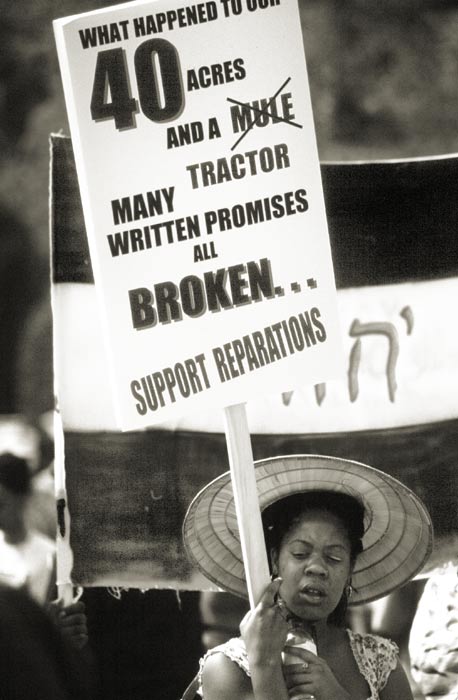 Although the subject of my last post--the special issue of Representations 92: "Redress" [Fall 2005; edited by Stephen Best and Saidiya Hartman] and The Redress Project--is not seemingly directly related to medieval studies [it has more to do with the subject of slavery, mainly in the early modern and modern periods], I believe it is actually quite relevant and important concerning our recent discussions on this blog about "why history matters" and whether or not early Anglo-Saxons might have been colonial-style racial oppresors [we know, of course, from the law codes, that early Anglo-Saxons possessed slaves--the larger question would be: how was it determined who would be a slave and how was that "class" of persons legally defined, regulated, constrained, etc.?]. I also believe that, for any medievalist who, like JJC, is interested in questions--theoretical, historical, and otherwise--that have to do with time, chronology, periodization, "untimeliness," and what might be called, following Vance Smith, "irregular histories," that some time spent looking at the scholarship of the Redress Project, comprised mainly of English, History, Law, Social Policy, and Human Rights scholars, is an absolute must. It relates, moreover, to the "hope" of Michael Uebel [expressed in a soon-to-be-published essay] that "critical medievalism . . . will recognize itself as particularly well suited to advance the terms by which temporality can be understood as a vital (cross)-disciplinary concern."
First, The Redress Project started as a reading group at Berkeley that met in the fall semester of 2004 "to foster a discussion of some of the different ways that . . . scholars [in different fields] . . . think about specific instances of historical injustice and the possibility of their remedy. The Redress Group’s ongoing task is to open up critical dialogue on questions of injury, justice, and closure that have yet to be posed within the traditional disciplines, and to address problems that have been either denied or repressed within liberal historiographic and philosophical critique." In their Introduction to the special issue of Representations, "Fugitive Justice," Stephen Best and Saidiya Hartman conceptualize a "redress discourse" that would locate itself in the space between "grievance and grief; between the necessity of legal remedy and the impossibility of redress" and which is also "the political interval in which all captives find themselves--the interval between the no longer and the not yet, between the destruction of the old world and the awaited hour of deliverance" (p. 3). Best and Hartman also outline the chief questions of the Redress Project:
- Why is justice fugitive? Why [for former slaves] . . . does justice appear elusive and perpetually dubious from within the crucible of slavery and at the height of the slave trade--when the time of injury and the time of repair would have been coeval? [Former slaves] . . . could not have been accused, as many are today, of "sleeping on their rights." Is this elusiveness then an index of the incommensurability between grief and grievance, pain and compensation?
- What is justice for the slave? What is justice for the slave's descendants? Does the slave even have descendants? Who are the slave's many descendants?
- What is slavery? [This, I think, is the especially pertinent question relative to early Anglo-Saxon legal classifications of different sorts of "persons"] What is the violence particular to slavery? . . . What is the essential feature of slavery: (1) property in human beings, (2) physical compulsion and corporal correction of the laborer, (3) involuntary servitude, (4) restrictions on mobility or opportunity or personal liberty, (5) restrictions of liberty of contract, (6) the expropriation of material fruits of the slave's labor, (7) absence of collective self-governance or non-citizenship, (8) dishonor and social death, (9) racism? We understand the particular character of slavery's violence to be ongoing and constitutive of the unfinished project of freedom.
- What is the slave--property, commodity, or disposable life?
- What is the time of slavery? [again--very apropos to our concerns with temporality as medievalists] Is it the time of the present, as Hortense Spillers suggests, a death sentence reenacted and transmitted across generations?
- Is it a time that we can all remember?
- Why is the history of reparations of slavery . . . a history of nonevent, a history of events either too recent to deserve the name of history or events that reverse contemporary expectations about reparations? And extending from that last question, why is the appeal for redress one that always seems to arrive too late, and to be marked by a note of belatedness and insufficiency?
Finally, in their Introduction, Best and Hartman are at pains to distinguish the work of their project from work on reparations or on remembering and working through trauma. Rather, they see their work [and the work of the other scholars involved with them] as:
the attempt to interrogate rigorously the kinds of political claims that can be mobilized on behalf of the slave (the stateless, the socially dead, and the disposable) in the political present. . . . we are concerned neither with "what happened then" nor with "what is owed because of what happened then," but rather with the contemporary predicament of freedom, with the melancholy recognition of forseeable futures still tethered to the past. . . . what is the story about the slave we ought to tell out of the present we ourselves inhabit--a present in which torture isn't really torture, a present in which persons have been stripped of rights heretofore deemed inalienable?
Since the contributors to the Redress Project see their subject as one that is mainly post-colonial [and therefore locates its incipit in the early modern period], I would ask, finally, how might medieval studies contribute to this Project? What, further, can medieval studies learn from this Project?
And thanks to Janet Thormann, who passed on to me the special issue of Representations that Best & Hartman edited.
Friday, July 28, 2006
Tiny Mix Tapes: An Experiment in Medievalism in Honor of Stephanie Trigg
 Okay--there's this really cool free music service that mainly only teenagers know about [thank god I'm living with losts of teenagers this summer at my friend Amy's house], called Tiny Mix Tapes, which takes requests for mix tapes that have to have a certain interesting "theme," and then their volunteer "mixers" take it upon themselves to make the tape mix for you [it can take a little while--they provide the song list, then you download it via Limewire.com or another open music source]. Recent mix themes have included: "Songs for when you're tripping on Robitussin and your best friend's mother catches you dancing around with a towel on your head to the song Eat Y'self Fitter," "my embarrassing secret is that, at nearly sixteen years old, i've often felt that the only reason i am still alive is because it would be wrong to die before losing my virginity. well, it's gone now," "songs to knit to," "music to drown yourself to," "depressing songs to play at the porn store i work at, so customers forget they're horny and go home and quit bothering me," and my personal favorite, "holy shit, I just made out with my brother."
As a little experiment, and in tribute to Stephanie Trigg's talk at NCS on "medievalism," I have submitted a request for a rock/punk/rage metal mix under the theme of "getting medieval." We'll see what happens.
Addendum [posted later in day]: in case anyone was wondering, a "Beowulf Soundtrack" mix tape was already requested, and this was the result:
Requested by: robin
Complied by: Alabaster
01. Boards of Canada - "In a Beautiful Place out in the Country" (In a Beautiful Place Out in the Country)
02. Bonnie 'Prince' Billy - "Another Day Full of Dread" (I See a Darkness)
03. Entrance - "Wandering Stranger" (?)
04. The Black Heart Procession - "The Visitor" (II)
05. Fugazi - "Epic Problem" (The Argument)
06. Mogwai - "Hunted by a Freak" (Happy Songs For Happy People)
07. Hanged Up - "Fuck This Place" (Clatter for Control)
08. Alasdair Roberts - "I Went Hunting" (Farewell Sorrow)
09. The Birthday Party - "Deep in the Woods" (Hits)
10. Slant 6 - "What Kind of Monster Are You?" (Twenty Years of Dischord)
11. Low - "Fearless" (A Lifetime of Temporary Relief)
12. Magik Markers - "Hero for Our Times pt. 1/2" (Feel the Crayon)
13. Hototogisu - "Run into the Woods" (Green)
14. The Stooges - "Search and Destroy" (Raw Power)
15. Tom Waits - "Flash Pan Hunter" (The Black Rider)
16. Woody Guthrie - "So Long It's Been Good To Know You" (Dustbowl Ballads)
Postcard from the New Chaucer Society
My postcard is in fact a snapshot of Patsy and Edina at NCS. I don't know when they became so dour, but a serious Chaucer conference will do that to even the most festive among us.
David Wallace's presidential address ("New Chaucer Topographies") would have interested many of this blog's readers, especially with its postcolonial swerve towards the end. He also mentioned that the Chaucer blog is probably scripted by an ABD Langlandian. Ouch.
A panel on "What is Happening to the Middle Ages?" was also intriguing. Carolyn Dinshaw spoke at length about multiple and heterogeneous temporalities. James Simpson launched a good argument against the ghetto of easy periodizations. Stephanie Trigg's paper on the thin (and probably more fantastic than real) line between medieval studies and medievalism studies was bracing. Surprisingly, no one mentioned blogs other than as a quick joke (Wallace) or as a quick advertisement (introduction to Trigg).
An enjoyable evening of drinks with some of my favorite bloggers and blog-haunters convinces me that a much of what is happening to the Middle Ages isn't unfolding in traditional spaces, and is being catalyzed by the profession's youngest, smartest and newest members.
Postcard to the New Chaucer Society
 Just a little postcard from those of us in Blogville to say we hope those of you at the New Chaucer Society meeting in NYC are having as much fun as Patsy and Edina would have if they were there. Come to think of it, academic conferences could use a few more Patsys and Edinas. Just a thought.
Thursday, July 27, 2006
Is Identity a Fate or a Choice?
 Relative to our discussions of humanism and "being human," and also psychoanalysis, transference, and self-Other relationships, I have just read a review of what looks to be an extremely interesting book by the Nobel Prize-winning economist and social philosopher Amartya Sen, Identity and Violence: The Illusion of Destiny, and I also append here a link to the review of that book that recently appeared in Prospect: "Illusions of Identity" by Kenan Malik.
I will quote here briefly from the review:
At the heart of the book is an argument against what Sen calls the communitarian view of identity—the belief that identity is something to be "discovered" rather than chosen. "There is a certain way of being human that is my way," the Canadian philosopher Charles Taylor wrote in his much-discussed essay "The Politics of Recognition." "I am called upon to live my life in this way." But who does the calling? Seemingly the identity itself. For Taylor, as for many communitarians, identity appears to come first, with the human actor following in its shadow. Or, as the philosopher John Gray has put it, identities are "a matter of fate, not choice."
Sen will have none of it. "There are two issues here," he says when I meet him at King's College, Cambridge, where he was master until returning to Harvard two years ago. "First, the recognition that identities are robustly plural and the importance of how one identity need not obliterate another. And second, that a person has to make choices about what relative importance to attach, in a particular context, to their divergent loyalties and identities. The individual belongs to many different groups and it's up to him or her to decide which of those groups he or she would like to give priority to." We are multitudes and we can choose among our multitudes.
Sen has been a vocal critic of "multiculturalism," but only when it is inflected in such a way that it assumes certain persons will act/think a certain way based upon the "group" to which they supposedly "belong." On this point, relative to social policy in Briatin, Sen has said, "We have a system in which Muslim organisations are in charge of all Muslims, Hindu organisations in charge of all Hindus, Jewish organisations in charge of all Jews and so on. . . . In downplaying political and social identities, as opposed to religious identities, the government has weakened civil society precisely when there is a great need to strengthen it." Sen, in other words, is wary of identity politics.
Here, also, is a link to an excerpt from Sen's book, published in Slate: "What Clash of Civilizations?" Here is a brief bit from that, that touches upon medieval history:
. . . . the frantic Western search for "the moderate Muslim" confounds moderation in political beliefs with moderateness of religious faith. A person can have strong religious faith—Islamic or any other—along with tolerant politics. Emperor Saladin, who fought valiantly for Islam in the Crusades in the 12th century, could offer, without any contradiction, an honored place in his Egyptian royal court to Maimonides as that distinguished Jewish philosopher fled an intolerant Europe. When, at the turn of the 16th century, the heretic Giordano Bruno was burned at the stake in Campo dei Fiori in Rome, the Great Mughal emperor Akbar (who was born a Muslim and died a Muslim) had just finished, in Agra, his large project of legally codifying minority rights, including religious freedom for all.
The point that needs particular attention is that while Akbar was free to pursue his liberal politics without ceasing to be a Muslim, that liberality was in no way ordained—nor of course prohibited—by Islam. Another Mughal emperor, Aurangzeb, could deny minority rights and persecute non-Muslims without, for that reason, failing to be a Muslim, in exactly the same way that Akbar did not terminate being a Muslim because of his tolerantly pluralist politics.
The insistence, if only implicitly, on a choiceless singularity of human identity not only diminishes us all, it also makes the world much more flammable. The alternative to the divisiveness of one pre-eminent categorization is not any unreal claim that we are all much the same. Rather, the main hope of harmony in our troubled world lies in the plurality of our identities, which cut across each other and work against sharp divisions around one single hardened line of vehement division that allegedly cannot be resisted. Our shared humanity gets savagely challenged when our differences are narrowed into one devised system of uniquely powerful categorization.
Perhaps the worst impairment comes from the neglect—and denial—of the roles of reasoning and choice, which follow from the recognition of our plural identities. The illusion of unique identity is much more divisive than the universe of plural and diverse classifications that characterize the world in which we actually live. The descriptive weakness of choiceless singularity has the effect of momentously impoverishing the power and reach of our social and political reasoning. The illusion of destiny exacts a remarkably heavy price.
Wednesday, July 26, 2006
Barbarian Tides
 A new book just out by Walter Goffart is quite apropos, I think, to our recent discussion regarding whether or not the early Anglo-Saxons were apartheid-style racists. I append here the description of the book from the University of Pennsylvania website:
Barbarian Tides
The Migration Age and the Later Roman Empire
Walter Goffart
384 pages 6 1/8 x 9 1/ Jun 2006 / ISBN 0-8122-3939-3 / $69.95
The Migration Age is still envisioned as an onrush of expansionary "Germans" pouring unwanted into the Roman Empire and subjecting it to pressures so great that its western parts collapsed under the weight. Further developing the themes set forth in his classic Barbarians and Romans, Walter Goffart dismantles this grand narrative, shaking the barbarians of late antiquity out of this "Germanic" setting and reimagining the role of foreigners in the Later Roman Empire.
The Empire was not swamped by a migratory Germanic flood for the simple reason that there was no single ancient Germanic civilization to be transplanted onto ex-Roman soil. Since the sixteenth century, the belief that purposeful Germans existed in parallel with the Romans has been a fixed point in European history. Goffart uncovers the origins of this historical untruth and argues that any projection of a modern Germany out of an ancient one is illusory. Rather, the multiplicity of northern peoples once living on the edges of the Empire participated with the Romans in the larger stirrings of late antiquity. Most relevant among these was the long militarization that gripped late Roman society concurrently with its Christianization.
If the fragmented foreign peoples with which the Empire dealt gave Rome an advantage in maintaining its ascendancy, the readiness to admit military talents of any social origin to positions of leadership opened the door of imperial service to immigrants from beyond its frontiers. Many barbarians were settled in the provinces without dislodging the Roman residents or destabilizing landownership; some were even incorporated into the ruling families of the Empire. The outcome of this process, Goffart argues, was a society headed by elites of soldiers and Christian clergy—one we have come to call medieval.
Subscribe to:
Posts (Atom)