Monday, July 08, 2013

Middle Ages in the Modern World: Translation and Ecology

by JONATHAN HSY


Greetings! Last week, I posted a little bit about the “Middle Ages in the Modern World” (MAMO) conference at St Andrews—a posting about Canadian heraldry. I would now like to provide a belated, more general overview of the conference as I saw it. My key words for this posting are TRANSLATION and ECOLOGY (two concerns that are perhaps not too surprising given my most recent posting about endangered languages).

The Middle Ages Today


My desk in Blackadder Hall (left); flyer for the Terry Jones plenary (right).

The inaugural MAMO conference was a highly publicized event, years in the making: it marked the 600th anniversary of the founding of St Andrews, a university which is quite literally a medieval institution in the contemporary world. The conference venue testified in many ways to how the medieval past infuses popular culture in the present, and in addition to many presentations encouraging creative modes of thinking across time, a significant concern in many threads concerned the blurring of boundaries between “professional” and “amateur” medievalisms. The opening plenary, for instance, was delivered by none other than Monty Python member, Chaucerian, and public historian Terry Jones. Many of the conference participants (myself included) lodged at the implausibly named Blackadder Hall—a site named (alas!) not for the multiply reincarnated protagonist portrayed by Rowan Atkinson but a real-life person, Agnes Blackadder (1875-1964), the first female graduate of St Andrews.

Translating the Middle Ages

This wide-ranging interdisciplinary conference encompassed a variety of ways the medieval past (or a consciously constructed neo- or pseudo-medieval one) informs many types of cultural production: literature, visual arts, cable television, and other media. I found myself most intrigued by how translation—cultural, linguistic, and artistic—served as a key concept throughout disparate threads.


Oliver Traxel's presentation on reverse translation; slide referring to Geoffrey Chaucer Doth Tweet (@LeVostreGC).

Some of the most compelling sessions tackled translation in its manifold linguistic forms. For instance, one session on “Translating the Middle Ages” yielded a striking variety of approaches to medieval languages moving across time and space. Helen Brookman provided a glimpse into the fascinating reception history of Anna Gurney, who was the first modern English translator of the Anglo-Saxon Chronicle (her translation was published in 1819). Living a life that might now register as queer (she resided with longtime female partner) as well as disabled (she was wheelchair user), Gurney forged her own literary authority and reputation as a medievalist scholar by working around many social and institutional barriers. Katherine Miller examined the rather squeamish range of approaches to Old Norse terms denoting slavery in modern English translations and dictionaries (modern translations and dictionaries tend to evade or obscure references to slavery—due to a level of discomfort with its acknowledging its presence, or a lack of full understanding of the nuances of the language, or both). Oliver Traxel offered an engaging overview of “reverse translation” (i.e., translating modern English works into older languages like Middle English and Anglo-Saxon) throughout modern Germany and Anglophone North America (including Geoffrey Chaucer Hath a Blog and the related twitter feed). What emerged from Traxel’s talk was a clear notion of translation as a means of academic play, parody, and enjoyment—activities pursued not out of any profit motive or use value.


Opening slide of our Global Chaucers presentation.

In a session on “Global Medievalisms,” Candace Barrington and I drew from our work on the Global Chaucers project to discuss how Chaucer’s Miller’s Tale is translated across three very different contexts: Flemish comic book by Lük Bey (preview the Flemish and English iPad apps online!), a Chinese prose translation by Fang Chong (which I’ve blogged about HERE), and song-and-dance performance in Nigerian Pidgin English (view snippet HERE). Each work draws (broadly speaking) from a common source-narrative, yet each work adapts its own idiosyncratic strategies for conveying local nuances of linguistic register and discursive style. The other panelist, Dongill Lee, compared his own Korean translation of Beowulf to those of Heaney and others. Among other things, he considered how Anglo-Saxon heroic values might be reoriented by a cross-cultural comparison with feudal structures in ancient Korea and Japan (and he also mentioned he had previously published a Korean translation of The Canterbury Tales).


Seamus Heaney reads from his translations of Middle Scots poets.

In my mind the culmination of this thread—and perhaps the conference as a whole—was a plenary lecture by Seamus Heaney; the poet read from (and spoke about) his translations from works by 15th-century Middle Scots poets (so-called “Scottish Chaucerians” including Henryson, Dunbar, and others). Heaney began by suggesting three motives for translation: translation as a mode of advocacy for a source text, translation as a means of contact with another alien culture, and translation as “writing by proxy”—with his own work interweaving these three motives simultaneously. I found his reading showcased an intricate layering of voices across time—the contemporary Irish poet uses modern English to ventriloquize the voice of medieval Scots poets—and the performance broke down any clear binary between an act of (derivative) translation and (originary) creation. In this venue, I was invited to listen and attend to poetry as craft, and this experience provided me—a historicist literary scholar—with a  refreshingly medieval sense of translation as a process of invention (in the medieval sense of inventio or perpetual re-creation), an ever-provisional reworking of material that arises from intimate encounters between present and past(s).

Ecologies, Medieval and Modern


Carolyn Dinshaw delivers her plenary on the Green Man. Title: “I’ve Got You Under My Skin.”

The MAMO conference featured a surprising amount of plenaries, including a morning and evening one on each day of the conference. A somewhat unexpected theme that emerged throughout some of the plenaries was ecology—or rather, a series of discussions each putting into conversation a few modes of ecological thought. Carolyn Dinshaw’s newest work on queer temporality and amateur/professional medievalism was much invoked (see JEFFREY’s draft review of her book, How Soon Is Now? for more on this work) and I’ve seen various iterations of Dinshaw’s talk on the Green Man before. But with each recursive discussion, I discover Dinshaw enfolds this material with new resonance. What I found most intriguing in this particular version of her talk was a clear postcolonial perspective. Toward the end of her talk, Dinshaw discussed Randolph Stow’s astoundingly complex novel The Girl Green as Elderflower (1980), which features an Australian who returns to the home of his ancestors in East Anglia; in the novel's complex network of intertwining and embedded narratives, the Green Man serves not only as figure, device, or “emblem” of the porous nature/culture divide but also an animating force that radically transforms and unsettles static conceptions of race, ethnic belonging, sexuality, and existence in time.

I felt fortunate that the organizers had asked me to chair a session on “The Natural World and Medievalism,” as I was so curious to see how each of the presenters would engage with this topic. Elizabeth Robertson demonstrated how devotion for the daisy in Chaucer’s Legend of Good Women provided some means of inspiration for Wordsworth’s poetry, and she suggested some ways to approach nature writing and locodescriptive poetry via Timothy Morton's ambient poetics. Arwen Taylor (a medievalist name if I ever heard one!) gave a paper on birds in the works of Chaucer and Tolkien; in this paper, she attended to birds as creatures who can act concurrently as signs and as avian agents that (who?) resist figuration. Helen Price—most closely engaged with Morton and recent ecocritical work by EILEEN and JEFFREY—widened the discussion to the localized poetry of Geoffrey Hill’s Mercian Hymns (1971) [read selections HERE and HERE], featuring hoarders of disparate objects, as well as evocative site-specific poetry/art projects like The Stanza Stones Walk (2010) of Simon Armitage. By the end of this session, I had become most interested in how the so-called “natural” world—flowers, birds, stones, other assemblages—veer away, withdraw from, or are utterly indifferent to human modes of signification and (linguistic) representation.


Bruce Holsinger delivers his plenary on “The Worlding of Medievalism: Past and Present in the Early Anthropocene.”

Bruce Holsinger’s plenary examined how a narrative episode from the 13th-century Landnámabok—Thorkel Farserk swims across the Hvalseyjarfjord while carrying a sheep—gets appropriated in the work of paleo-climatologists as well as global warming skeptics. Working under the assumption that this body of water must have been warmer than it is today (or else Thorkel Farserk would have died of cold), some (amateur) climatologists invoke this story as a piece of evidence for a pre-industrial Medieval Warm Period (or Medieval Climate Optimum), a time when the North Sea was warmer that it is now (and also a time when Vikings were able to settle different lands and achieve all sorts of nifty things as a result). Holsinger revealed some of the ways the medieval past can serve any number of (pseudo)scientific and political agendas—including the use of this story to cast trends in warming as “natural” (not manmade) phenomena. Returning the overall discussion to the “professional vs. amateur” distinction, Holsinger suggested not so much the playful side of amateur medievalism but its potential for abuse. This sort of brute re-appropriation of a highly imaginative medieval text as “evidence” against (human generated) global warming might strike literary scholars as rather unsophisticated selective reading (and mischaracterization!) of a complex text. Holsinger ended by suggesting how more fully engaged interdisciplinary endeavors might operate: his ongoing research on medieval parchment, for instance, can bring literature, paleography, and art history into contact with historical genetics and paleo-climatology. Parchment—created from the skins of animals—carries the organic, material, and cultural traces of another time.

MAMO was a well-organized and stimulating conference. I am pleased to see how academic medievalism studies is gaining more prominence, and this burgeoning field continues to encourage new ways to examine the enduring presence of medieval culture in our contemporary lives. From politics and policy to popular culture, we find the past that is not safely partitioned in a realm beyond our own; it potentially plays an intimate part of our everyday existence and modern ways of life.

Thursday, July 04, 2013

Language Ecology: Living, Endangered, and Undead Tongues

by JONATHAN HSY


[NOTE: This is another blog posting about languages and mobility -- quite a flurry of ITM postings along these lines this week! See the recent posting by KARL STEEL about multilingual Istanbul and the myth of a monolingual/monocultural past; see also the posting by EILEEN JOY about the forthcoming issue of postmedieval on "Medieval Mobilities" (eds. Laurie Finke, Martin Shichtman, and Kathleen Coyne Kelly).]

Linguistic Habitats


Above, the current front page of the Endangered Languages project, an online collaborative endeavor to promote global linguistic diversity (see the EL blog and EL Facebook page). Endangered Languages is also one of the featured elements of the Smithsonian Folklife Festival now underway in Washington DC (see the "One World, Many Voices" homepage). Snapshot taken 3 July 2013.

National Geographic's Enduring Voices documentary project transforms linguists (and linguistic anthropologists) into real-life Indiana Jones-style hero-explorers. See for instance this account of an expedition to record speakers of a language called Xyzyl (pronounced hizzle). In these narratives, "explorers" set out to (re)discover so-called "hidden" or obscure languages (i.e., enter them into annals of Western, scientific, recording and description), and they work together with local communities to help preserve precious, rare languages like Xyzyl -- and others around the globe -- from extinction. The work being done here is very important -- not just for its impact on our knowledge of the planet's linguistic diversity but also on an intangible preservation of sociocultural assets: the number of speakers of Xyzyl and many other indigenous and minority tongues around the globe continue to dwindle as speakers "leave" these languages for "global juggernauts" like English, Mandarin, Arabic, Spanish, Russian. Moreover, our ethical relationship to "at risk" languages (or "endangered" plurilinguistic environments) is akin to our salvific relation to particular nonhuman creatures (or specific ecosystems). A clear message emerges from the "Language Hotspots" map (which you can see on the Living Tongues website and also HERE) -- as well as related blogs such as Enduring Voices and Endangered Alphabets. Namely, stewardship of our shared global environment must include stewardship of a global linguistic ecology. Collaborative efforts of the Endangered Languages project (image and caption above) and others have deep ethical implications. Once languages are lost, they -- like extinct species -- are gone from the earth forever. *

What I find so interesting here (in the outreach and public relations materials for these projects) is the affective mechanism of salvific representation at play. National Geographic publishes gorgeously aestheticized images of colorful, weird underwater creatures (see HERE and HERE) or super-cute endangered marine animals (see HERE) -- and sends the implicit message that we should somehow act to preserve them. In a similar fashion, the magazine offers a set of carefully crafted and curated images of human environments through the work of photographer Lynn Johnson; her "Vanishing Voices" gallery suggests that languages themselves must be rendered exotic, appealing, "worthy" of being saved. Johnson has the very curious task of working to "translating" lived, dynamic human language into static images for (progressive and openminded) mass consumption and edification. And she manages to achieve these effects quite well through these highly evocative scenes -- with images interwoven with informative text.

The "story" these images tell about indegneity and located-ness of languages is crucial as well. This photo gallery gets us "interested" in languages that we might not otherwise know or care about, but also images remind us that it's not enough just to describe, capture, or "record" any given language. Nor can we simply take a language--a living thing--and simply "transplant" it from one geocultural or social context into new place and expect it to thrive there. Preserving a language is as much about preserving a (distant) way of living and thinking as it is about a way of speaking. For a language to flourish, one must also sustain its entire sociocultural habitat.

Transporting Languages

How relate to temporally distant medieval texts? One is the "un-translatability" (non-transportability) of language, that we as modern readers can engage with distant texts while also having a clear respect for the "native habitat" of the original language in which surviving texts are written. I find that teaching Middle English texts requires students (and teachers) to inhabit a cultural space that is profoundly not our own. Chaucer is well-known for reflecting on the cliché that the "past is a foreign country," an idea that registers quite well to modern English readers encountering his slightly-alien Middle English:

Ye knowe ek that in forme of speche is chaunge
Withinne a thousand yeer, and wordes tho
That hadden pris, now wonder nyce and straunge
Us thinketh hem, nd yet thei spake hem so,
And spedde as wel in love as men now do.  (Troilus and Criseyde, II. 22-26) 


In my own teaching, try to instill oral performance of Middle English in the original language -- or rather, its editorial (re)construction as printed in the Riverside Chaucer (or whatever edition we might be using at the time). Voicing Middle English aloud is just one way of physically inhabiting a language that is not one's own.

So how does one fully reinhabit an already-dead language, or quasi-moribund-zombie language (such as Anglo-Saxon, Old Norse, Anglo-Norman, Middle English)? To what extent are we -- by which I mean literature scholars, linguists, historians, and others -- acting as stewards of tongues, or sustainers of "lost" historically distant ways of living?

Animating Languages

We are in the business of reanimating zombie languages on an everyday basis, when you think about it. Take Latin, for instance. The Vatican (in the discourse of a New York Times article written last in fall 2012) continues to "breathe new life" into the language order for it to survive in a modern secular world (see HERE), and to some extent Latin has its own "cultural life" in the modern world through other avenues: new coinages are generated in Latin via institutionalized religious contexts (e.g. see words for "computer," "jet(plane)," and others in the Lexicon Recentis Latinitatis), but new coinages are also created via secular means, as previously unattested species are identified and given official Latin names (see the fly named for cartoonist Gary Larson). In these little ways Latin does continue to have a "life" in our contemporary world, but thinking about how a language like Middle English or Anglo-Saxon might "live" today is perhaps a different prospect. We will never know what the language of Chaucer or the Beowulf-poet or Kempe actually sounded or "felt" like, and whatever we offer will always be a strange living-and-dead fantasy: a (lovingly researched) reconstruction.

Perhaps best way, then, of thinking of our activities as scholars, historians, teachers, students (people interested in the linguistic ecologies of the past) is to say we are not detached (social) "scientists" nor paternalistic/parental curators and custodians but rather inter-temporal ambassadors, people who mediate between present-day audiences and distant, seemingly alien cultural environment. Yet even this ambassadorial comparison is inexact: most envoys or emissaries have (or should have) a secure sense of the interests that they are "supposed to represent" or advance. In our own ambassadorial functions -- our living in and with past and present languages -- we are in a position that is much more flexible and cannot be disentangled from professional and personal desires. Through our work with texts (or music, drama, manuscripts, sculpture, architecture, what have you) we not only grant partial access to an alien past or distant cultural habitat; we also actively reacquaint ourselves with our own time and place, recognizing the strangeness of the manifold world that we inhabit now and think we know so well.


* Something I admire about the discourses of linguistic preservation on such websites is how they avoid starkly utilitarian or capitalist justifications. I wouldn't want to make the argument that if we "lose" indigenous languages, we might lose an important cultural "resource" such as indigenous knowledge of the medicinal value of Amazonian plants, or what you will (what a shame if such cultural knowledge could no longer be exploited by pharmaceutical corporations!).

Tuesday, July 02, 2013

NOW PUBLISHED: Medieval Mobilities [postmedieval 4.2]

[image on cover: Carhenge, Alliance, Nebraska, 2007; photo by Tom Boettcher]

by EILEEN JOY

Somewhat serendipitously, given both Jonathan's and Karl's recent posts, respectively, on Canadian heraldry and multilingual graffiti, and their emphases on what might be called the "mouvance" of medieval objects (including language, texts, etc.), the most recent issue of postmedieval on MEDIEVAL MOBILITIES, edited by Laurie Finke, Martin Shichtman, and Kathleen Kelly, has published this week. In their introduction to the issue, Laurie, Marty, and Kathleen write,
The idea for a special issue on the transcultural Middle Ages with a focus on mobility came from a mystery novel. The events of Maureen Duffy's Orpheus Trail are set in motion by the discovery in an Anglo-Saxon burial of several objects of Middle Eastern origin, including talismans representing Mithric and Orphic cults. While the police sort out a series of grisly murders involving a pedophile ring exploiting migrant boys (another contemporary example of transcultural movement across borders), archaeologists and museum curators of Middle Eastern Studies, Egyptology, Anglo-Saxon England and, oddly, Victoriana, try to figure out how these antiquities fetched up in Essex. It requires a collaboration among experts from several disciplines to solve the murders by deciphering clues from the ancient past. As the ‘trail’ in the title suggests, the novel highlights flows across boundaries, both national and disciplinary: a temporal and geographical line that stretches back ‘from Essex to the North African deserts and the sphinx's smile’ (Duffy, 2009, 123).

Duffy's premise that an Anglo-Saxon grave might contain objects from the Middle East is not fiction. Archaeologists, numismatists and historians who study the remains of medieval material culture are constantly confronted with the reality of how often and how far goods traveled in the Middle Ages. 

This issue of postmedieval, then, asks a deceptively simple question: How did ‘things’ circulate globally across borders during the Middle Ages and with what consequences for cultural interaction? The volume assumes the construct of a transcultural Middle Ages and puts that paradigm into dialogue with the emerging field of mobility studies. The trans in ‘transcultural’ certainly captures something about movement: How did coins minted in Samarkand end up in England? Christianity from the Eastern Mediterranean rim in China? A focus on the transcultural Middle Ages is often a focus on ideas, people and goods once they have arrived. What happened to them in their new home? To focus on mobilities, however, is to pause on the road, not to reconstruct the means by which things arrive, but to examine the route itself. What we want to celebrate as cultural fluidity – something that new approaches to medieval studies allow us to see more and more – is the result of mobility.
For the most part, mobility studies – the critical study of the movement of people, goods and ideas – is dedicated to the contemporary moment, a present of displaced persons and immigrants and city streets and airport lounges. Scholars associated with mobility studies tend to cluster in social anthropology, cultural geography and sociology. While a number of medievalists have begun cruising cultural geography and sociology and explicitly articulating a more global, transcultural and mobile Middle Ages, medievalists have been working in the domain of mobility studies without naming or theorizing it as such before ‘mobility studies’ was recognized as an interdiscipline. Mobility studies is in need of historicizing, and the Middle Ages is in need of mobility theories.
The volume has many precursors, of course [from the Hakluyt Society established in 1846 to Paul Zumthor's and Jerome McGann's work on textual mobilities to  Latour's actor-network theory to David Wallace's new Literary History project to Geraldine Heng and Lynn Ramey's Global Middle Ages project to Sharon Kinoshita and Brian Catlos's medieval Mediterranean studies to Suzanne Conklin Akbari's work on the Norman world "as a cultural network connecting Sicily, Italy, France and England by sea routes from the Mediterranean to Scandinavia," and beyond], but there is a special connection in this issue as well with the work of British sociologist John Urry [also the respondent to this issue], whose "mobile sociology" brings important light to the role of non-human objects and agents in the mobile systems that have shaped various global histories. Ultimately, as the editors explain, such a project of tracing the global circulation of medieval objects, and thus of describing a "medieval world system,"
can only ever be collaborative because no one individual or discipline can have the necessary expertise to describe the whole world. This volume is both prolegomenon and call to explore collaboration as a kind of flow, and scholarship itself as a knowledge transfer between domains. We want to suggest that strategic uses of those flows might counter static understandings of scholarly activity and expertise. We open ourselves up to some of the messiness of the Middle Ages by recognizing how often people, objects and ideas were on the road, in movement, in flux, never completely locatable at a single fixed moment, in a single place or speaking in a single language.
Herewith, then, the Table of Contents [and note that there is an awesome Book Review Essay as well by Kathleen Biddick on "transmedieval mattering"], and if anyone who does not have institutional access to the journal would like any or all of the essays in this volume, please just email me at: eileenajoy@gmail.com.


Editors' Introduction

  • "The world is my home when I'm mobile": Medieval Mobilities / Laurie Finke, Martin B. Shichtman, and Kathleen Coyne Kelly

Essays

  • A Restless Medieval? Archaeological and Saga-steads in the Viking Age North Atlantic /  Douglas J. Bolender (Field Museum of Natural History) and Oscar Aldred (Newcastle University)
  • Have Dante Will Travel: On the Limitations of Personal Mobility / Daniel Hartnett (Kenyon College)
  • Der guote Gêrhart: The Power of Mobility in the Medieval Mediterranean / William Crooke (East Tennessee State University)
  • Mobile Language Networks and Medieval Travel Writing / Jonathan Hsy (George Washington University)
  • Ruins in Motion / Heather Bamford (Texas State University-San Marcos)
  • Virtual Mobility: Landscape and Dreamscape in a Late Medieval Allegory / Anne Harris (DePauw University)
  • Flea and ANT: Mapping the Mobility of the Plague, 1330s-1350s / Kathleen Coyne Kelly (Northeastern University)

Response Essay

  • Medieval Worlds and Mad Max / John Urry (University of Lancaster)

Book Review Essay

  • Transmedieval Mattering and the Untimeliness of the Real Presence / Kathleen Biddick (Temple University) *reviewing: Karen Barad, Meeting the Universe Halfway: Quantum Physics and the Entanglement of Matter and Meaning (Duke UP, 2007); Jane Bennett, Vibrant Matter: A Political Ecology of Things (Duke UP, 2010); Lanfranc, On the Body and Blood of the Lord and Guitmund of Aversa, On the Truth of the Body and Blood of Christ in the Eucharist, trans. by M.G. Vaillancourt (Catholic U America P, 2009); and Eric Santner, The Royal Remains: The People's Two Bodies and the Endgame of Sovereignty (U Chicago P, 2011).

Briefly Noted: A Multilingual Doorframe in Istanbul

by KARL STEEL

On Facebook, my coblogger JONATHAN HSY (whose recent post on Canadian Heraldry you should read) links to fine post by linguistics prof Ingrid Piller on language diversity in medieval and modern Constantinople/Istanbul. 


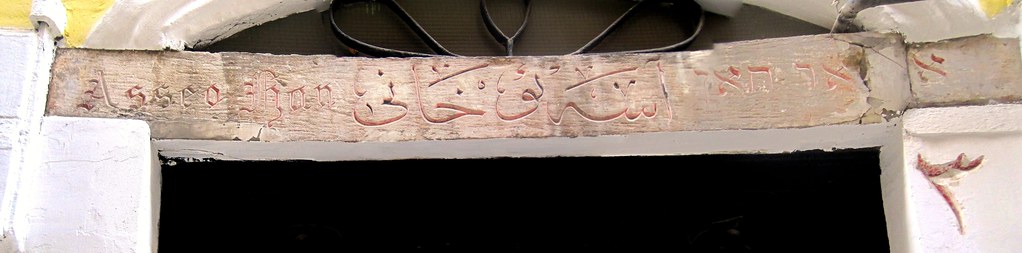
She shares this picture of graffiti runes in Hagia Sophia, which she connects to a Chinese Flyer for an room for rent in modern Antwerp, which leads to consideration of how official monolingualism tends to erase evidence of multilingualism.   

Piller finally leads us back to modern Istanbul and modern Turkey's famous language reforms, where she observes:
The reform was “a catastrophic success,” as the Turkologist Geoffrey Lewis has called it. As a result, most contemporary Turkish speakers are cut off from their linguistic and cultural heritage predating the 1930s. A famous – and also ironic – example of the monolingualization of Turkish is the fact that a major 1927 speech by Atatürk, the founder of the Turkish Republic, has had to be ‘translated’ repeatedly into contemporary Turkish so as to remain comprehensible to contemporary Turks.
In Istanbul, as elsewhere, contemporary examples of ‘super-diversity’ – the Russian ‘Sale’ signs in the shop windows, the tourist communications in all the languages of countries with strong currencies, the handwritten Arabic ‘for rent’ signs, the Kurdish music stalls – are impossible to ignore. By contrast, the fact that super-diversity has been a characteristic of Istanbul-Constantinople-Byzantium since time immemorial is easy to overlook.
I'm presenting all this to join Jonathan in encouraging you to read her post, but also to share a photo with you, which I took on my Istanbul trip in January 2012. While there, my very multilingual colleague Louis Fishman (his twitter account; some articles; and here we are trying to solve a historical puzzle) gave my wife and me a tour of a few neighborhoods and took special effort to point out the following near İstiklal Avenue:


poorly stitched panorama. Sorry.
Click on the image to see it better (edit: I've now uploaded the original set of photos, which I think probably give a better sense of what the door lintel looks like: see here). That's script in Roman letters, transliterating an Ottoman Word (it says Asseo Han," the Han or caravanserai of the Asseo family), and possibly the same phrase repeated in Ottoman Arabic and Hebrew. Louis said that one of these, representing the Han of another family, had also been visible directly across the street, and taken down or otherwise obscured to present a monolinguistic Turkish past, which he then connected to the controversy over Bonomo (a Sephardic Jewish Turk) representing Turkey at the Eurovision contest. Louis's apartment in Kurtuluş (a view), where we were staying, was itself a formally Greek neighborhood, but purged of Greeks in the 1955 pogrom.

More data, then, for Piller's observations.

Monday, July 01, 2013

Middle Ages in the Modern World: Canadian Heraldry

by JONATHAN HSY

Greetings from the UK! I've arrived in London after an excellent conference in St Andrews on The Middle Ages in the Modern World (MAMO) and will offer a more detailed blog posting about it very soon.

MAMO explored the many ways the medieval past infuses contemporary culture. Today--in honor of Canada Day--I discuss a fascinating session entirely dedicated to Canadian heraldry. Three presenters associated with the Canadian Heraldic Authority (CHA) provided insights into how they design, grant, and register new armorial bearings for individual Canadian citizens well as other Canadian entities (e.g., universities and schools, cities and municipalities, provincial and local governments, and tribal emblems for indigenous communities). How does the CHA take an obscure and archaic medieval tradition--heraldry--and translate it into modern terms? In what ways does Canadian heraldic practice differ from medieval usage?


[Opening slide for the Canadian heraldry session.]

Forrest Pass, historian at the Canadian Museum of Civilization and former Herald and Assistant Registrar at the CHA, started with a fascinating talk on (mis)perceptions of heraldry in modern North America. While I had assumed Canadian heraldry traces its origins directly back to medieval Britain, I was surprised to learn its origins can be found in both Anglophone and Francophone traditions (as well as modern fantasies about the past). As Dr. Pass explained in his talk, Edward Marion Chadwick--influenced by democratic ideals developing concurrently in the US--rejected "old world" notions that heraldic arms should be granted only by royal authority (as in Britain) and he believed that anyone * should be able to design and use arms. Indeed, his innovative book of arms, Ye armiger (1901), was decidedly Canadian: it included arms of Ontarian families as well as indigenous animal totems (see HERE for his bio). Frederic Gregory Forsyth, who styled himself Viscount de Fronsac, claimed illustrious ancestors through his own genealogical research; he believed that the French aristocracy were the rightful nobility in Canada and later established the College of Arms of Canada. **


[On the left, the arms of Britain's College of Arms in the UK; on the right, the arms of the Collège Boréal (a francophone college of applied arts and technology) in Ontario.]

Manon Labelle, who is officially the Miramichi Herald (each Herald at Arms bears a Canadian river-name designation), showed how the present-day practice of Canadian heraldry in some important ways confirms to medieval European practice: each design is designed and calligraphed by hand. The petitioner's arms are developed through consultation between the CHA and the petitioner.


Here's the complex flow chart of this procedure from the presentation (above). On the CHA website you also can read more about the application process (with lovely flow diagram).


The current Chief Herald of Canada, Claire Boudreau, gave the final presentation in this session: she set out to discuss some important ways that Canadian heraldry explicitly diverges from other armorial traditions. The CHA is officially only 25 years old (with letters patent granted by Queen Elizabeth II in 1988), and the Canadian heraldry exhibits some conspicuously modern, progressive features. A very important point to remember here is that any citizen can submit petition for heraldic arms, and the arms do not signal social distinctions such as gender or rank; moreover, arms can transferred from one generation to the next in ways that reflect all kinds of family structures and kinship relations (spouses or domestic partners of either gender, stepchildren, adopted children, etc.).


See (above) the arms of a woman, Barbara Zaharescu (with German motto); her two children (one male and one female) with identical arms except for an additional distinguishing mark (or brisure).


Above is another example of the arms of a woman, Louise Martel (note pun on French "marteau" or hammer) with gender-neutral distinguishing marks for children.


And here's an example of a man, Rodney Montegue Bergh, who has children from two different marriages (and note the use of shared arms even though not all the surnames are the same).


An important point made by Dr. Boudreau was that Canadian heraldry can incorporate visual elements from non-European traditions, such as indigenous cultures. See for instance the arms of Judy Gingell (a woman of Tlingit ancestry) and the arms of the Canadian Museum of Civilization (the supporters include Inuit and Algonquin water spirits).

While most of the mottos are in Latin, English, or French, over thirty different languages have been used in Canadian heraldry (including European and indigenous languages, as sampled in some of the arms above).


The Canadian Wongs--or rather a Chinese-Canadian association associated with the Wong surname--made the news in 2011 for making several innovations. First, the arms featured a panda bear and a polar bear as supporters; second, it was the first case of Canadian arms using Chinese characters in the motto (compare this to the arms granted to a Chinese Canadian individual.)

This blog post is only the "tip of the iceberg" of the many fascinating features of Canadian heraldry--an enduring aspect of visual culture that takes advantage of the flexibility of medieval traditions while also adapting them to modern aims and desires.

NOTES

* Anyone who owned land anyway.

** Dr. Pass noted some of the dubious aspects of this character. Among many things, he claimed to be born in Montréal--but was actually born in the US.