Hamas television, which was criticized for a Mickey Mouse-like character named Farfur who spouted anti-Israeli and anti-Jewish nostrums at children, has replaced the mouse with a bee named Nahoul, who says he is Farfur’s cousin.Talk about killer bees.Farfur was beaten to death by an Israeli who wanted his land on the previous episode of the children’s show “Tomorrow’s Pioneers.”
Nahoul, the bee, says: “I want to continue on the path of Farfur, the path of ‘Islam is the solution.’ The path of heroism, the path of martyrdom, the path of jihad warriors.”
In the name of Farfur, the bee says, “we shall take revenge on the enemies of Allah, the murderers of the prophets, the murderers of innocent children.”
Tuesday, July 17, 2007
Animals and brutal allegory
In the olden days of this blog I wrote against animals as allegories. From today's NYT, an illustration of just how heavy handed animals as allegory can be. Secretly I'd been afraid that Farfur was going to found his own version of Disneyland, so it is easy not to mourn the passing of this antisemitic rodent.


Monday, July 16, 2007

Sunday, July 15, 2007
Memories of London, or, Mary Poppins and the Order of the Phoenix
The alternate title above indicate the kinderfocus of what follows. We did two entertainment events that centered upon age appropriate fantasies of a London and England that never were: a Mary Poppins musical in the West End for Kid #2 and the debut of the new HP movie for Kid #1. I drove both progeny crazy by speaking of "Harry Poppins" and "Mary Potter" but it makes sense: both figures do the same work. OK, here is the sojourn in brief:

This was the trip on which Kid #1 finally (according to him) overcame his lifelong fear of heights. He'd been dreading our whirl around the London Eye, but halfway up this giant wheel of rotating tourists he pronounced himself cured. A panorama of London that in the past was reserved only to the gods probably helped.
 In London Kid #1 also discovered a new flavor: malt vinegar. Unlike normal children, Kid #1 has never been a fan of french fries. Chips with malt vinegar, however, are something else entirely. Sadly, our local Whole Foods does not stock this elixir so I regret not bringing some back. Notice in the picture, by the way, we were eating at the cafe of the Tate Modern, a playground of art that is an effective antidote to the stodginess of the National Gallery.
Speaking of what London tastes like, favorite restaurants for adults and kiddies alike included Masala Zone (where you can get a vegetarian thali as a kids meal!) and Yo!Sushi (the latter is a chain; we went to the one in Bloomsbury and were wowed by the food as much as the decor. And what can be more fun than having your dinner travel by you on a conveyor belt as if it were a small but delectable train?)
 Punting on the Cam was something we'll all remember for a looong time. Thanks Liza!
 Like many young tourists, our children became entrapped in a London phone booth. We rescued them several hours later, after a quiet dinner and drinks at a nearby pub. No need to use a babysitter or nanny when you are in London.
 Behold the merriest decapitation scene ever witnessed. This was Kid #2's visit to the London Dungeon. Please don't tell her it was an advertisement near Tower Bridge rather than the real thing.
 Is it abusive to command your progeny to pose next every Roman statue you come across, especially if it is Trajan before a REAL ROMAN WALL?
 In the Museum of Docklands, Kid #2 guessed that the Great Stink was caused by flatulence. She bared her tummy to show what happens when you keep too much gas inside you.
 Touching the stones at Avebury was quite a moving experience. See here if you missed my brief comment on why Kid #1 and I raced to the Barber Stone.
 My family had tea with Jude Law at Salisbury Cathedral. Only he didn't know it. I can report that he talks with scones in his mouth and that he dresses his blonde-haired daughter in a tight T-shirt that says "JUICY."
 In a shocking case of misnomerism, the Tour de France began in London. Some bike company set up a play area. Behold Kid #1 practicing to be a recumbent version of Lance Armstrong.
 Kid #2 forced a Tower Guard to pose with her. She also made him promise to protect her should Henry VIII attempt to lop off her noggin.
 Nothing invites quiet meditation more than perching one's bottom atop a medieval loo.
 This portrait inspired a romp through the White Tower screaming "Don't let Henry VIII chop my head off!" As I mentioned previously, decapitation was a dominant theme of this trip. Even the Pearl Poet manuscript was open to this page in the British Library.
 At the Museum of London, Kid #1 got to dress as a Saxon warrior for a dramatic retelling of the Battle of London Bridge. Next to the recreation of an English home c.1000 where the story was told was a display of Viking weapons (mostly axes) recovered from the Thames and dating to the fall of the bridge.
 Behold a spiny tailed Moroccan lizard at the London Zoo. Spotting this adorable little bundle of prickles reminded Kid #1 of his own spiny tailed Moroccan lizard, Spike. After two weeks of London, he finally -- and quite suddenly -- became homesick.
 Here Kid #1 points to the spot in Hyde Park where he unearthed a neolithic flint arrowhead.
 Here Kid #2 poses in front of the Peter Pan statue that she had spent long nights dreaming of. Note the leaf placed upon her head to make her better resemble Tinker Bell.
 Moments like this one not only made London utterly worth the visit, they make life worth the living.

This was the trip on which Kid #1 finally (according to him) overcame his lifelong fear of heights. He'd been dreading our whirl around the London Eye, but halfway up this giant wheel of rotating tourists he pronounced himself cured. A panorama of London that in the past was reserved only to the gods probably helped.
 In London Kid #1 also discovered a new flavor: malt vinegar. Unlike normal children, Kid #1 has never been a fan of french fries. Chips with malt vinegar, however, are something else entirely. Sadly, our local Whole Foods does not stock this elixir so I regret not bringing some back. Notice in the picture, by the way, we were eating at the cafe of the Tate Modern, a playground of art that is an effective antidote to the stodginess of the National Gallery.
Speaking of what London tastes like, favorite restaurants for adults and kiddies alike included Masala Zone (where you can get a vegetarian thali as a kids meal!) and Yo!Sushi (the latter is a chain; we went to the one in Bloomsbury and were wowed by the food as much as the decor. And what can be more fun than having your dinner travel by you on a conveyor belt as if it were a small but delectable train?)
 Punting on the Cam was something we'll all remember for a looong time. Thanks Liza!
 Like many young tourists, our children became entrapped in a London phone booth. We rescued them several hours later, after a quiet dinner and drinks at a nearby pub. No need to use a babysitter or nanny when you are in London.
 Behold the merriest decapitation scene ever witnessed. This was Kid #2's visit to the London Dungeon. Please don't tell her it was an advertisement near Tower Bridge rather than the real thing.
 Is it abusive to command your progeny to pose next every Roman statue you come across, especially if it is Trajan before a REAL ROMAN WALL?
 In the Museum of Docklands, Kid #2 guessed that the Great Stink was caused by flatulence. She bared her tummy to show what happens when you keep too much gas inside you.
 Touching the stones at Avebury was quite a moving experience. See here if you missed my brief comment on why Kid #1 and I raced to the Barber Stone.
 My family had tea with Jude Law at Salisbury Cathedral. Only he didn't know it. I can report that he talks with scones in his mouth and that he dresses his blonde-haired daughter in a tight T-shirt that says "JUICY."
 In a shocking case of misnomerism, the Tour de France began in London. Some bike company set up a play area. Behold Kid #1 practicing to be a recumbent version of Lance Armstrong.
 Kid #2 forced a Tower Guard to pose with her. She also made him promise to protect her should Henry VIII attempt to lop off her noggin.
 Nothing invites quiet meditation more than perching one's bottom atop a medieval loo.
 This portrait inspired a romp through the White Tower screaming "Don't let Henry VIII chop my head off!" As I mentioned previously, decapitation was a dominant theme of this trip. Even the Pearl Poet manuscript was open to this page in the British Library.

 At the Museum of London, Kid #1 got to dress as a Saxon warrior for a dramatic retelling of the Battle of London Bridge. Next to the recreation of an English home c.1000 where the story was told was a display of Viking weapons (mostly axes) recovered from the Thames and dating to the fall of the bridge.
 Behold a spiny tailed Moroccan lizard at the London Zoo. Spotting this adorable little bundle of prickles reminded Kid #1 of his own spiny tailed Moroccan lizard, Spike. After two weeks of London, he finally -- and quite suddenly -- became homesick.
 Here Kid #1 points to the spot in Hyde Park where he unearthed a neolithic flint arrowhead.
 Here Kid #2 poses in front of the Peter Pan statue that she had spent long nights dreaming of. Note the leaf placed upon her head to make her better resemble Tinker Bell.
 Moments like this one not only made London utterly worth the visit, they make life worth the living.
Friday, July 13, 2007
NY Times Op-Ed: Iraq is Grendel and History is a Convenient Alibi for G.W. Bush
 Not to interrupt our two fascinating and unfolding discussions on The Lindow Man and Forks in the Rift of Time, but . . . .
It's hard to know where to begin with this one, but on Wednesday of this week Maureen Dowd wrote an Op-Ed column in The New York Times in which she compared the Iraq situation to a "Grendel," with "no Beowulf in sight." It's kind of a lop-sided analogy [i.e., I agree that the situation in Iraq is a little like Grendel: voraciously and senselessly destructive with no end or appeasement in sight, BUT: isn't the U.S. already acting a little but like a Beowulf: proudly arrogant and aggressive and ultimately doomed to failure?], but I think I'm more disturbed by the way Dowd invokes "history" in the column, where she writes that studying history won't do the president [Bush] any good because "morality, security, and strategy" are more important than history right now, and further, in a present moment as direly dangerous as ours is right now, history is nothing more than a convenient "alibi" for not acting more wisely on the what might be called the ground of a present crisis. Hmmmmmm. Where to begin? [see full Op-Ed column below]
On Friday, Condi Rice played hooky and spent the afternoon at the Tiger Woods golf tournament at Congressional Country Club in suburban Maryland. She had lunch at the clubhouse with Tiger, who had dedicated the contest to American servicemen. She followed Phil Mickelson and Brad Faxon for a bit, after having them over to the White House on the Fourth to watch the fireworks. She gave interviews about her newfound affection for golf, laughing about her errant drives and “wicked hook.”
Like W. going out boating and fishing in Kennebunkport as Britain and its new prime minister, Gordon Brown, reeled from terrorist attacks, Condi acted as if she didn’t have a care in the world. And why on earth should she?
The homeland security chief, Michael Chertoff, has a gut feeling that a Qaeda cell might be coming or already be here. “Summertime seems to be appealing to them,” he said, sounding more like a meteorologist than the man charged with keeping us safe.
With 30 mortars hitting the Green Zone yesterday and Army recruiting wilting, some Bush advisers are at long last coming around to the Baker-Hamilton report recommendation that they should engage in intense diplomacy with the countries around Iraq.
Someone might tell Condi — who said in one of her golf interviews that her zest for sports is so all-encompassing that “I love anything with a score at the end” — that she’d better get to work or America’s score in Iraq will be zero.
The Iraq war she helped sell has turned into Grendel, devouring everything in sight and making it uninhabitable. It has ravaged Iraq, Bush’s presidency, the federal budget, the Republican majority, American invincibility and integrity, and now, John McCain’s chance to be president.
And there’s no Beowulf in sight. Just a bunch of spectacularly wrong hawks stubbornly continuing to be spectacularly wrong at what an alarmed Republican Senator John Warner calls “a time in our history unlike any I have ever witnessed before.”
And there’s no Beowulf in sight. Just a bunch of spectacularly wrong hawks stubbornly continuing to be spectacularly wrong at what an alarmed Republican Senator John Warner calls “a time in our history unlike any I have ever witnessed before.”
Watching the warring tribes in Iraq grow more violent has caused the beginning of a reconciliation among the warring tribes in Washington, as they realize they have to get the car keys away from the careening president who has crashed into the globe.
With Republicans in revolt over the surge and losing patience, and Bushies worried, as one put it to The Washington Post, that “July has become the new September,” the president decided to do a p.r. surge to sound as if he’s acquainted with reality.
But in a speech in Cleveland yesterday, the president was still repeating his deranged generalities. Making a tiny concession, he said we would be able to pull back troops “in a while,” whatever that means, but asked Congress to wait for Gen. David Petraeus to debrief on the surge in September — rather than focus on the report due this week that says the ineffectual Iraq government has failed to meet benchmarks set by America.
It was ironic that his strongest supporter to the bitter end was the Republican who was once his bitter rival. There was speculation that Mr. McCain would come back from his visit to Iraq and revise his bullish support of the war to save his imploding campaign. But the opposite happened.
As his top advisers were purged, Mr. McCain went to the floor of the Senate to reassert his warped view that “there appears to be overall movement in the right direction.”
As his top advisers were purged, Mr. McCain went to the floor of the Senate to reassert his warped view that “there appears to be overall movement in the right direction.”
Like W., Senator McCain values the advice of Henry Kissinger and said, “We can find wisdom in several suggestions put forward recently by Henry Kissinger.” Why they continue to seek counsel from the man who kept the Vietnam War going for years just to protect Richard Nixon’s electoral chances is beyond mystifying. But Mr. Kissinger holds their attention with all his warnings of “American impotence” emboldening radical Islam and Iran. Can’t W. and Mr. McCain see that American muscularity, stupidly thrown around, has already emboldened radical Islam and Iran?
The president mentioned in his speech yesterday that he was reading history, and he has been summoning historians and theologians to the White House for discussions on the fate of Iraq and the nature of good and evil. W. thinks history will be his alibi. When presidents have screwed up and want to console themselves, they think history will give them a second chance. It’s the historical equivalent of a presidential pardon.
But there are other things — morality, strategy and security — that are more pressing than history. History is just the fanciest way possible of wanting to deny or distract attention from what’s happening now.
Wednesday, July 11, 2007
Who mourns for Lindow man?
 I'd gone to the British Museum early to get a look at the prehistoric section before the general public thronged the place. I filled my notebook with all kinds of observations about objects as temporal archives and the placement of the dead. I was hunched over Lindow Man when the family arrived. "Cool!" declared Kid #1 of the preserved corpse -- fragmented by a peat harvesting machine, but otherwise uncannily lifelike for a 2000 year old, a gift to the distant future of an anaerobic environment that has lingered from the distant past.
Kid #2, however, gazed into the darkened case that houses his remains and her eyes grew large. "Is he going to be OK?" she whispered.
"No," replied her brother confidently. "He's dead."
"I don't want him to be dead!" she said. "I want him to be OK."
"We all die. He's dead. He isn't going to get any better."
The news wounded her. "I want Lindow Man to be OK! I don't want him to be dead!" These last repetitions were accompanied by profuse tears. Lindow Man's corpse was too much for a three year old to accept. In life this person had been savagely beaten. He'd been given mistletoe to drink. His throat had been slit. The British Museum website reads like a True Crime! report:
The man met a horrific death. He was struck on the top of his head twice with a heavy object, perhaps a narrow bladed axe. He also received a vicious blow in the back – perhaps from someone’s knee – which broke one of his ribs. He had a thin cord tied around his neck which was used to strangle him and break his neck. By now he was probably dead, but then his throat was cut. Finally, he was placed face down in a pond in the bog.Now Lindow Man is encased in glass, the resident of a museum display where hundreds look at his head, torso and arm every day, remarking upon how uncannily alive he looks but not feeling all that much for him. (I was told that he is the third most popular item in the BM, after the Rosetta Stone and Elgin Marbles).
Looking into the case, holding Kid #2's hand and running my hand through her hair, I suddenly wondered if anyone had ever grieved Lindow Man's passing. I wondered if my daughter, with her mind that cannot yet comprehend mortality but is beginning to see that all human lives end, I wondered if she was the first to mourn for Lindow Man.
(for an earlier post on Lindow Man, go here. Eileen's post on Time Forks got me thinking about this)
EDIT July 12
Here are some of the questions I've been contemplating as part of my research on this trip, questions that brought me to Lindow Man in the first place: Can the ancient past send legible messages to an uncertain future? Or is the future the people of history imagine simply a projection of their own present into eternity? Can an architecture or artifact really endure beyond such an inhuman temporal horizon, or are they destined to crumble, disaggregate, become mute? (Most dolmens and megalithic architectures -- the things we think will really endure -- tend to be reconstructions). Can the past communicate to us in a language of its own? In a transhistorical language? Or can the past be heard only in the auditor's language, an impoverished kind of listening? (Is Stonehenge Theirs, Ours, or Everyone's?) How do we treat ancient messages? As quarries for some quotidian uses? As sites in which to enact similar but related rites -- as in "numinous" areas that keep alive their sacrality in the movement from pagan to Christian? As museum exhibits? What is sacred about the past, or is reverence an impediment? At what point does a body interred in a grave (or thrown in a peat bog) become suitable for excavation and display? Under what conditions can a body be an object, and when is it a person? When is it sacred? When does it cease being human? Is a body buried with artifacts a message to the future, a letter to an uncertain receiver, a time capsule -- or instead a missive to lost gods and never to be opened by human hands? What happens to objects and people when they have become temporally enfolded? Can the older stories survive? How ought they to be commemorated, if at all?
Tuesday, July 10, 2007
Forks in the Rift of Time: Moments-Becoming and Counter Counter-History
 Pursuant to the tail-end of the comment thread over at Cynocephali, Animal Savagery, and Terror, where I wrote that . . .
Increasingly, in all of my work, especially of a medieval studies historicist nature, I find myself wanting to take better account of all the ways in which certain supposedly obvious "connections" are not so easy to always make. For example, it may not be true, a la Foucault, that all events are, to one extent or another, "effects" of various forms of power. It may not always be true, a la Benjamin, that history is always written by the victors. It may not always be true that for every act of oppression or subjugation that there is a clear-cut and straightforward ideology attached to a specific political power that is primarily to blame. History is as chaotic and inconsequential and random as it is often also purposeful and organized and directed to a specific end for specific reasons, which may be better or worse reasons depending on where one stands when making judgments. And so on and so forth. It's almost too easy, isn't it, to, let's say, blame the torture of prisoners at Abu Ghraib on the specific directive of a specific branch, or branches, of the government, who gave said directive on the basis of an idea, or philosophy, or belief, rooted in a notion of American "democracy" or "empire building" or "economic interests" or "hegemony." Much harder is to ask ourselves: what, and who else, for reasons or non-reasons, for specific purposes or because of a lack of purposes, participated meaningfully and with material effect in--not the "chain"--but the constellated "array" of events that led to the torture of prisoners at Abu Ghraib? Which of those actors or actions contributed to flows of physical energies that might have existed completely outside any streams of "American" this or "American" that, outside, further, of any "chain of command" and the purposes behind it, but nevertheless contributed some particle of direction, without which the torture might not have happened, or happened differently?
. . . which came back to me with more force this morning as I was re-reading Chapter 6, "Democracy and Time," of the political theorist William E. Connolly's brilliant book Neuropolitics: Thinking, Culture, Speed [Minnesota UP, 2002], where he writes . . .
I . . . reject the cyclical image of slow time adopted by many ancients. But I also find myself at odds with progressive, teleological, and linear conceptions of time. . . . [Against these] I embrace the idea of rifts or forks in time that help to constitute it as time. A rift as constitutive of time itself, in which time flows into a future neither fully determined by a discernible past nor fixed by its place in a cycle of eternal return, nor directed by an intrinsic purpose pulling it along. Free time. Or, better, time as becoming, replete with the dangers and possibilities attached to such a world. [p. 144]To better illustrate his point, Connolly cites the moment in Nietzsche's Thus Spoke Zarathustra when Zarathustra is addressing the "vision" and the "riddle" of time in a debate, before a gateway on their walk, with a "dwarf" who embodies the spirit of gravity:
"Behold this gateway, dwarf!" I continued, "It has two faces. Two paths meet here; no one has yet followed either to its end. The long lane stretches back for an eternity. And the long lane out there, that is another eternity. They contradict each other, these paths; they offend each other face to face; and it is here at this gateway that they come together. The name of the gateway is inscribed 'Moment.' . . . do you believe, dwarf, that these paths contradict each other eternally?" "All that is straight lies," the dwarf murmered contemptuously. "All truth is crooked; time itself is a circle."In Connolly's reading of this passage in Nietzsche,
In every moment, the pressures of the past enter into a dissonant conjunction with uncertain possibilities of the future. The fugitive present is both constituted by this dissonant conjunction between past and present and rendered uncertain in its direction by it. Often enough that uncertainity is resolved through continuity; but below the threshhold of human attention indiscernible shifts and changes have accumulated, sometimes finding expression in small mutations and sometimes in large events. So occasionally time forks in new and surprising directions. A rift in time, engendered by the dissonant conjunction between complex systems with some capacity for self-organization and unexpected events not smoothly assimilable by them. A rift through which at any moment a surprising fork may emerge, ushering microscopic, small, large, or world historical shifts into an open future unsusceptible to full coverage by a smooth narrative, sufficient set of rules, or tight causal explanation. [p. 145]
Ultimately, for Connolly, "it becomes wise to fold the expectation of surprise and the unexpected into the very fabric of our explanatory theories, interpretive schemes, religious identities, territorial conceptions of politics, and ethical sensibilities. And to work on ourselves subtly to overcome existential resentment of these expectations" [p. 146].
So, for me, in relation to many of the conversations we have had on this blog and elsewhere about how we account for particular historical events and identities, and in relation to Karl's work with the categories, philosophies, and material forces that coalesce around the historical processes of becoming-human and becoming-animal, and also in response to JJC's comments, in his Afterword to BABEL's Palgrave book, Cultural Studies of the Modern Middle Ages, which Karl quotes in his Identity Soup post, that certain material objects in the present, such as a pig or pig soup, can function as "temporal archives" that are also "wrinkles in time," I wonder if we can't spend some time here collectively ruminating how we might be historians of these "moments" of time-becoming, of these rifts and forks of time that often lie beneath our scholarly attention, or are even willfully ignored by us because they do not meet with our already-established explanatory theories? As regards what happened, and is still happening, in places like Abu Ghraib and Guantanamo Bay, but also in post-Bloc Identitaire France and pre-Norman Conquest England, I find that I desire historical explanations that would account for "the dissonant conjunction between complex systems with some capacity for self-organization and unexpected events not smoothly assimilable with them"--is this, perhaps, what is meant to be accomplished by Foucault's archaeological method, or is that something else entirely? Could medieval studies be well poised to write what I might call counter counter-history? Where and how has this already been done, and what aspects of or events within the Middle Ages might be well-served by this method? [I am thinking here of JJC's work, in two instances, on Gerald of Wales and St Guthlac, both of which studies would seem to fit this model; what does everyone else think?]
Blogger collision 2
You can't even wander the British Library without bumping into another damned medievalist. I mean that literally! (And how great is that about the BL?)
Monday, July 09, 2007
Blogger collision: Dr V
(Read Karl on Identity Soup, then read this if you are bored).
So there we were, the whole Cohen clan strolling Guildford Street (well, Kid #2 was being rolled along in her royal coach, AKA the $15 umbrella stroller that now has about 60 London miles on it). A long morning walk had taken us through University College London to pay our respects to the preserved corpse -- err, "Auto-Icon" -- of Jeremy Bentham in its wood cabinet. UCL, you may know, was the first to admit Jews and women to post-secondary education: all hail Jeremy, may you stay forever preserved! Then we walked along the street where Yeats once lived to the British Library. We showed the kids the Sir Gawain and the Green Knight manuscript, opened to the illustration of the decapitation (an emergent theme: Bentham's lavender-stuffed corpse is also headless; a wax reproduction of the caput was placed on top after students stole the real thing several times) (also, yesterday at the Tower of London Kid #2 was seen by many tourists running through the White Tower holding her neck and screaming "I don't want Henry VIII to chop off MY head!!!!") We looked at Beatles music and books of hours, and ate muffins at the outdoor cafe. Next came the Foundling Museum, where I must admit that we asked Kid #1 to stand upon the steps while we walked away ... forever. Isn't that what a Foundling Museum is for? Finally we walked around the bend to Coram's Fields, a playground. Our kids have been so good and so attentive that they needed, after all this time, some joyful swinging and running and sliding.
As we made our way towards the playgrounds, who should we almost run over with the stroller than the illustrious Dr V? She patiently endured Kid #1's spiel about the neolithic flint arrowhead he had unearthed in Regent Park, and helped me to convince the entire family that some medievalists are in fact elegant, sociable, and good humored.
Besides, of course, yours truly.
Identity Soup: Today's Juxtaposition
 A small post. In Feb. 2006, Jeffrey wrote this:
Back to the temporal archive: pork is a food central to Christian identity, a demarcative use that is positively medieval. Is it no surprise, then, that rightwingers in France -- people who are fond of imagining a medieval purity of the French and of Europe that in fact never existed -- have taken to serving pork-based soups to the poor in order to exclude impoverished Muslims and Jews from their charity? Craig Smith reports in the New York Times that "la soupe au cochon" has been christened "identity soup" by those who serve it (many of whom belong to the extremist Bloc Identitaire, whose website features feral pigs....
The Jews, the Christians, and the Muslims of today's Paris are not the same as the Jews, Christians, Muslims of the Middle Ages, but that pig soup and the lines of community and exclusion it is supposed to materialize really are part of the food's enduring medieval temporality. Spooning out dishes of pig soup won't work, of course, to bring about the wished-for boundaries and purified spaces; it may even provoke violence (in anger over exclusion, in anger over the fact that the soup isn't magically doing its demarcative job). This "traditional" meal of pig flesh is served with exuberance, and as if in perfect innocence ("la France n’est pas encore une république islamiste" the racists declare sweetly, ladle in hand). Yet la soupe au cochon marks a frightening return of medieval rhetorics of antisemitism and Islamophobia, demonstrating the ways in which an object as seemingly inert as bowl filled with pork can carry into the present its own little wrinkle in time.
On Saturday, I saw La Vie en Rose (in France: La Môme (The Kid)). Edith Piaf has just stunned New York with a performance of the title song, full of feeling because she's directing it to her lover, the boxer Marcel Cerdan. Marlene Dietrich shows up and declares "votre voix est comme l'âme de Paris" (your voice is like the soul of Paris: note, I swear she said ta voix, but various French bloggers contradict me).
So what? The lover, the fellow who summoned up the soul of Paris in her, was Marcel "Le Bombardier marocain" Cerdan (although I should note that although Cerdan was born and lived in Morocco, his parents were born in France).
And Piaf? The Soul of Paris? Her mother was Italian, but not only Italian: Edith's maternal grandmother was an Algerian Berber, Aïcha Saïd Ben Mohammed.
Sunday, July 08, 2007
Return of the Latin Mass: Comments?
I read this recently:
Finally, I think ofCaroline Carolyn Dinshaw in the current issue of the GLQ (thanks Michael O'Rourke for recommending it), who observes, and cautions:
Pope ends Latin Mass restrictionIt's Sunday, so someone somewhere is saying "Credo in unum Deum" right now (EDIT: or, if it were Good Friday, "Oremus et pro perfidis Judaeis"), which is why, I guess, I thought today would be a good day for this post. I can tell you what I thought of when I was reading the BBC article, but I simply don't know enough to make anything even imitative of a final or just judgment (knowing of course that such things are impossible). First I thought of what I wrote here:
Pope Benedict has lifted restrictions on celebrating the Latin Tridentine Mass, pleasing some traditionalists.
The Latin Mass was largely abandoned in the 1960s, as part of reforms to make Catholicism more relevant to its worldwide congregation.
Traditionalists wanted to bring the Mass back, though some Jewish groups opposed it because of a prayer calling for their conversion.
The Pope denied claims the reversal could cause a schism in the Church.
Rift-healing
The late Pope John Paul II partially relaxed the prohibition in the 1980s, allowing bishops discretionary powers to let priests celebrate Mass in Latin if members of the congregation asked for it.
The Pope wanted to heal a rift with ultra-traditionalists who rebelled against Second Vatican Council changes.
The Church believes the majority of its congregation will continue to hear Mass in their local languages.
Catholic commentator John L Allen told the BBC in April he did not believe there would be much call for the Mass - and 40 years after the Second Vatican Council, there would be few priests able to read it.
In his chapter on Derrida in The Premodern Condition, Bruce Holsinger describes at length the "interventionist medievalism" (120) of the Radical Orthodoxy group, in particular, Catherine Pickstock's After Writing: On the Liturgical Consummation of Philosophy. As Holsinger explains, Pickstock "aims at a wholesale dismantling of Derrida's critique of Western logocentrism through a 'recasting of the premodern' against what she sees as its pernicious recruitment by deconstruction" (121). After Writing presents a pretty easy target for a medievalist, at least so far as Holsinger summarizes it. This is despite Pickstock's erudition in Western philosophical traditions, in fact despite her insistence that the deconstructive critique of language inadequately accounts for the bodily presence necessary to produce language (a point I know I find attractive, even as I find the implied prediscursive body-as-presence argument suspicious). For Holsinger, Pickstock's work presents an easy target because she mourns the loss of the "liturgical civilization [that] existed in its purest form in the Western Middle Ages and achieved its most coherent expression as the liturgy of the Roman Rite" (125) and because she longs for something she calls "genuine liturgy" (qtd 127) to restore "real language" (qtd 127). Far from being a medieval artifact, the ideal(ized) liturgy from which Pickstock quotes dates from the Counter-Reformation, a period of intense religious longing, nostalgia, and reaction against Protestantism, and now, I suppose, recuperated for much the same purposes to inveigh against a secular "nihilistic" philosophy that suspects all promises of presence.Also, when I think of the Latin Mass and traditionalists, I think of the most famous enthusiast for the Latin Mass, Mel Gibson:
What leapt out at me, I suspect wholly uncharitably, was the Jewishness of two of Pickstock's bêtes noires, Lévinas and Derrida. Keeping this in mind renders Pickstock's "commitment to credal Christianity...to deploy this recovered vision systematically to criticise modern society" (qtd 119) a bit pernicious, at least to my eyes, right now.
An avowed family man still on his first marriage, with seven children to show for it, Gibson smokes, raises cattle, publicly shuns plastic surgery and seems wholly unmoved by most of the liberal-left causes favored by industry peers. Recently, however, something beyond the impulse to entertain has been showing up in Gibson's work. Last year he played a former minister who rediscovers religion amid an alien invasion in ''Signs'' and a reverent Catholic lieutenant colonel in the war drama ''We Were Soldiers.'' In these films, but especially in a new movie, a monumentally risky project called ''The Passion,'' which he co-wrote and is currently directing in and around Rome, Gibson appears increasingly driven to express a theology only hinted at in his previous work. That theology is a strain of Catholicism rooted in the dictates of a 16th-century papal council and nurtured by a splinter group of conspiracy-minded Catholics, mystics, monarchists and disaffected conservatives -- including a seminary dropout and rabble-rousing theologist who also happens to be Mel Gibson's father.
Gibson is the star practitioner of this movement, which is known as Catholic traditionalism. Seeking to maintain the faith as it was understood before the landmark Second Vatican Council of 1962-1965, traditionalists view modern reforms as the work of either foolish liberals or hellbent heretics. They generally operate outside the authority or oversight of the official church, often maintaining their own chapels, schools, seminaries and clerical orders. Central to the movement is the Tridentine Mass, the Latin rite that was codified by the Council of Trent in the 16th century and remained in place until the Second Vatican Council deemed that Mass should be held in the popular language of each country. Latin, however, is just the beginning -- traditionalists refrain from eating meat on Fridays, and traditionalist women wear headdresses in church. The movement seeks to revive an orthodoxy uncorrupted by the theological and social changes of the last 300 years or so.
Michael W. Cuneo, a sociology professor at Fordham University who reported on right-wing Catholic dissent in his 1997 book, ''The Smoke of Satan,'' wrote that traditionalists ''would like nothing more than to be transported back to Louis XIV's France or Franco's Spain, where Catholicism enjoyed an unrivaled presidency over cultural life and other religions existed entirely at its beneficence.''
Finally, I think of
I’m yet another subject of anachronism, experiencing a kind of expanded now in which past, present, and future coincide. My point in all this is that one way of making the concept of temporal heterogeneity analytically salient, and insisting on the present’s irreducible multiplicity, is to inquire into the felt experience of asynchrony. As I was suggesting earlier, such feelings can be exploited for social and political reasons; the evangelical Christian movement in the United States, for example, works off of people’s feeling out of step with contemporary mores. (190)And that's all I have for the moment. Surely our readers have something to say, even, I hope, corrections for me and my obviously suspicious mind. Have at it.
Saturday, July 07, 2007
A fine day in Wiltshire
 At Avebury we dodged sheep pies to wonder at the megaliths, feeling puny beside their ancient bulk. Knowing that a crushed body had been found beneath the Barber Stone made Kid #1 and I race to touch its surface first, pressing palms against the rock to discover if we could feel some power inside. We ate lunch in a lonely pub with roof beams torn from a ship. A countryside pockmarked by barrows invited us to speak of the dead, but Stonehenge was so full of life that it was impossible to be gloomy. Kid #1 admitted that he thought the place would be ominous, the stones in their circle dark, but the sky was blue and the sun was bright ... and the circle shone radiant gray. Kid #2 sang
 about rocks and birds and dancing. At Salisbury cathedral we had cream tea so good my eyes watered. My spouse spotted Jude Law at the table next to us and I realized how easily she could leave me with the kids (luckily, Jude was their with his own daughter and her sports team). We glanced at Magna Carta, walked a city busy with its market day, then headed to Old Sarum ... where bright sun, grass so green it blinded, and chalky ruins of a castle touched us all the more for the Iron Age fortress they squatted upon. When we stood at the top of the wall built upon a mound built upon another mound, we thought we could see the very edge of the world.

A fine day in Wiltshire.
[Karl, Eileen: Sorry not to weigh in on your recent, substantial posts. I've barely been on the internet, only long enough to drop this postcard and little more]
Friday, July 06, 2007
Cynocephali, Animal Savagery, and Terror
 Don't miss the vibrant tools discussion below. Go there first if you haven't already, and then, if you like, enjoy this long post for/over the weekend.
Sometime before 865, Ratramnus of Corbie wrote his Epistola de Cynocephalis, a teratologic work remarkable for focusing on only a single type of creature and for eschewing moralization. In essence, its concern is whether Cynocephali merit evangelization, not whether they, for example, represent backbiting. Following the Augustinian criteria of City of God XVI.8, the letter asserts that the Cynocephali are descended from Adam and hence human, but it doesn't stop here. The rest of letter compiles a Cynocephalic ethnography, muses in an Isidoran fashion on portents, and, finally, demonstrates incontrovertibly that these creatures possess reason.
forma capitis et latratus canum non hominibus, sed bestiis similes ostendit. Hominum denique est rotundo vertice caelum conspicere, canum vero longo capite rostroque deducto terram intueri, et homines loquuntur, canes vero latrant. (155: 24-27)
the form of their heads and their canine barking shows that they are similar not to humans but to animals. In fact, the heads of humans are on top and round in order for them to see the heavens, while those of dogs are long and drawn out in a snout so that they can look at the ground. And humans speak, while dogs bark.
But he raises these points only to counter them with a list of behaviors that argue for Cynocephalic humanity. That the Cynocephali live together in towns and engage in agriculture, that they evidence modesty by wearing clothing, and that they live together under a law, “Haec enim omnia rationalem quodammodo testificari videntur eis inesse animam” (155: 34-35; all these things seem to demonstrate that some kind of rational soul is in them). Ratramnus also observes that, “Homo vero a bestiis ratione tantummodo discernitur. Quae quod videtur inesse his de quibus loquimur, homines potius quam bestiae deputandi videntur” (156: 13-14; humans can be distinguished from beasts only by reason. From these things, a rational soul would seem to be in those of which we speak; they would seem to be regarded as humans rather than beasts). Ratramnus asserts that anyone who doubts the link between these behaviors and reason must himself lack reason (156: 9).
Ratramnus can't seem, however, to convince himself. Uncertainty pervades his letter, perhaps most evidently in its frequent use of videri (to seem): “videntur eis inesse animam,” “videtur inesse his,” “homines...videntur.” At this stage of his letter all Ratramnus allows, and that tentatively, is the possibility of Cynocephalic humanity, but neither the behavior he has cited nor the teratologic traditions of Christopher and monstrous births to which he next refers provide him with any definitive conclusions. It is only with his final point that Ratramnus at last transforms the uncertain videri to the active, confident videre (to consider or to see):
Ratramnus can't seem, however, to convince himself. Uncertainty pervades his letter, perhaps most evidently in its frequent use of videri (to seem): “videntur eis inesse animam,” “videtur inesse his,” “homines...videntur.” At this stage of his letter all Ratramnus allows, and that tentatively, is the possibility of Cynocephalic humanity, but neither the behavior he has cited nor the teratologic traditions of Christopher and monstrous births to which he next refers provide him with any definitive conclusions. It is only with his final point that Ratramnus at last transforms the uncertain videri to the active, confident videre (to consider or to see):
Accedit ad haec, quod scripta vestra testantur, domesticorum omne genus animalium, quae nostris in regionibus habentur, apud illos haberi. Hoc vero fieri posse, si bestialem et non rationalem animam haberent, nequaquam video; siquidem homini animantia terrae fuisse divinitus subjecta Geneseos lectione cognoscimus. Ut vero bestiae alterius a se generis animantia, et maxime domestici generis, curent et eis diligentiam adhibeant suisque cogant imperiis subjacere et usibus parere, sicut nec auditum ita nec creditum cognoscitur. (157: 10-15, my emphasis)
It is added to these things to which your letter bears witness that all the kinds of domesticated animals that are managed in our regions are managed among them. I consider that this could not be if they had a bestial and not a rational soul, since the living things of the earth were subjected to men by heaven, as we know from having read Genesis. But it has never been heard or believed that animals of one kind can by themselves take care of other animals, especially those of a domestic kind, keep them, compel them to submit to their rule, and follow regular routines.
Ratramnus takes three steps to establish these creatures as human and thus worthy of a missionary effort or, at least, to make them signal the necessary breadth of missionary activity: he silently eliminates their anthropophagy (a usual trait in the teratologic tradition on Cynocephali); he gives them agriculture, shame, clothing, and other human cultural characteristics; above all, he makes them keepers of domestic animals. Ratramnus defines the subjugation of these animals with a clause, “suis cogant imperiis subjacere,” crammed with three synonyms for command. It is this total assurance that confers humanity upon its actors: humans must monopolize dominion over animals if they are to claim human identity through it. With such a reckoning, Ratramnus has no need to account for the partially animal bodies of Cynocephali or their barking: his determination of the Cynocephalic relationship to animals dissipates any counterargument.
Something nevertheless continues to trouble Ratramnus. He adds that, “At vero Cenocephali, cum domesticorum animalium dicuntur habere multitudinem, eis minime convenit bestialis feritas, quorum animalia domestica lenitate mansuefiunt” (157: 15-18; but since the Cynocephali are said to possess a multitude of domestic animals, then animal savagery does not fit them because they tame their domestic animals gently). In characterizing the violence in which the Cynocephali supposedly do not engage with two words meaning “beast,” Ratramnus evokes a moral tradition that associated ferocity with animals: for example, Ambrose’s Hexaemeron VI.3.10 cautions, “If you revel in ferocity, the dominant trait of savage beasts for which reason they are slain, see that you, too, may not become a victim of your own atrocious cruelty.” The moral context cannot, however, exhaust the significance of Cynocephalic gentleness. It must be recognized that bestiae are, in a way, only animalia that refuse the humiliation of domestication, and that domestication cannot be enacted without some kind of subjugation. Nor, given the evidence of Ratramnus’s letter, can the subjugation of the Cynocephali be readily understood as gentle: the Cynocephali wear hides (presumably animal), and the excessiveness of the clause “suis cogant imperiis subjacere” strongly suggests that the Cynocephali master their animals at least through a monopolization of violence. It may be said that they dominate their animals gently, but no animal could ever resist their gentle regime. Ratramnus has not, then, purged his Cynocephali of violence: he has preserved its aspects of mastery for his newly born humans while imperfectly displacing the violence away from its enactors and onto its victims.
Something nevertheless continues to trouble Ratramnus. He adds that, “At vero Cenocephali, cum domesticorum animalium dicuntur habere multitudinem, eis minime convenit bestialis feritas, quorum animalia domestica lenitate mansuefiunt” (157: 15-18; but since the Cynocephali are said to possess a multitude of domestic animals, then animal savagery does not fit them because they tame their domestic animals gently). In characterizing the violence in which the Cynocephali supposedly do not engage with two words meaning “beast,” Ratramnus evokes a moral tradition that associated ferocity with animals: for example, Ambrose’s Hexaemeron VI.3.10 cautions, “If you revel in ferocity, the dominant trait of savage beasts for which reason they are slain, see that you, too, may not become a victim of your own atrocious cruelty.” The moral context cannot, however, exhaust the significance of Cynocephalic gentleness. It must be recognized that bestiae are, in a way, only animalia that refuse the humiliation of domestication, and that domestication cannot be enacted without some kind of subjugation. Nor, given the evidence of Ratramnus’s letter, can the subjugation of the Cynocephali be readily understood as gentle: the Cynocephali wear hides (presumably animal), and the excessiveness of the clause “suis cogant imperiis subjacere” strongly suggests that the Cynocephali master their animals at least through a monopolization of violence. It may be said that they dominate their animals gently, but no animal could ever resist their gentle regime. Ratramnus has not, then, purged his Cynocephali of violence: he has preserved its aspects of mastery for his newly born humans while imperfectly displacing the violence away from its enactors and onto its victims.
Today, I found myself reading Žižek in my study's hideous chair, where I ran across a passage that inspired me to repurpose more of my material on Cynocephali in what, I have to warn you, is going to be more of the same compounded by low-rent Žižekianism. In another discussion on "obscene enjoyment," this time in The Parallax View, Žižek characterizes the torture at Abu Ghraib as "a clash between anonymous brutal torture [i.e., that of S. Hussein's government] and torture as a mediatic spectacle in which the victims' bodies serve as the anonymous background for the stupidly smiling 'innocent American' faces of the torturers themselves" (372) through which the Iraqi victims become initiated into American culture in all its obscene excess; they simultaneously experienced American personal freedom and the outsourcing of torment that sustains it. Towards the end of the discussion, Žižek contrasts the Cold War to the War on Terror (and let's put aside whether his historical contrast works: I'm not so sure it does), where he observes, "The power which presents itself as being under threat all the time, living in mortal danger, and thus merely defending itself, is the most dangerous kind of power, the very model of Nietzchean ressentiment and moralistic hypocrisy" (373).
We have seen the response to the terrorist threat from enemies portrayed as religious fanatics, misogynists, and torturers; the appropriate response, at least so far as the Right is concerned, is to become religiously fanatic, misogynist, and to torture (a common point, available in many places, for example here; there's also Amanda Marcotte's observation that "When conservatives say, 'Freedom isn’t free,' they seem to mean that it exacts a price, but perhaps a more accurate translation would be, 'Freedom is slavery'). As you might expect me to do (and by anticipating your anticipation, I of course promise my secret possession of more thought on the matter than you see here: in other words, "as you might expect me to do" is a profoundly dishonest thing to say, and if I go any further, I won't get out)...okay, as you might expect me to do, I observe that the Cynocephali, despite Ratramnus's testimony, themselves must engage in animal savagery to keep their animals domesticated. They must, because animals are, now per Ratramnus's testimony, by their nature savage. One can hardly blame the Cynocephali, then, for what they must do (although Ratramnus implicitly blames them by declaring that they in fact don't do what we know they must do).
The low-rent Žižekianism follows. In this sense, then, the Cynocephalic body is the image of the constitutive excess of humanity, the 'bestial' acts--subjugation, carnivorousness--in which it must engage to distinguish itself from animals. Simply because of their bodies, the Cynocephali cannot help but act bestially; but they should not be thought other because of this. They are rather the desublimated form of the conflict internal to human identity. At least so long as it's a humanity defined by difference to animals (and I'm becoming increasingly uncertain that that's the only way to do it), there is no way to be human without being bestial.
I think I've hit the end of my tether, at least so long as I'm starting from where I do. I'm ready to try something different or, at least, to push Ratramnus and the Cynocephali to do something different (at least so long as we don't lose animality by reading them as disguised Saracens, which is the usual--and I should say productive--way to study Cynocephali): but I've no idea where to take it.
Texts
The letter, which survives in a single eleventh-century manuscript, is available in PL 121: 1153-56; Ernst Dümmler, ed., Epistolae variorum 12, Monumenta Germaniae Historica: Epistolae 6. (Berlin: 1925), 155-57 (quotations derive from, and are keyed to, this edition); and, in translation, in Paul Edward Dutton, ed., Carolingian Civilization: A Reader, 2nd ed., Readings in Medieval Civilizations and Cultures 1 (Peterborough, Ontario: Broadview Press, 2004). My translations mostly follow Dutton.
Note that a few other writers, all Greek, also remark on Cynocephalic animal husbandry; see Claude Lecouteux, "Les Cynocéphales: Étude d'une tradition tératologique de l'Antiquité au XIIe s." Cahiers de civilisation médiévale 24 (1981): 117-29, at 118, for Cynocephalic husbandry in Ctesias of Cnidus (5th-4th century BCE) and Aelian (1st-2nd century CE); at greater length, see Lecouteux, Monstres dans la littérature allemande, 21, who translates (from Greek into French) a medieval witness to Ctesias in a letter of Photios, a late ninth-century Patriarch of Constantinople.
Cartoon from Momma, by Mell Lazarus, Oct 31 2006, discovered through Comics Curmudgeon, which I love.
Thursday, July 05, 2007
A perfect 4 July
 I will keep this brief so as not to detract from the Tools Chat below.
We met Liza, my former student and all around good person -- and, oh yes, frequent blog commentator -- in Cambridge. She was good enough to load all four Cohens on a punt, endure all manner of twaddle about the root system of duckweed (Kid #1), the wetness of river water (Kid #2), the coldness of her derrière (Spouse; her chivalric partner had given her the subaquatic seat while taking the dry one for himself), and the general gossip about medieval studies (me). Highlight: wind and currents conspired to render us stuck beneath a bridge, which we christened the Haunted Crossing. Liza handled everything with aplomb, even the loss of the punting stick. We enjoyed a view of ducks, cows, magnificent architecture (we sighed as we passed beneath the fake Bridge of Sighs), and beautiful gardens.
Lunch was at the Eagle Pub, where Crick and Watson first delivered news of their double helix. In my infinite kindness, I sat next to Liza so that she would not have to endure The Stare. The staff were even good enough to make Kid #2 her favorite meal: scrambled eggs with mushy peas. Then on to a foot tour of magnificent architecture (we sighed as we walked across the fake Bridge of Sighs), beautiful gardens, and so forth. As we strolled past Kings, a trumpet began to play the Star Spangled Banner from atop a tower. Liza whipped out a small American flag pin with sparkly LED lights, a gift from her patriotic mom. Kid #1 placed his hand over his heart, as if at a ballgame.
And here is our crescendo: back at our London flat, just as the kids were getting ready for bed, we looked out the window and saw that the London Eye was glowing red and blue. Fireworks suddenly erupted over the Thames.
Wednesday, July 04, 2007
without Tools he is Nothing, with Tools he is all
 In a recent New Yorker essay, Steven Shapin reviews a new book by the British historian of military and industrial technology David Edgerton, The Shock of the Old: Technology and Global History Since 1900 [Oxford UP, 2007], which offers what Shapin terms a "vigorous assault" on the commonly-held assumption that supposedly "new" technologies are the driving force in historical progress and change. In short, in Edgerton's view,
no one is very good at predicting technological futures; new and old technologies coexist; and technological significance and technological novelty are rarely the same--indeed, a given technology's grip on our awareness is often in inverse relationship to its significance in our lives. Above all . . . we are wrong to associate technology solely with invention, and . . . should think of it, rather, as evolving through use.
As regards technologies that never took off but could have vastly improved our lives, Shapin reminds us of how, in 1897, Manhattan "started to equip itself with an island-wide system of underground pneumatic tubes, which soon extended from 125th Street as far as the Brooklyn General Post Office," although ultimately, the telegraph and the telephone flourished at the expense of the tubes. But, Shapin surmises, what if these pneumatic tubes could have been improved upon over a century's worth of innovation? "A man working on Eighty-sixth Street could send a scribbled note, chocolates, and a pair of earrings to his girlfriend on Wall Street. To have left your wallet at home could be a mistake remedied in seconds." According to Shapin,
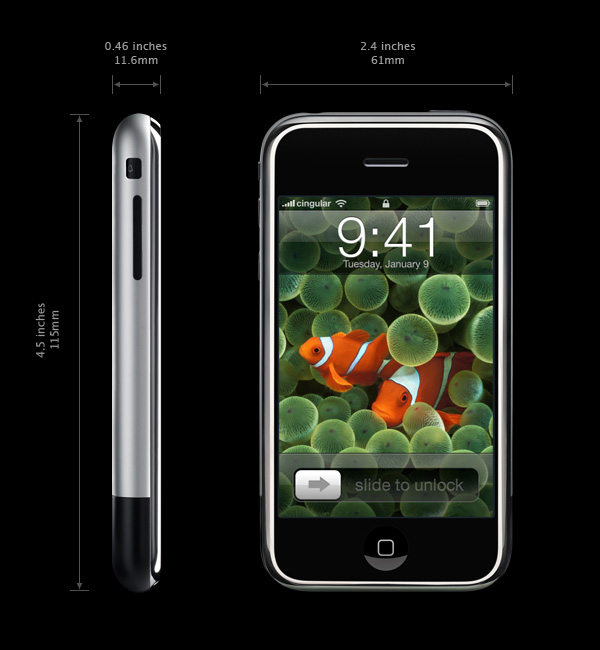
Edgerton calls the tendency to overrate the impact of dramatic new technologies [Apple's new iPhone, anyone?] "futurism." Few things, it turns out, are as passe as past futures. In the mid-twentieth century, a world was promised in which nuclear power would provide electricity "too cheap to meter," eliminating pollution, forestalling energy crises, and alleviating world poverty; hypersonic civil air travel would whip masses of us around the globe in an hour or two; permanent settlements would be established not just on the moon but on the planets; nuclear weapons would put an end to war. And so it goes.
Some readers here might recall a post I made a few weeks ago, just before leaving St. Louis to return to Conway, South Carolina [where I spend my summers], about an art exhibit I viewed at the Saint Louis Art Museum devoted to the stunning monumental paintings of Angelina Gualdoni, whose work is preoccupied with capturing modernist and futurist architecture post-abandonment and post-decay. One of her series of paintings concerns the 1999 demise of the Horizons Pavilion in Future World at Walt Disney's Epcot Center. Horizons featured a series of dioramas depicting imagined futures, including underwater cities and a space colony; these once-popular fantasies grew outmoded and embarrassing to their makers in just a few decades. [If you haven't already, read MKH's lovely meditation on her own adolescent fascination with futurism and the Epcot Center here.] Of this group of paintings, Gualdoni wrote,
I painted the demolition event as a slow inevitable, as if the building had given way to release its fluid miasma, the fruition of unmet expectations. As the building was demolished its guts oozed and dripped and the minimal building became organic, inverting the dichotomy of lush, organic life versus static architecture.
Shapin also reminds us that "[o]ur obsession with innovation . . . blinds us to how much of technology is focused on keeping things the same. The dikes of Holland maintain the integrity of the nation, and great ingenuity goes into preserving and improving them," and we are "going to need a lot more, and more powerful, technologies of conservation: not just the technologies of levees and barriers against the ocean but technologies to maintain the supply of potable water, breathable air, and arable soil; technologies to maintain as much biodiversity as we can or want to maintain; technologies to preserve and renew our crumbling Victorian legacies of infrastructure (sewers, rail beds, roads, and bridges); technologies to stabilize and prevent the dispersal of radioactive waste."
In his essay's conclusion, Shapin notes that, for most of us, how technology works is not what interests us: "As users, we typically want our technology to be a black box; we don't want to be bothered with adjusting it, monitoring it, repairing it, or knowing about its inner workings. A sure sign of the success of a technology is that we scarcely think of it as technology at all." But it ultimately turns out that things--gadgets, tools, what-have-you--are very important in our lives, even when we are not thinking about them very much or how they work.
So all of this got me thinking: as medievalists, can we take note anywhere in our global present, of technologies that are still highly useful in a "modern" way, yet are also "premodern"? Also, is there any technology in your own life which is "old" but which you could not live without, yet hardly even think upon? For me, it would be the 1940s percolator that I bought at the Vietnam Veterans thrift store in Richmond, Virginia round about 1988. It cost 25 cents and it makes the best cup of coffee I have ever tasted. Has anyone noticed, too, that all of a sudden, percolators [but newer, shinier models] are making a comeback? Even Target is selling them, and I've tried one or two new models, and the coffee is too weak. Also, in 1992, I typed my entire M.F.A. thesis on an antique manual Corona typewriter that my sister bought for me in an antiques store in Boston. Of course, computers were readily available to me, but I wanted the "authenticity" of the typewriter, imaging myself some kind of Jack Kerouac--in this case, I was thinking about the technology too much, and yes, I suffered for my "art" as a result.
[title of this post is a quotation from Thomas Carlyle, essayist par excellence]
UPDATE: Another question I just thought of, also, might be: are there any "passe past futures" that we can think of that were "dreamed" in the Middle Ages? Was Stonehenge, perhaps, one of these?
Monday, July 02, 2007
The Chronicle of Higher Ed at the Zoo
To quote:
Don't let my quote scare you; others (like Dr Nokes) say smarter things. John Gravois's full text here. An audio tour of the K'zoo dance can be accessed from this page as well. Includes a short stand up routine from Eileen Joy! With laugh track!"There's so much about the medieval that's associated with the juvenile, the popular, the low," says Jeffrey Jerome Cohen, a professor of medieval English literature at George Washington University. As specialists in Arthuriana and other literature heavy on adventure and light on introspection, he says, medievalists already dread being regarded as scholars of so much juvenilia.
And so sometimes their responses to the truly puerile strains of pop medievalism are downright grouchy and exasperated — as when medievalists point out for the umpteenth time that turkey legs, consumed with such gluttonous abandon at Medieval Times restaurants, did not exist in medieval Europe.
Subscribe to:
Posts (Atom)